
Check the working state
Dry: Matching bag at inlet; sound dry filter under head.; Wet: Bag removed; wet-appropriate filter fitted and float checked.; Reset for storage: Unplug, empty, rinse permitted parts, dry filter and tank.
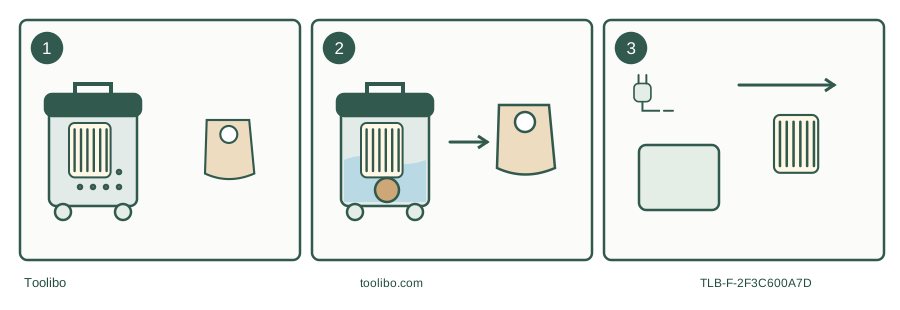
Dry
Matching bag at inlet; sound dry filter under head.
Wet
Bag removed; wet-appropriate filter fitted and float checked.
Reset for storage
Unplug, empty, rinse permitted parts, dry filter and tank.
An original decision aid. Isolate power before opening, changing filters or emptying.
Keep the EU product number with the machine
This guide covers Buddy II 12 EU, product 18451119. It is a 12-litre domestic wet/dry vacuum, not the Buddy II 18 T tool-socket version or a different regional package. The manufacturer lists a 1,200 W motor and a standard wet filter. The product number is the useful identifier when buying compatible bags and filters; the words “Buddy” or “12 litres” alone are not enough.
EU identification is not evidence of UK or Middle East plug suitability, local stock or warranty coverage. Check the actual voltage and plug against the intended supply. Older family manuals can present different input-power descriptions, so the unit’s nameplate governs electrical matching. No airflow ranking is inferred from its motor wattage.
Plan a compact cleanup, not a hazardous-material job
The small container is useful only if the task and emptying route suit it. Think about where it will stand while you clean a car footwell or a hobby area, and where permitted collected waste will go. Hose length is not permission to tow the machine past a sharp edge or lift it by the hose. Keep the body upright and clear of the walking route.
The Buddy is a household machine for non-hazardous dust and suitable non-flammable liquids. Do not collect hazardous dust, hot material, flammable or explosive liquids, acids, alkalis, solvents or combustible metal dust. This guide does not authorize cement, flour, ash, asbestos, lead or unidentified powder cleanup. A new dust bag does not change the material’s hazard or the machine’s classification.
Recognise bag versus filter
Switch off and unplug before removing the head. The bag connects to the inlet and catches dry debris; the filter is attached beneath the head and must not be omitted. For permitted dry pickup, install the correct clean, dry filter and an appropriate matching bag. Inspect the filter material and sealing surfaces for damage before closing the machine.
Seat the bag collar gently rather than forcing or tearing it. Keep it clear of the rim and make sure the head fits correctly. Connect the hose to the suction inlet, not the blower outlet. Select a suitable floor or crevice attachment and start with the cable fully laid out so the machine can remain in a stable position.
Set up for ordinary liquid pickup
Stop and disconnect electricity. Remove the dust bag and empty dry material from the tank. The manual requires a filter suitable for wet operation and a check that the float works correctly. Keep the specified wet-capable filter fitted: “bag removed” does not mean “run with no filter.” If a previous owner installed an unknown filter, identify it before collecting liquid.
Keep the plug and socket dry and away from the spill. Do not use the machine in an electrically unsafe flooded area. The 12-litre container figure is not a guaranteed liquid collection amount; stop early if the load would be difficult to handle. Remain beside the cleaner, watching for reduced pickup, foam or liquid escaping from the head.
If foam forms or liquid escapes, stop immediately, unplug and empty. Treat a full-tank response as a reason to stop yourself, not a promise that electrical power has automatically been isolated. Never defeat the float or keep restarting to force additional water into the bucket. Check for contamination, damage and the correct filter arrangement before the next use.
Clean the filter and sealing area carefully
With power disconnected, release the filter’s retaining disc as described in the manual, remove the filter gently and inspect it. The wet/dry filter can be rinsed with water; let it dry before reuse for dry work. Avoid forcing dirt deeper into the material or using a sharp tool that can puncture it. A torn or misshapen filter should be replaced.
Clean the sealing surfaces before refitting the filter and securing the retaining disc. A filter that looks clean but sits crooked can let dirt bypass it. Empty and clean the container and appropriate accessories, while keeping water away from the electrical head. Do not close the machine for long-term storage with a wet filter and residual dirty water inside.
Use external checks, then service when needed
For declining dry suction, unplug and check the nozzle, tube, hose, bag fullness and filter before blaming the motor. A blocked bag and a wet full-tank response need different corrections. Do not use the blower to disperse the suspect dust; use it only with a clean hose and a controlled, permitted task.
Keep owner maintenance to accessible cleaning and correct consumable replacement. A damaged cord or plug, liquid inside the electrical section, persistent overheating or unresolved loss of suction requires Nilfisk service or a qualified repairer. Do not open the motor housing or modify mechanical, electrical or thermal safety devices. Store the clean, emptied machine indoors in a dry, frost-protected place.
Models referenced