
Freedom from a cord can come from three different systems
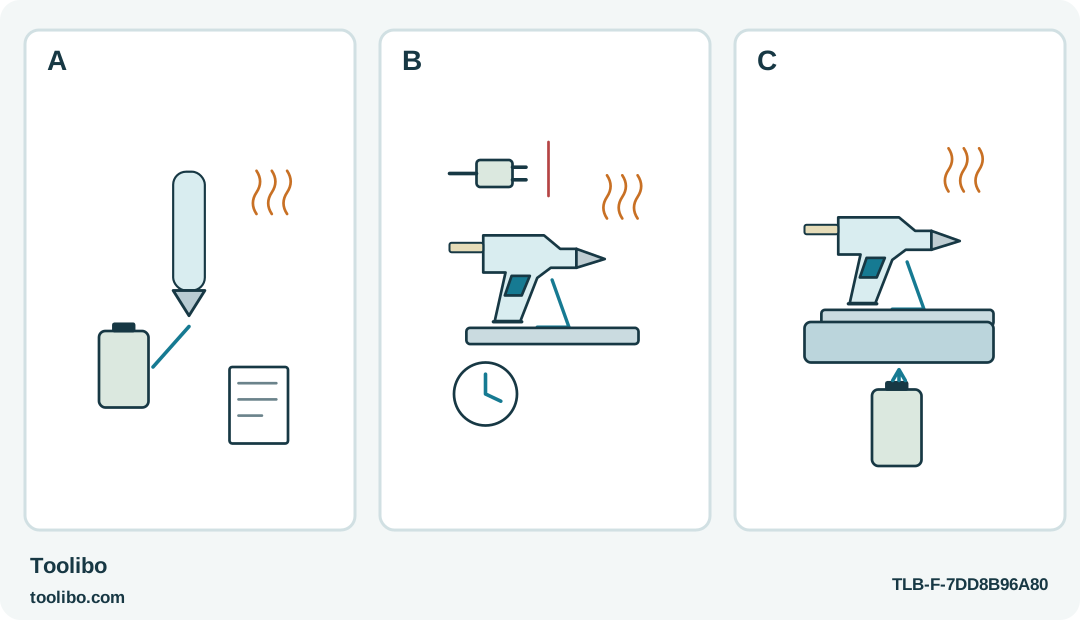
A pen with a separate energy-source symbol, a detached-cord gun with a time cue and a battery-powered heating base show three cordless working rhythms.
A
GluePen heats from an integrated battery; the adjacent battery symbol explains the energy source, not removable access or internal construction.
B
Dremel 940 spends stored heat after designed cord removal and must return to its instructed powered setup for reheating.
C
P306 heats only while seated in its battery-powered base. That base is a heater, not the battery charger.
A battery-heated pen, stored heat after disconnection and a dock-heated gun create three different return-to-power routines.
“Cordless” can describe three different working rhythms
A tool can leave its power connection behind without carrying a battery that heats it in your hand. That distinction matters when you plan where to glue and where to pause. The Bosch GluePen, Dremel 940 and Ryobi P306 all offer freedom from a trailing cord during at least part of the work, but they obtain heat in three different ways.
The GluePen has an integrated battery in the pen. The 940 has a detachable mains cord and can work briefly using stored heat after disconnection. The P306 heats while seated in a base supplied by its removable battery; the gun does not keep heating away from that base. None should be chosen solely from a photograph showing no cord beside the nozzle.
For a small dry indoor decoration, map the complete route from heating to application to parking. Consider the tool, its battery or power equipment, the bench space and the time required to align the parts. The smallest handheld body may still need an accessible base nearby, while a battery inside a pen still requires a safe hot-tool resting place.
Understand what must stay near the project
With the GluePen, charge using the specified equipment before the session and follow its readiness indication. It cannot be used while charging. Its integrated battery is not a removable pack to exchange at the bench, and opening the housing is not part of ordinary use. Plan a pause if charging is needed rather than treating a connected cable as a way to continue gluing.
With the Dremel 940, the mains cord supplies heating before the tool is used away from it. The manual describes a limited period of operation after detaching the cord, approximately five minutes before reheating is needed. That is not battery runtime or a guarantee of consistent flow for every adhesive quantity. Arrange a safe return to the instructed powered setup when the glue becomes less workable.
With the Ryobi P306, keep the base close enough for an unobstructed return. The battery powers the base’s heating arrangement; the base is not a charger for that battery. The base light indicates power and the gun light indicates connection, not temperature readiness. Allow heating and confirm flow on scrap before leaving the base for the first application.
Compare the consumables as well as the power
The identified GluePen uses recommended 7 mm sticks. The 940 uses its specified 11/12 mm system and original compatible Dremel accessories. The US P306 permits 0.28 inch (7.11 mm) or 0.31 inch (7.87 mm) mini sticks, with suitable adhesive requirements still applying. These dimensions do not create an interchangeable family of “cordless glue sticks.”
- Identify the actual model and regional instructions rather than relying on a retailer’s broad cordless category.
- Select the manufacturer-recommended adhesive for the gun’s diameter, processing temperature and intended materials.
- Dry-fit the small decorative project and check that its assembly movement fits the tool’s heating rhythm.
- Provide the correct stand or base, a heatproof work mat and supported matching scraps.
- Test normal flow and the cold scrap bond before using the finished object.
A more convenient power arrangement cannot make an unsuitable plastic, wet-use repair or structural joint appropriate. Keep the task nonessential and indoors. If the project requires overhead work or an upward-pointing nozzle, bring it to a safer bench arrangement or choose a different method.
Choose by the interruption you can manage
For a few small attachments at a prepared bench, an integrated-battery pen may make the approach convenient. A detachable-cord tool may suit a short application away from its powered position, provided you accept the reheating return. A dock-heated gun works best when the base remains part of the active workstation rather than being left across the room.
In every case, stop dispensing if normal flow becomes difficult. Do not force the trigger to extend a residual-heat interval or to avoid a trip back to the P306 base. Park the tool safely before aligning a joint. A cold bead applied before an interruption should not be treated as fresh adhesive when you resume.
At the end, follow the actual shutdown procedure and allow complete cooling. The P306 should be switched off and left seated for cooling, with battery removal after the tool is cold. The 940 must be switched off and disconnected as directed. The GluePen must be switched off and stored without opening its battery housing.
The meaningful comparison is not which tool is most cordless. It is which complete system lets you apply a controlled amount, return the hot tool safely and finish the joint before the adhesive cools. Matching that rhythm to the project is more useful than promising unlimited reach from any of the three designs.
Models referenced