
Check the working state
Dry: Cassette filter dry; appropriate bag fitted for fine dirt.; Wet: Cassette remains shut with filter; bag is removed.; Care: Unplug, release cassette, rinse without rubbing, fully dry.
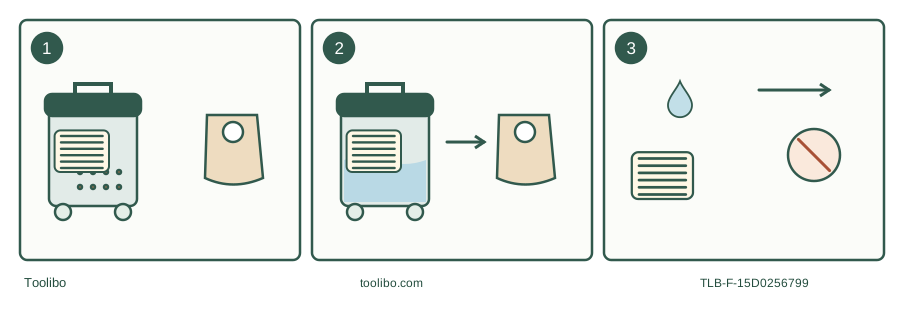
Dry
Cassette filter dry; appropriate bag fitted for fine dirt.
Wet
Cassette remains shut with filter; bag is removed.
Care
Unplug, release cassette, rinse without rubbing, fully dry.
An original decision aid. Isolate power before opening, changing filters or emptying.
Identify the non-P UK machine
The WD 4 V-20/5/22 covered here is UK part 1.628-211.0, with a 20-litre plastic container, 5 m cable and 2.2 m hose. Its distinguishing owner-service feature is a flat pleated filter in a removable cassette. The filter is accessible without reaching into the dirty collection bucket. This is the non-P configuration: do not borrow automatic power-tool socket instructions from WD 4 P illustrations in the shared manual.
The current UK technical table lists 1,100 W input, 55 l/s airflow and 240 mbar vacuum. None is an independently measured cleaning-speed result. Airflow and pressure describe different operating conditions, while motor input is electrical consumption. Use the actual nameplate for electrical setup and the exact packaging for supplied accessories rather than assuming every pictured accessory is included.
Build a safe dry-pickup state
Unplug before opening or checking the filter cassette. Confirm that the flat pleated filter is intact, fully dry and correctly fitted. It must remain installed whenever the machine operates. A dust bag and the main filter have different jobs: the bag collects debris for disposal, while the pleated filter remains part of the air path.
For fine, permitted dry dirt, fit the appropriate fleece bag. Unfold it, seat its collar on the container inlet and keep it away from the rim seal. Refit and latch the head without pinching the bag. Connect the hose to the suction inlet, select the suitable nozzle and lay out the cable without tension. Keep the machine upright; the castors are not brakes and a tight hose can pull it into an unstable position.
Remove the bag, not the cassette filter
To change from dry dirt to a small ordinary water spill, switch off and disconnect the plug. Take out the dust bag and empty the tank. Inspect the accessible float area and leave the sound flat pleated filter in its cassette. Do not remove the cassette filter to “improve water flow.”
Keep electrical connections dry and outside the spill. Use a suitable wet floor-nozzle arrangement and remain beside the machine. Gross container volume is not usable liquid capacity: the float and air space need room. Do not leave it running as a pump, and do not attempt cleanup where live electrical equipment may be in contact with water.
At the fill limit the float closes the suction opening, and the motor note rises. Switch off immediately, unplug and empty. If the unit has fallen over, restore a safe upright position, switch off and wait five seconds before restarting after checks. Foam or escaped liquid is a separate immediate stop-and-unplug condition, even when the tank does not look full.
Clean the cassette gently
After use, isolate electricity before releasing the filter-box catch and folding the cassette out. Empty loose debris from the box into appropriate waste containment. Avoid creating a dust cloud; only clean material that was permitted to enter the machine in the first place. A bag change cannot make previously collected hazardous dust safe to handle.
Where separate filter cleaning is needed, remove the flat pleated element and rinse it under running water. The manual specifically says not to rub or brush it. Let it dry completely before reuse, then inspect the folds and sealing surfaces and refit the cassette securely. Do not use a hair dryer, flame, aggressive solvent or high-pressure jet to shorten the drying step. Damaged filtration needs replacement, not a patch or operation with the filter absent.
Troubleshoot before blaming the motor
A gradual loss of pickup usually calls for an isolated external check: nozzle, tubes and hose first, then bag fullness, filter condition and cassette seating. A sudden change during water pickup calls for the float/full-tank check. These are different situations; repeatedly cycling the switch is not a general repair method.
The WD 4 is a household wet/dry vacuum, not a hazardous-dust extractor. Exclude flammable liquids or dust, reactive metal powders, acids, brine and hot or smouldering debris. This guide does not authorize ash, cement, flour or hazardous construction-dust collection. A separate cold-ash accessory condition is not a blanket approval for the stock machine.
Empty and rinse appropriate non-electrical parts, dry them and store indoors away from frost. Never wash or immerse the electrical head. Stop using a damaged cable, leaking head or machine that repeatedly trips protection. Electrical repairs and unresolved faults belong with authorized service; accessible cassette cleaning is not permission to open the motor housing.
Models referenced