
A cosmetic attachment is not a structural repair
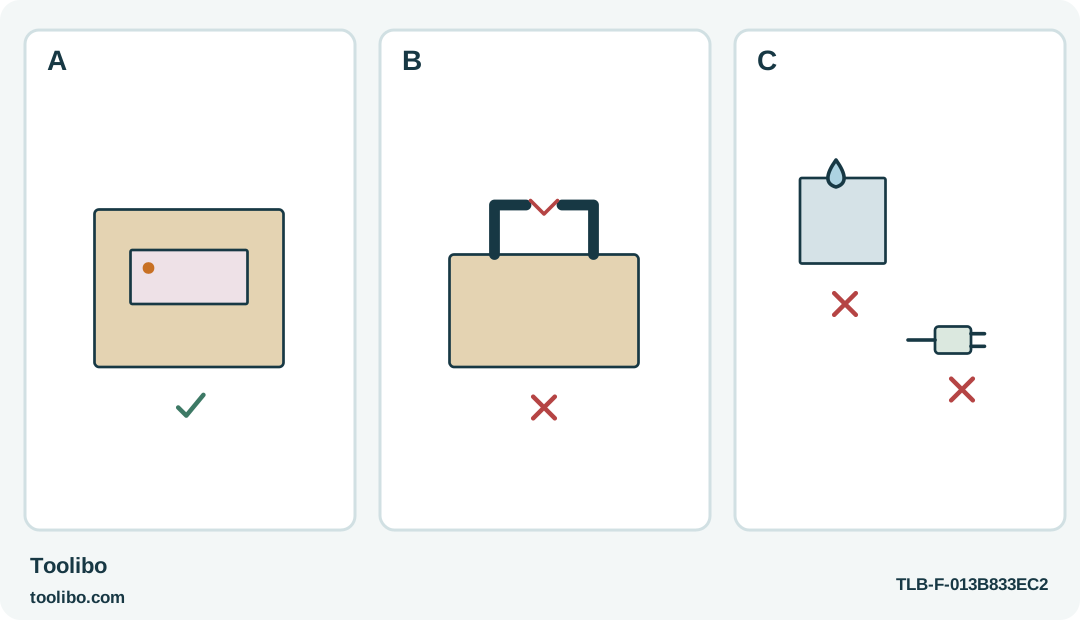
A label on an intact box contrasts with a broken carrying handle; wet-tile and cable symbols are marked as excluded repairs.
A
A small label on an already sound dry organizer is cosmetic; the object remains functional without it.
B
A broken carrying handle asks the glue to restore strength and is outside this decorative workflow.
C
Wet tile, electrical items, food-contact uses and safety-critical repairs need their own appropriate repair system, not a larger bead.
A label leaves the box’s strength unchanged; a handle repair asks the adhesive to perform a different job.
Ask what failure would do
A household object can be small and still be an unsuitable hot-glue repair. A loose handle, a shoe sole or a piece above a doorway may look like a quick job, but its failure can cause more than a crooked decoration. Before heating a Bosch GluePen or Worx WX045L, describe what the joint must do and what happens if it releases without warning.
Use a simple boundary: this workflow is for light, dry indoor decoration on an object that is already sound. The glue may retain a paper embellishment or a nonessential trim piece. It should not restore the strength of furniture, carry a load, retain a safety component or make an electrical item usable again. If the object only works because the new glue holds it together, reconsider the repair.
Separate decorative and supporting functions on the same object. Attaching a label to an intact storage box is different from repairing the box’s carrying handle. A trim strip on a removable display board is different from a strip mounted overhead. Judge the function of the particular joint, not the reassuring name of the material.
Reject the common wrong jobs early
Do not use these craft workflows for damaged plugs, cable insulation, electrical enclosures or battery housings. Hot glue is not a household substitute for an approved electrical repair. Food-contact surfaces and drinking vessels are also outside the scope; an adhesive described as general purpose does not establish suitability for direct or indirect food contact.
Wet tile and detached shoe soles are especially tempting because glue may seem to stick initially. The GluePen and WX045L troubleshooting guidance identifies moisture-related failure in these applications and points away from hot glue. Do not interpret a cold trial on a dry sample as proof that a bathroom joint or a shoe will survive its real conditions.
Reject joints that will be washed, repeatedly bent, exposed to significant heat or required to keep water out unless a different, specifically suitable repair system has been established. This article does not provide that system. A decorative repair also needs reconsideration if it will be accessible to a child who could detach small parts.
Test the remaining project before committing
For a candidate such as a lightweight ornament on a dry desk organizer, work through these checks in order:
- Confirm that the organizer remains fully functional without the ornament. Remove it from use if the underlying structure is damaged.
- Identify both surfaces, including coatings. Unknown plastic, loose paint or a precious finish is a reason to choose a nonadhesive option rather than experiment on the object.
- Select the adhesive recommended for the exact tool and material. The GluePen and WX045L use different stick systems; do not share sticks on appearance alone.
- Dry-fit the pieces on the bench. They must meet without being bent into place or held against spring pressure.
- Make a supported trial on equivalent scraps, then inspect after cooling for clean contact, distortion and separation.
A successful trial only supports that small decorative use under comparable conditions. It does not turn the joint into a tested structural connection or establish resistance to repeated loading. Keep the amount modest and the application accessible so no hand is placed behind hot glue.
Stop when the object asks for a different repair
During application, stop if the substrate softens, a coating lifts or a strong unintended odor suggests material damage. Park the tool safely, switch off or disconnect as its manual directs and allow complete cooling. Do not add another layer to hide a failed bond or use the hot nozzle to melt the damaged surface into shape.
After cooling, inspect the joint before returning the object to display. An edge that peels, a part that rocks or a visible gap means the attachment did not succeed. A failed decorative piece can be left unattached; the need to finish a project is not a reason to expand its safety boundary. If a failure has exposed underlying damage, retire the object from the intended use until it receives an appropriate repair.
For rejected jobs, record the actual problem rather than asking for “stronger hot glue.” A loose chair joint needs a furniture repair assessment; a wet tile needs the appropriate building repair; a damaged electrical item needs its approved service route. Knowing why you stopped makes the next decision more useful.
Finally, keep the tool’s hazards separate from the bond’s limitations. Even a harmless-looking paper decoration uses a hot nozzle and molten adhesive. Provide a stable resting place, protect the bench, keep others away and cool the tool fully before storage. The best household repair decision is often to reserve hot glue for the small cosmetic task it can reasonably serve.
Models referenced