
A dry start does not establish wet-use suitability
A droplet approaches a joint edge with an ingress path, a dry shelf contrasts with it, and a wet-use shoe repair is excluded.
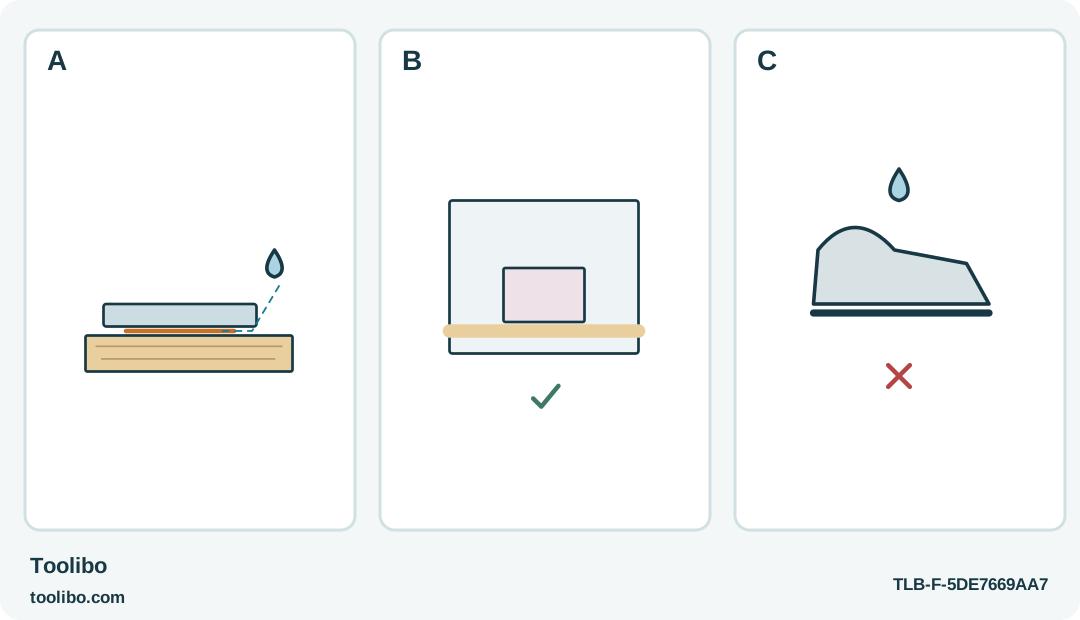
A
Water can reach the bonding interface from an exposed edge even when the visible bead remains intact.
B
Reserve this trial for a decorative attachment that will remain on a genuinely dry indoor shelf.
C
Washing, damp tile, shoe soles and leak-sealing are different applications; a dry tabletop trial does not qualify them.
Moisture can enter at a joint edge, so a dry first bond does not qualify a wet-use repair.
Separate dry preparation from dry service
A surface can be dry when you glue it and still be wrong for a hot-glue repair. A bathroom tile, a shoe sole or a decoration that will be washed encounters moisture after the initial application. That later exposure matters. For the Bosch GluePen and Worx WX045L, use this workflow only for a light decorative attachment that will remain in a dry indoor setting.
Both tool manuals identify moisture-related failures with tiles in damp locations and detached shoe soles. These are not invitations to make a thicker bead or to dry the object more thoroughly before repeating the same repair. Moisture can reach the bonding area during use, and the appropriate solution is a repair system designed for that application.
Do not make waterproofing, leak-stopping or food-container repairs with this guide. A bead that looks continuous is not a tested seal, and a label such as “general purpose” does not establish suitability for water exposure. The fact that the glue itself remains visible after contact with water says little about what happens at its boundary with the material.
Map where water will reach the object
Ask how the object is used and cleaned. A desk decoration on a dry shelf is different from an ornament beside a sink, even if both are indoors. Splashes, condensation, wet wiping and routine washing all change the decision. Think about the edge of the joint as well as the front surface; water does not need to strike the visible bead directly to reach the bonding area.
If the object needs washing for ordinary hygiene, do not redesign its cleaning routine merely to preserve an uncertain glue joint. Choose a suitable removable decoration or another attachment method. Do not use hot glue to create a pocket that traps moisture behind a trim piece. Avoid a placement where a failed part could fall into a drain, appliance or electrical area.
A dry room is not a guarantee that every location in it is dry. A cold window can develop condensation, and a plant container can be watered or overflow. Relocate decorative craft work away from those sources rather than relying on an optimistic description of normal use.
Make a genuinely dry decorative bond
- Select an already sound object that needs only a cosmetic attachment and will stay away from wet use.
- Identify the surfaces and choose the adhesive recommended for the exact tool and material. The GluePen’s 7 mm system and WX045L’s 11 mm system are not interchangeable.
- Remove loose dirt and allow ordinary moisture from any suitable preparation to disappear fully. Do not heat a wet surface with the gun nozzle or use a flammable solvent shortcut.
- Dry-fit the pieces so they meet without bending or gaps that invite a large glue fill.
- Trial the same material and finish on supported scraps, then inspect the cold joint before proceeding.
Keep the work on a protected bench. Apply a modest amount, join promptly and leave the piece supported while it cools. Neither a clean appearance nor a strong-feeling first attachment establishes water resistance. The trial is limited to the dry decorative conditions you actually selected.
If the surface remains damp, the coating lifts or the adhesive peels away after cooling, stop. Adding glue over a wet or failed layer only conceals the unresolved interface. Let the object dry and reassess whether the application belongs in this method at all.
Respond to an exposed or failed joint
If the finished decoration becomes wet, remove it from the intended display position when safe to do so and avoid stressing the attachment. Let it dry without trying to force heat into the joint. Inspect after drying for lifted edges, movement, staining or trapped moisture. A decorative piece that has released should remain out of use until its attachment method is reconsidered.
Do not re-glue a wet tile or shoe sole because the first repair appeared to work for a while. That history confirms the real environment matters; it does not show that the next bead needs to be larger. Describe the material and exposure when choosing an appropriate specialist repair product or service, rather than asking only for a stronger hot-melt stick.
Keep the tool itself dry as well. The WX045L must not be exposed to rain or moisture, and its routine cleaning uses a dry cloth rather than water or chemical cleaner. Never wash glue off a powered or hot tool. Switch off, follow the exact battery or disconnection procedure and allow complete cooling before storage.
A successful dry craft bond stays within a deliberately narrow use. Its owner knows where it belongs, how it will be handled and why washing, condensation or repeated wetting would require a different decision. That is more useful than calling an untested household joint waterproof.
Models referenced