
Processing heat is not a finished-bond service rating
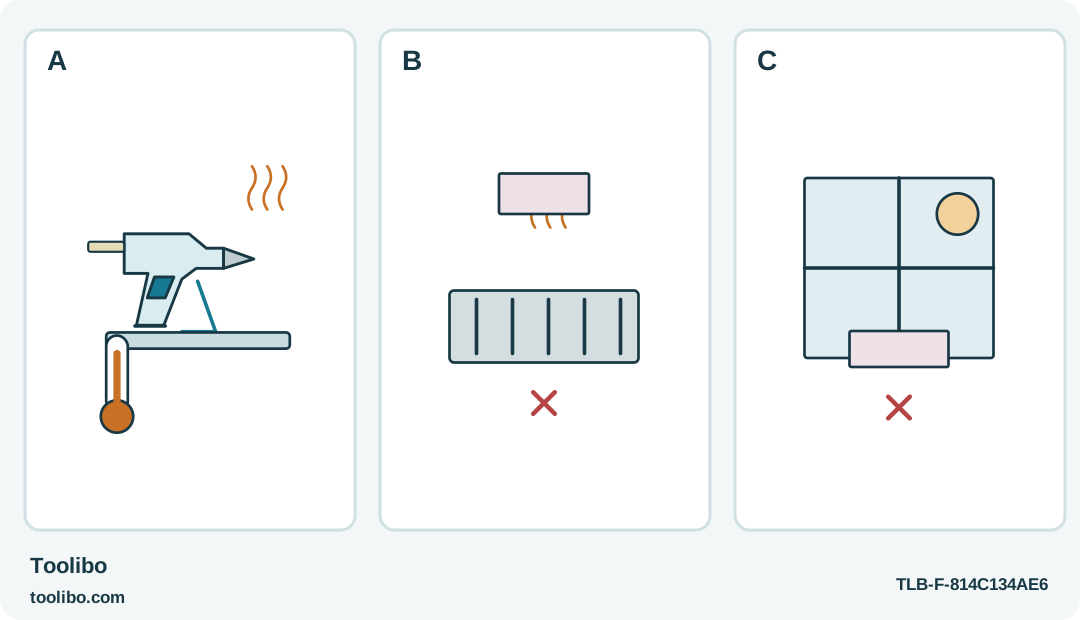
A heated tool is separated from crossed radiator and sunlit-window display locations, denying equivalence between nozzle temperature and service suitability.
A
A hot nozzle describes processing, not heat resistance of the finished joint; a hotter gun does not establish a hotter-use bond.
B
Keep craft attachments away from radiators and other heat sources. Gluey’s 50°C exposure exclusion is model-specific, not a universal adhesive rating.
C
Strong sun and changing display conditions also matter; choose a cool dry location rather than inventing a household heat test.
Heat used to dispense adhesive gives no permission to display the finished bond beside a heater or hot window.
Distinguish a melting temperature from a service limit
The temperature that lets a glue gun dispense adhesive is not the temperature a finished joint can safely withstand. A Bosch Gluey heats its compatible adhesive to approximately 150 °C, but that does not make a decoration suitable beside a hot appliance. Its instructions specifically exclude gluing objects that can be exposed to temperatures of 50 °C and above. Treat that as a limit on the Gluey application, not as a universal service rating for every hot-melt adhesive.
The Bosch PKP 18 E lists a gluing temperature of approximately 200 °C and warns that heat or moisture can release adhesive bonds. That higher processing temperature is not evidence that a PKP joint is appropriate in a hotter location than a Gluey joint. Tool specifications describe how the tool works; the complete adhesive system and intended environment determine whether the object belongs there.
Start with the display location, not the tool already in your drawer. A lightweight decoration on a cool interior desk presents a different question from the same decoration on a sunny window, in a parked car or beside a heater. Moving the object can be a better solution than searching for a hotter gun.
Reject heat sources rather than guessing a margin
Keep these household craft bonds away from cooking appliances, radiators, lamps that heat nearby surfaces and other concentrated heat sources. Do not attach trim to appliance housings or use hot glue to repair parts exposed to operating heat. An apparently cool external panel may change temperature during use, and this guide does not establish a safe attachment point on any appliance.
A sunlit window and a vehicle interior also change conditions through the day. A pleasant room temperature while you work does not establish the later temperature of a dark ornament or the surface behind it. If the intended position may become hot and you have no complete suitability information, choose another location or attachment method. Do not use your hand as a thermometer or treat a brief trial in mild weather as approval for a season of exposure.
Consider what happens when a bond releases. A decoration that can fall onto a hot surface, obstruct a control or drop into moving equipment is unsuitable even if it is very light. Keep the scope to ordinary dry indoor display where failure has no safety consequence.
Establish a cool-location trial
- Choose a display position away from direct heat and strong sun, and confirm the object is not part of an appliance or safety function.
- Identify both materials and any finish. Select the exact adhesive recommended for the chosen gun; Gluey requires its specific low-temperature stick system, not a PKP consumable cut shorter.
- Dry-fit the parts so no continuous bending force is needed to keep them together.
- Make a supported scrap trial using the tool’s own heating and dispensing sequence.
- Let the trial cool completely, then inspect for distortion, poor contact and visible marks before working on the object.
The trial checks whether the application is manageable and whether the material is immediately damaged. It does not simulate long-term heat exposure or establish a new service temperature. Do not heat the sample with a flame, oven or improvised hot-air setup to invent a household heat rating.
For a decorative card assembly, use only the amount necessary to retain the pieces and join promptly. Park the tool safely while aligning the work through cool edges. If the first bead has already cooled before assembly, let the attempt cool fully and revise the sequence rather than using a hot nozzle to reactivate the whole decoration.
Recheck the location when the room changes
A suitable display position can become unsuitable when someone moves a lamp, switches on seasonal heating or transfers the decoration to a windowsill. Make the placement limitation part of the project: keep it on the intended cool indoor surface, and do not casually repurpose it as a car ornament, trivet or appliance accessory.
Inspect the joint cold if the piece has moved, tilted or developed an open edge. A softened or displaced bead is a reason to stop using that attachment, not to add a thicker layer while leaving the heat source unchanged. Let the object cool away from the heat before handling loose adhesive, and choose a different location before considering any remake.
Finish the tool session independently of the display decision. Switch Gluey off, or unplug the PKP 18 E, and leave the tool safely supported until completely cool. Store the consumables according to their own instructions; a hot storage spot can also be wrong for unused sticks. The durable decision is to match the finished object’s environment, not to confuse the nozzle’s working temperature with permission to expose the joint to heat.
Models referenced