
Cleaning, drying and collection mode are separate states
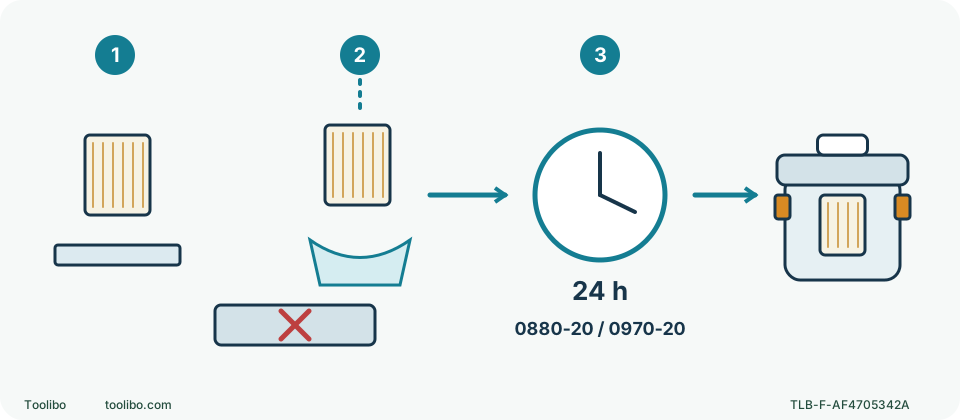
Original sequence shows a removed cartridge above a rinse tray, an isolated motor head, a drying clock marked 24 h for the selected Milwaukee filters, and a checked dry reassembly.
Identify
Match the filter, removal method and collection role.
Clean
Keep power parts dry and use only the stated method.
Dry
Complete the applicable drying requirement before dry pickup.
The 24 h label applies to the selected Milwaukee instructions; it is not a universal interval for every filter.
Decide whether cleaning is the right response
Poor pickup can come from a loaded filter, but also a blocked hose, full tank or badly seated head. With the machine safely isolated, inspect the accessible collection path before deciding to wash a part. Cleaning a sound filter will not mend a split hose. A damaged, deformed or excessively clogged filter may need the genuine specified replacement rather than more aggressive cleaning.
Stop if the collected material is unknown or potentially hazardous. This household routine is not a decontamination method and does not authorize shaking hazardous dust into a bin or washing it down a drain. Identify a suitable handling and disposal process before disturbing the collection media.
Put the correct identity on the work surface
For the selected DEWALT models, the matched filter is used in both dry and wet collection. For the selected Milwaukee models, 49-90-1900 is the dry filter that is removed before wet pickup. Washability does not erase that distinction: a filter can tolerate a prescribed cleaning wash without being the correct filter for collecting water.
Set out the actual manual, a suitable collection receptacle for permitted residue and a clean place for the removed part. Switch off and remove the battery; on DCV581H also unplug the mains lead. Keep the power head and battery interface out of the washing area. Washing a removable filter is not permission to rinse the motor housing or immerse the appliance.
Follow the removal method rather than forcing the fitting
The DEWALT instructions describe turning the filter right to remove it and left to secure it, using their illustrated orientation. The Milwaukee instructions describe a short counterclockwise release and clockwise lock, aligning the tabs. These are not a universal interchangeable rule. Look at the matched manual’s view and the actual engagement before applying force.
If the fitting will not release normally, stop and inspect the accessible connection. Do not use pliers through the filter media or lever against the float cage. A cracked mount can create an air leak or prevent proper retention even if the pleats still look clean. Keep small parts organized so reassembly does not rely on memory.
Swipe or scroll horizontally to see all columns.
| Selected filter instructions | Cleaning point | Return-to-service point |
|---|---|---|
| DCV580H / DCV581H | Gentle removal of residue and permitted running-water rinse; no brush | Correct filter, intact fitting and suitable dry condition for dry collection |
| 0880-20 / 49-90-1900 | Tap clean or the documented water-cleaning method | Manual specifies 24 hours drying after water cleaning |
| 0970-20 / 49-90-1900 | Tap clean or rinse as documented | Manual specifies 24 hours drying after water cleaning |
Avoid making a clean-looking but damaged filter
For the DEWALT filters, do not use a brush: the matched instructions expressly exclude it. More generally, do not add a solvent, pressure-washer jet, heater or compressed-air treatment that the particular instructions do not authorize. The objective is to remove permitted residue while preserving the media and seal, not to make the surface look new at any cost.
Inspect after cleaning for tears, separated edges, cracked plastic and distorted sealing areas. If damage appears, replace the correct part. A photograph of clean pleats cannot demonstrate filtration performance, and a HEPA label is not a home test that the cleaned whole machine still meets a particular hazardous-dust standard.
Leave time for the next job
The two selected Milwaukee manuals specify 24 hours drying after water cleaning. Treat that as a stated preparation requirement, not a promise that a cold, humid room makes every filter suitably dry at that exact moment. Do not return a visibly damp filter to dry-debris pickup. Arrange a clean drying place where the part cannot fall, be crushed or be mistaken for a ready spare.
Do not copy that numeric interval onto the DEWALT models as a manufacturer instruction they do not state in the same way. Follow their matched instructions and ensure a suitable dry configuration before collecting dry material. If the next job is urgent, the answer is a correctly matched ready spare or postponement, not running without filtration.
Reassemble and verify without creating a dust cloud
Refit the correct filter using its prescribed engagement, check the seating and secure the head latches. Keep the next normal operating check limited to a known permitted task; do not scatter fine powder to “test the HEPA.” If dust escapes or pickup remains abnormal, stop and recheck the collection path while isolated.
Record which part was cleaned, how it was cleaned and when drying began. A clear note prevents another person from treating an unfinished maintenance step as a ready-to-use vacuum. Persistent leakage, damaged mounts or repeated malfunction belongs with service rather than improvised sealing tape.
Models referenced