
One shared filter does not imply one shared bag
Original compatibility diagram connects two vacuum model numbers to the dry and wet filters, while the bag has a link only to 0970-20.
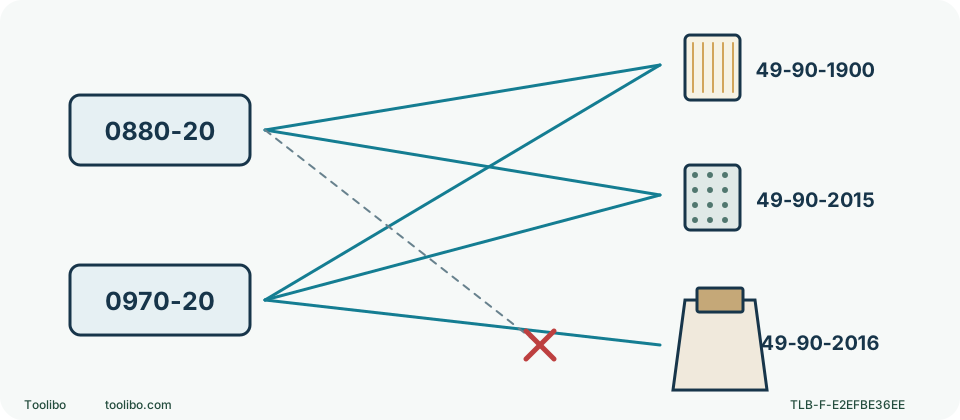
1900
Dry filter, listed for both selected machines.
2015
Wet foam, not a dry-filter substitute.
2016
Bag listed for 0970-20, not 0880-20.
Use the exact model and part-number matrix; the supplied 0960-20 bag holder is not a universal conversion accessory.
Start with the part’s job, then its shape
Three visually different consumables can still be confused when a shop listing calls all of them “vacuum filters.” For this pair of compact Milwaukee machines, write down the full accessory number before ordering: 49-90-1900 is the dry HEPA filter, 49-90-2015 the wet foam filter, and 49-90-2016 the fleece dust-bag pack. Their functions differ even when a seller groups them together.
A photograph is useful for spotting an obviously wrong item, but cannot establish compatibility by itself. A red plastic end cap, similar cylinder diameter or familiar brand name is not enough. Keep the machine’s exact number beside the accessory number and check both against the official listing and your actual manual.
Use a matrix rather than a chain of assumptions
Swipe or scroll horizontally to see all columns.
| Accessory | Function | 0880-20 | 0970-20 |
|---|---|---|---|
| 49-90-1900 | Dry HEPA filter | Listed | Listed |
| 49-90-2015 | Wet foam filter | Listed | Listed |
| 49-90-2016 | Fleece dust bag | Not listed | Listed |
The last row is the important break in the chain. Both machines use the same listed dry filter, but the official fleece-bag page names 0960-20 and 0970-20. It does not name 0880-20. Do not infer an undocumented bag conversion from the first two rows. “Not listed” is a limit of the verified compatibility evidence, not proof that an improvised attachment has been safely tested.
The bag pack includes an attachable holder identified for 0960-20. That does not turn it into a universal conversion kit for every small Milwaukee tank. The 0970-20 manual describes its bag inlet engaging the machine’s holder. Keep those two facts distinct when checking loose second-hand accessories.
Make a labelled storage kit before the next changeover
Keep each clean accessory in a suitable separate place with its part number visible. Add the machine model and the intended dry or wet role to a small card. Do not place a damp foam filter with a clean dry cartridge and assume the next person will identify which one can be fitted immediately.
For a shared household kit, record the date of inspection and any damage rather than inventing a universal replacement interval. A torn bag, cracked filter fitting or deformed seal is not fixed by cleaning. Set questionable parts aside so they cannot be reinstalled accidentally. Use only replacements and cleaning methods permitted for the particular part.
Check the assembly before closing the tank
Switch off and remove the battery first. For dry use, verify the correct filter is installed and seated. If a permitted bag is being used on 0970-20, inspect the collar and holder arrangement without pinching the bag at the lid. The bag supplements collection; do not remove the required dry filter simply because the bag is present.
For wet use, follow the matched machine’s changeover, remove dry collection layers and retain the float cage. The listed foam option belongs to the wet configuration; it is not a substitute dry filter. Never cover a float opening with a bag or tape to gain room. Before reinstalling power, check that the head latches close normally without forcing them over a misplaced component.
Resolve conflicting numbers before buying
A useful caution appears in the 0970-20 manual: its English specifications and fine-dust section identify bag 49-90-2016, while one Spanish fine-dust paragraph repeats the foam number. The separate official bag page and the English specifications agree on the bag identity. Do not follow the isolated wrong number merely because it is printed near the word “bag.”
If your own revision or an unfamiliar part disagrees, stop and have the manufacturer or authorized supplier confirm the exact combination. Send the model/type and accessory number rather than a vague request for “the red filter.” Keep the answer with the kit so the same uncertainty is not repeated next month.
Keep compatibility separate from material permission
A correctly matched accessory still does not establish that a particular dust is safe to collect. The filter label is a component description, not a whole-machine H-class certificate or universal hazardous-dust approval. Unknown renovation debris, combustible powder and other excluded materials remain outside this household guide.
The goal of the matrix is practical: buy the right item, store it clearly and restore the right collection state. It is not a route to expanding the vacuum’s permitted uses through extra layers, homemade holders or a better-sounding filter description.
Models referenced