
Keep clear and record existing observations
A smoking collector is not opened for a close smell check; service information is gathered only once safe.
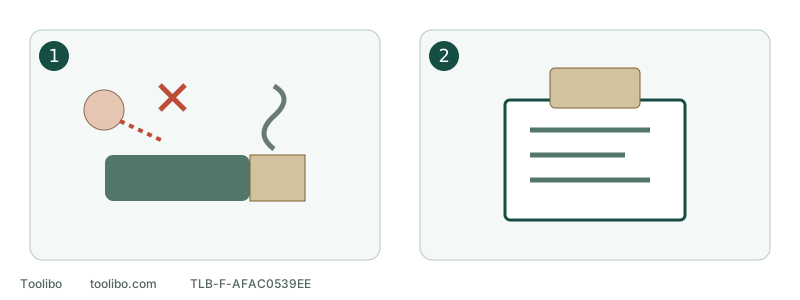
1. Do not approach smoke
Keep your face away and address immediate danger before cleanup.
2. Record without restarting
Use existing observations and safe exterior photographs, not a running demonstration.
A smoking collector is not opened for a close smell check; service information is gathered only once safe.
Stop only when it is safe to reach the controls
If safe, use the normal stop control, retain necessary control until motion ends and isolate power safely. Do not approach a dangerous tool, battery or plug just to complete a standard sequence. Keep people away and obtain emergency assistance for immediate danger.
Do not grab hot, leaking or deformed batteries or approach a smoking housing or collector with your face. This is not a battery or dust-fire extinguishing procedure.
Do not dismiss the symptom as normal brush sparking
Some motor designs have brush-related phenomena, but this page gives no safe spark-size, colour or frequency threshold. A new pattern, electrical odour, smoke, failed control or changed operation needs assessment.
Another model’s video cannot establish your tool’s condition. Opening the housing, touching contacts or bridging a switch is not external owner inspection.
Consider collected dust separately
Fine sanding dust can ignite around sparks or flame, and some collected coating residues may self-ignite. Separate locations inside a tool and collector do not remove the concern. Do not open a smoking collector near your face or mix its contents into stored dust.
If material or residue identity is uncertain, obtain suitable handling advice. Do not blow it around, beat it onto the floor or dispose of suspect material casually. Active danger comes before cleaning or shipping preparation.
Record what is already observable
Keep power disconnected and record only information available without dismantling or running:
- Tool and service identity, and whether battery or charger was involved.
- Known material/coating, full abrasive specification and collection setup.
- First visible or smelled symptom, its location and accompanying noise, vibration or failed stopping.
- Recent accessory changes, impact, liquid exposure or earlier occurrences.
- Safe-stop actions already taken and components still unsafe to handle.
Separate facts from diagnoses. An external photograph, if safe, is enough; do not reconnect for a demonstration video.
Ask service about assessment and transport
Describe the symptom and ask for the correct inspection and handling route. Treat a suspected damaged battery as a separate issue; do not include it in an ordinary shipment without confirmed instructions. Do not open it or try another charger to establish usability.
Prevent other people from using the tool and identify its out-of-use status, following the applicable storage guidance for affected components and materials. Do not ask a colleague to try it once.
What does not establish recovery
Cooling, fading odour, one uneventful restart or continued cutting after a paper change does not rule out electrical or internal trouble. Return only when appropriate assessment establishes the cause and safe next action. Ordinary loading or grip advice cannot override this stop boundary.
Models referenced