
A surface mark is not a smoking tool
These observations lead to different checks; neither image proves a cause or safe temperature.
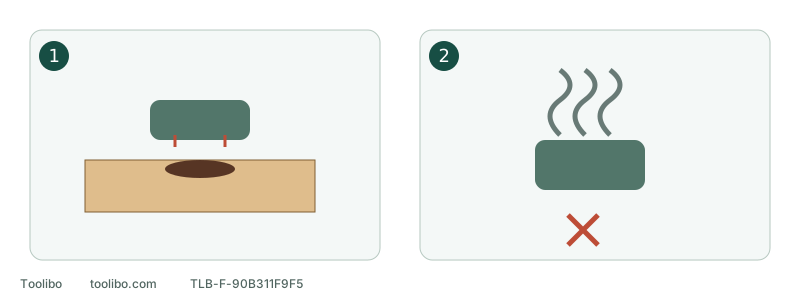
1. Local surface mark
After safe cooling and disconnection, check material, loading and dwell.
2. Smoke from equipment
Keep out of use; do not run a sample to reproduce the symptom.
These observations lead to different checks; neither image proves a cause or safe temperature.
Stop rather than turn up the speed
For a new hot smell, blackening or smeared finish, use the normal stop control, retain control if safe, wait for motion to cease and isolate power safely. Do not assume a darker patch merely needs coarser paper or heavier pressure.
Smoke, unusual sparks, electrical odour or a hot deformed or leaking battery excludes ordinary surface troubleshooting. Keep away from hazardous components and seek emergency help for immediate danger. Do not approach a collector to smell it or restart to locate smoke.
Choose the correct route
Swipe or scroll horizontally to see all columns.
| Observation | Next action |
|---|---|
| Smoke, sparks, battery abnormality or electrical smell | Keep out of use; address danger then the appropriate service route |
| Hot smell with uncertain origin | Do not locate it with another pass; keep stopped for assessment |
| Local change on known ordinary wood, without tool symptoms | Inspect material, abrasive and dwell after safe cooling and disconnection |
Discolouration is not a thermometer or proof against a concurrent fault. Finding loaded paper does not cancel an earlier electrical smell from the housing.
Check that the surface suits sanding
Distinguish bare wood, a known coating at its sandable stage and unidentified residue. Friction can soften some resin or finish, but smell and colour do not identify chemistry. Unknown old coatings require assessment before disturbance.
Allow a known coating or adhesive to reach its stated sandable condition. Coarse paper is not a cure shortcut. Do not cool a dry-sanding setup with water or solvents; dissolving a residue does not establish compatibility with the tool.
Inspect the cool, disconnected setup
- Remove the disc and look for loading, worn patches, tears and uneven wear. Do not burn residue off by running against scrap.
- Check backing and pad for debris, flatness and secure attachment. Damage, separation or failed holding requires correction before use.
- Check aligned holes and the accessible dust path; maintain and reassemble as permitted, without blowing debris into the housing.
- Compare the mark location with repeated dwell, pressure or pad tilt. Correct one identified external factor rather than changing everything together.
The 2648-20 instructions warn against excessive pressure and remaining in one place too long.
When is a sample appropriate?
Only after identifying suitable dry-sanding material, correcting a clear surface-process or abrasive issue, establishing sound tool/pad/battery condition and preparing collection and support. Use secured matching scrap and the exact operating sequence for a short stage. This is not a test to reproduce an unexplained hot smell.
Stop if discolouration or abnormal heat returns, or smell, noise or vibration remains unexplained. Cooling and continued rotation do not prove a cure.
Assess damage to the original piece separately. Remaining thickness and finish condition determine whether further removal is acceptable; do not sand through veneer or create a hollow to erase one dark patch.
Models referenced