
Different non-starting symptoms need different decisions
Three external-state pictograms distinguish normal trigger-released silence, humming without operation and an electrical protection trip; a disconnected cable is shown for inspection.
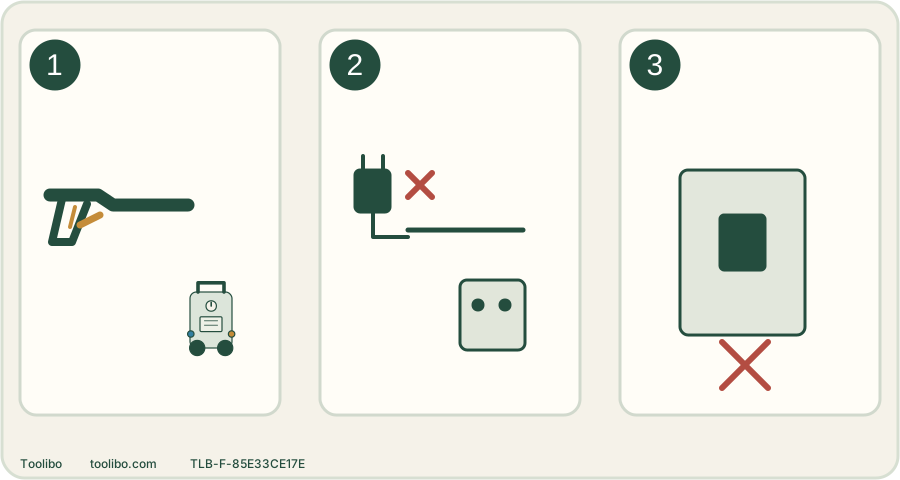
Trigger state
Normal auto-stop may keep the motor silent until the trigger is pressed.
External power route
Inspect only accessible intact connections with power disconnected.
Stop for protection trips
Do not increase ratings or bypass a protective device.
Describe the symptom before restarting. Cooling times belong to the matched model; repeated electrical trips require professional assessment. Conceptual schematic, not a product image or scale drawing.
Separate silence, humming and protection trips
With the machine prepared for normal use, observe whether it is silent, hums without pumping, starts then stops, or trips a protective device. Stop immediately for a damaged cable, scorched plug, burning smell, water around electrics or repeated tripping. Those are not reasons to keep trying sockets.
Normal auto-stop is easy to misread: the Bosch UniversalAquatak 135 stops its motor when the gun trigger is released. Confirm the trigger lock has been released and the gun is being used normally, with the water supply established. Never tie the trigger open or bridge a safety device to test this function.
Check the ordinary setup without opening anything
Read the rating plate and confirm the supply matches the machine’s market version. Check the main switch position and that an undamaged plug is properly inserted into a suitable dry, protected outlet. Inspect the accessible cable with power disconnected. Do not open the plug, perform live voltage measurements or remove the housing.
If an extension lead is fitted, its specification, condition and outdoor connections matter. A cable reel or underspecified lead can contribute to poor starting. Where the machine can safely reach an appropriate outlet without an extension, the matched Bosch troubleshooting guide allows trying without the extension. Do not stretch the machine’s cable across water or improvise an unsafe route merely to make this test possible.
Treat a protection trip as information
A circuit breaker or residual-current device operating once is not proof that it is “too sensitive.” Leave the machine switched off and unplugged while inspecting the external setup. Repeated trips, wet connections or visible damage require a qualified electrician or authorized repairer. Do not fit a larger fuse, change breaker type or move to an unprotected outlet to force operation.
Even where a manufacturer table mentions circuit capacity, changing an electrical installation is not an ordinary user troubleshooting step. The useful report is which device tripped, when it happened and what else was on the circuit, not an attempt to defeat it.
Cooling periods belong to specific models
The UniversalAquatak 135 troubleshooting table gives 15 minutes of cooling when its motor protector has activated. The Kärcher K4 Power Control Flex manual gives one hour after a motor-overload trip. These are not interchangeable timers, and neither proves overheating was the cause of every non-start.
Switch off and let the machine cool as its manual specifies; keep ventilation clear without opening the housing. If the same event returns after the permitted restart, stop and arrange service. If freezing is suspected, do not energize the machine to thaw it. Let the complete water path thaw safely and check for damage before a later normal start.
What to send to service
Provide the exact model and market, the sound or silence observed, whether the trigger was pressed, whether an extension was used, the protective device involved and whether the fault appeared hot, cold or after storage. A short description of these facts helps distinguish external supply issues from internal faults.
Humming without operation that remains after the safe external checks, repeated thermal stopping, or irregular response of the total-stop system ends this checklist. Do not open the motor, capacitor, switch or pump. This article gets you to a safe next decision rather than a speculative component replacement.
Before contacting support, photograph the intact rating plate with the machine disconnected. A family name alone may cover different market voltages and revisions; the full product number helps service interpret the symptom without asking you to open the machine.