
A slipping bit needs a cause, not more pressure
A recess close-up beside damaged engagement, a separate retention check and a straight axis with crossed tilted bit distinguish three slip causes.
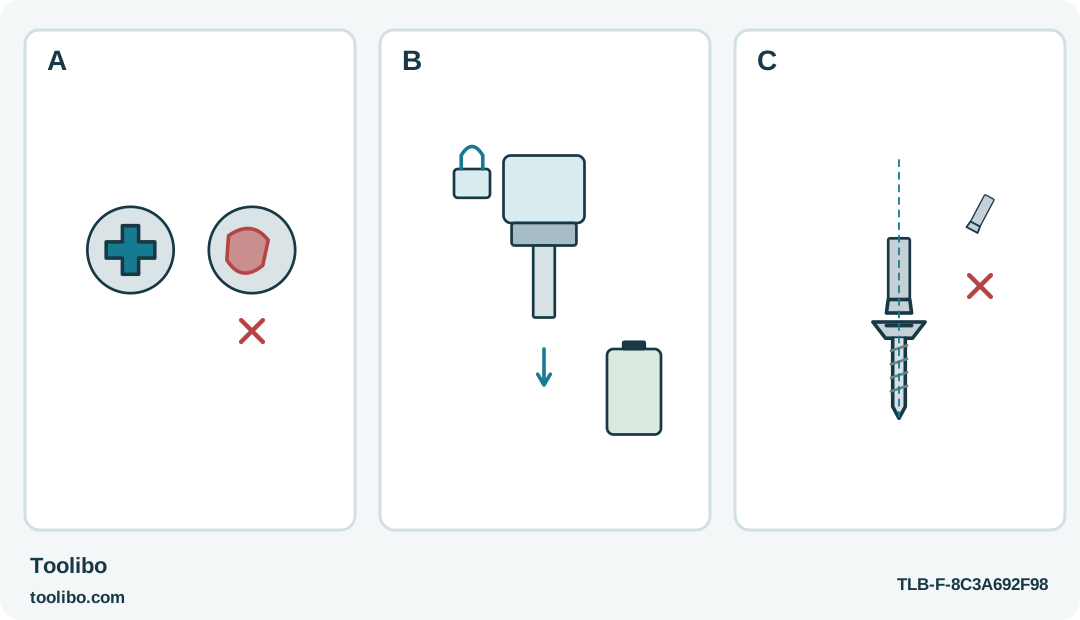
A
Stop and inspect the recess and matching tip for wear or wrong profile. A damaged head does not justify another powered attempt.
B
With the tool isolated as instructed, check accessory retention separately from tip fit.
C
Check the screw axis from two views; retry only after a clear cause is corrected and the joint remains sound.
Tip wear, holder retention and approach angle can produce similar slipping symptoms, but each needs a different external check before another attempt.
Stop before the recess becomes the repair
A sharp click followed by a bit climbing out of the screw head is a reason to release the control immediately. Continuing to run it can turn a small setup mistake into a damaged fastener that is much harder to remove. Do not try to catch the spinning tip with a finger or keep pushing while it skates across the fitting.
This check applies to visible, ordinary household fasteners using the Makita DF012D or SKIL SD561802 within their supported screwdriving scope. It is not an extraction procedure for a ruined screw, a seized fixing or a safety-critical joint. If the fastener secures something heavy or under tension, make the work safe before inspecting it.
Inspect the recess with power isolated
On the DF012D, switch off, set the lock lever to B and remove the battery before changing or examining the bit. On the SD561802, release the trigger, wait for rotation to stop and use center-lock before accessory work. Disconnect charging equipment and allow a hot bit to cool before handling it.
Look at the actual recess in good light. Distinguish damage from loose dust or an unsuitable bit profile. A tip should seat properly rather than resting on the upper corners. If you cannot identify the recess or the fastener is already rounded, do not keep trying different powered bits until one happens to catch. Obtain the correct fastener information or a suitable repair method.
Check the tip separately from the holder
A bit can be securely retained in the tool yet be wrong for the screw. Compare the tip’s shape and size with the recess while the motor is disabled. Inspect for worn edges, a twisted end or a rounded point. A familiar bit from a previous furniture kit is not automatically the correct one for this kit.
Then check retention. The Makita sleeve must return and the compatible bit must resist a gentle retention check. The SKIL’s magnetic holder uses its own accessory arrangement; do not import a sleeve procedure from another model. Reject a bit that cannot seat properly in either holder. Tape, packing material or a finger behind the bit is not an acceptable substitute for a correct fit.
Look at the approach from two directions
A driver may look straight from above while leaning sideways when viewed at eye level. With the tool stopped, place the correctly fitting bit at the screw and inspect both views. The bit axis should continue the screw axis without the tool body bearing against a cabinet edge.
Reposition a removable workpiece when its maker permits it, or choose a suitable hand screwdriver if the powered body cannot fit. On a pivoting tool, change the grip only while stopped and locked, then check the pivot is secure. A different handle position does not make an angled bit engage a screw correctly. Arrange your free hand outside the possible slip path, not on the edge toward which the tip would escape.
Decide whether one controlled retry is justified
Retry only after you have identified and corrected the cause, and only if the screw head, fitting and material remain sound. Secure the work, wear eye protection and keep the tip fully engaged before applying power. Use a cautious drive with enough straight pressure to maintain engagement, not a hard sideways push.
For a DF012D clutch trial, use low gear and a suitable low numbered setting rather than the drill symbol. Watch the joint and stop at its required seat. If the bit slips again, end the powered attempt. Repeated slipping despite correct fit and access may mean the fastener or job needs a different method; it is not an invitation to increase force indefinitely.
Check what happened around the screw
Inspect the fitting and finish as well as the recess. A scrape, lifted bracket or split surface can matter even when the screw still turns. Check the opposite face where accessible, particularly if the fastener length was uncertain. Do not conceal a damaged fastening by tightening nearby screws harder.
Keep a damaged bit separate from usable ones so it does not return to the next project. If the holder itself fails to retain a compatible bit or the tool behaves unpredictably, discontinue use and seek service. The aim of this short investigation is to preserve a sound fastening, not to prove that every slipping screw can eventually be driven with enough pressure.
Models referenced