
Small clean water spill
Three panels show excluded wet electrical connection, dry machine and cord separated from spill with only nozzle at water, then unplugged emptying into a receptacle.
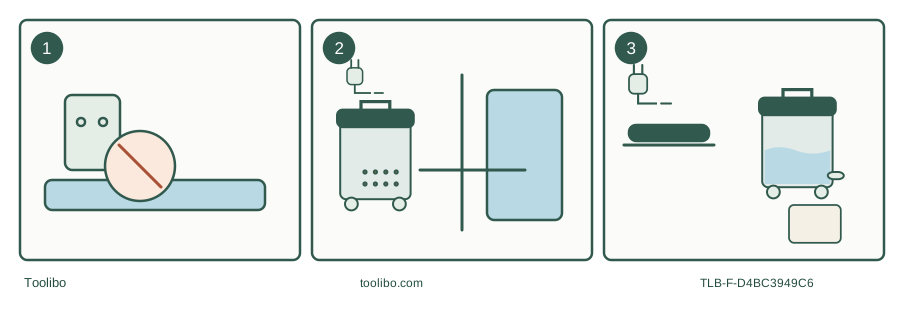
Screen
Exclude water near potentially energized equipment.
Separate
Keep machine and electrical route dry.
Finish
Stop, isolate, empty and dry permitted parts.
Model-specific decision path; isolate power before opening or changing the collection system.
Decide whether vacuuming is necessary and appropriate
A small amount of spilled clean tap water on a suitable hard surface may be simpler to collect with an appropriate non-electrical method. A wet/dry vacuum is an option only when the actual machine permits wet pickup and the surroundings are safe. This guide is not for flooding, a burst pipe near wiring, submerged equipment, sewage, chemical spills or water whose source is unknown.
First stop the clean-water source if it is safe to do so. Keep people from walking through the slip area. Look beyond the puddle: water may have travelled under an appliance or toward a cable, floor socket or extension connection. Do not assume that a clear liquid is electrically harmless or chemically clean merely because it has no visible colour.
Establish a boundary you can keep dry
Do not enter standing water where electricity may be present, and do not reach across it to unplug an appliance. Have a competent person make the supply and area safe when electrical exposure is possible. If the vacuum’s plug, cord connection, switch or motor head is wet, stop rather than wiping the outside and attempting a test.
For the documented RIDGID HD12000, the manual warns against liquid entering the motor compartment and against handling the plug, switch or vacuum with wet hands. It also requires extension connections to remain clear of liquid. Use the correct local power protection and supply arrangement for the actual unit; a protective device does not make a wet connection acceptable or authorize bypassing any warning.
Swipe or scroll horizontally to see all columns.
| Scene check | Continue only if | Otherwise |
|---|---|---|
| Water source | Known clean water, source safely stopped | Identify and control the source first |
| Electrical area | Safe dry access and dry connections | Stop and obtain competent assistance |
| Surface | Permits this collection method | Use surface-specific advice |
| Machine | Correct wet setup, sound cable and housing | Resolve setup or arrange service |
Prepare the collection system away from the puddle
With the vacuum off and unplugged, empty previous ordinary contents and fit the exact wet configuration. For Kärcher WD 4 manual 59510240, remove the collection bag but retain the flat pleated filter. The RIDGID HD12000 SP7160 (04/24) has its own liquid-quantity and wet-filter instructions. Do not combine one model’s filter rule with another model’s nozzle or reset procedure.
Fit the approved wet nozzle or insert and check the hose connection. Place the upright machine on a stable dry area within reach, not in the spill. Route the hose separately from the cord where practical, with enough slack to avoid pulling either connection toward water. Decide where the collected clean water will be emptied before switching on.
Collect in controlled passes
Work from a dry position and keep attention on the machine and the changing spill boundary. Use the nozzle as its manual describes; do not immerse the motor head or improvise a pump arrangement. A bucket vacuum is not a continuous drainage pump and must not be left unattended to manage an ongoing leak.
Stop promptly if suction disappears with a rising motor pitch, the tank approaches its stopping condition, foam or liquid exits, or any electrical part becomes exposed to water. The float may close airflow without cutting power. Switch off and disconnect safely before emptying. Never tilt the running machine or hold the float down to extend collection.
Finish the surface as well as the tank
After the visible puddle is collected, inspect the surface according to its care requirements. Liquid may remain at seams or beneath objects, so the absence of a puddle is not proof that a moisture-sensitive floor is undamaged. Do not introduce extra water merely to demonstrate suction. Address persistent moisture or suspected damage through appropriate surface or building advice.
Empty the tank into a suitable receptacle or permitted drain for its known contents. Keep the electrical head dry, rinse only the permitted collection parts and allow them to dry before storage or dry pickup. Remove the hose and cord from the walking route. The task ends when the spill area is safe and the vacuum is no longer holding water, not when the nozzle stops making a visible track.