
Wet to dry changeover
Three panels trace residual water from tank recess and hose low point to separate drying components, then a fully dry filter and dry bag installed.
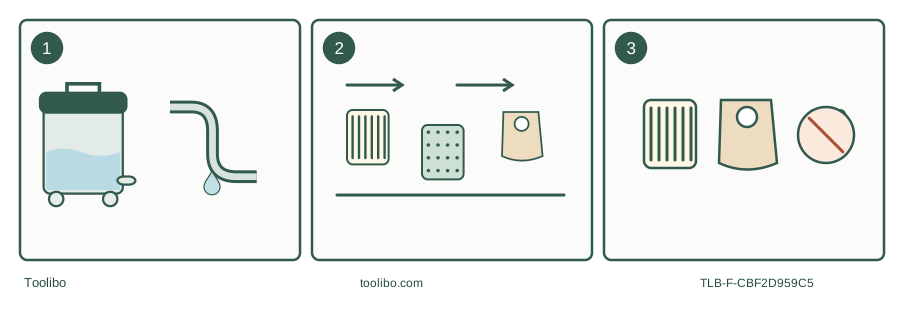
Drain
Empty the tank and low points in the hose.
Dry
Separate permitted wet components until completely dry.
Restore
Fit the correct dry filter and compatible bag.
Model-specific decision path; isolate power before opening or changing the collection system.
Treat the last wet job as unfinished until drying is complete
A quick switch from water to crumbs is tempting because the same hose and tank are available. The important question is what remains inside them. This guide covers a vacuum used only for known clean water and ordinary permitted debris. If the previous liquid was sewage, fuel, solvent, an unknown mixture or hazardous contamination, stop: ordinary rinsing does not establish that the machine is safe for household dry cleaning.
Use the actual model manual to identify which filter was fitted for water. The Kärcher WD 4 family in manual 59510240 retains its flat pleated filter for wet use. RIDGID HD12000 manual SP7160 (04/24) specifies a wet foam filter for larger liquid pickup. Those two cases have different changeovers. Do not assume the part currently over the filter cage is the right dry filter.
Isolate and separate the wet path
Switch off and unplug safely with dry hands before opening the collection system. Empty the known water into a suitable receptacle or permitted drain. Keep the motor head and electrical connections out of the rinse area. Remove the hose and nozzle as their instructions allow, and drain remaining water where it cannot create a slip hazard or wet nearby electrical equipment.
Inspect the bucket bottom, rim and inlet rather than only the centre. A small pool hidden at a moulded recess can wet new dry debris. Look through the accessible hose ends and check the nozzle channels. Do not start the motor to blow moisture through the room, use compressed air to scatter residue, or leave the vacuum running unattended as a dryer.
Restore the filter state deliberately
For the documented WD 4, the pleated filter must be dry and undamaged for dry vacuuming. Its care procedure permits running-water cleaning when necessary and requires complete drying before reuse. For the documented HD12000, restore an appropriate dry filter after a wet-only configuration; its manual also requires complete drying and inspection for holes or tears.
A filter that is dry on the outer tips may still contain moisture deeper in its folds. There is no universal number of hours that proves dryness for every filter, room or climate. Follow any drying directions for the actual replacement part. Do not apply a heat gun, oven or hair dryer unless the manufacturer expressly permits that method. If timely dry work matters, an approved dry spare is a better plan than rushing a wet filter.
Swipe or scroll horizontally to see all columns.
| Component | Ready for dry work | Hold the changeover |
|---|---|---|
| Tank and inlet | Clean, empty and dry | Droplets, sludge or unexplained residue |
| Hose and nozzle | Drained, clean and dry | Water still drips when repositioned |
| Dry filter | Correct part, fully dry, intact | Wet, torn, distorted or unidentified |
| Collection bag | Correct dry bag, if required or selected | Old wet bag, split collar or wrong size |
Reassemble without creating a bypass
Refit the dry filter using its specified retention method and inspect the sealing surfaces. A bag is an additional collection component where the manual permits it, not a replacement for the main filter. Fit a fresh compatible dry bag if needed; do not reuse a disposable bag that became wet or damaged. Ensure the bag is unfolded and not trapped between the tank and lid.
Close and latch the head fully, reconnect the suction hose and chosen dry nozzle, and check that a drain cap is correctly refitted where present. Keep any removed wet-only filter clean and labelled separately. That prevents the next user from choosing a foam sleeve merely because it fits over the cage.
Confirm with the intended ordinary job
With the electrical area dry, resume only the original permitted dry task. Attend the machine and stop for dust from the exhaust, abnormal sound, poor pickup or damp residue appearing at the nozzle. Disconnect before investigating. Do not use flour, cement, ash or another fine powder as a “filter test”; it creates a new contamination problem and tells you nothing reliable about whole-machine safety certification.
Finish by recording that the unit is now configured for dry work. If drying is incomplete, leave a clear note and keep the plug disconnected rather than presenting the machine as ready. A deliberate pause protects both the next collection bag and the clean surface you intended to vacuum.