
Prepare for water
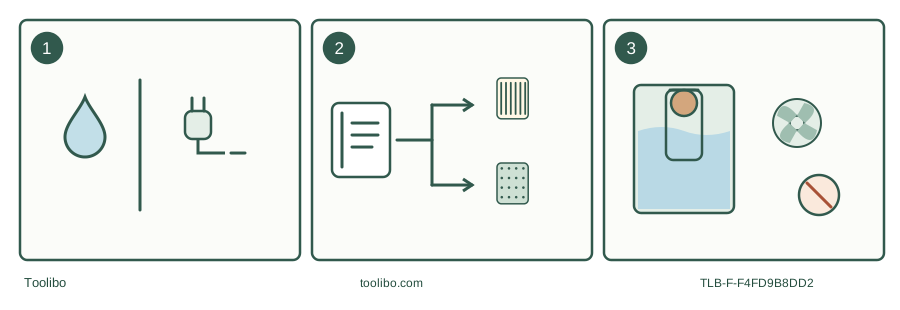
A branching filter diagram with WD 4 retaining the pleated filter and HD12000 larger-liquid branch selecting wet foam; both keep float protection.
Verify
Identify clean water and a dry electrical boundary.
Select
Use the exact model wet-filter branch.
Stop
Know the full-tank signal and emptying route.
Model-specific decision path; isolate power before opening or changing the collection system.
First decide whether this is an appropriate water job
This preparation is for a small, known clean-water spill on a suitable surface. It is not a flood-response procedure and not permission to collect sewage, fuel, solvents, unknown liquid, hazardous slurry or hot material. Stop a continuing leak only if that can be done safely. If water is near energized wiring, sockets, appliances or a distribution board, do not step into it or reach through it to unplug equipment; obtain competent help to make the area electrically safe.
Move preparation to a dry place. Read the wet-pickup section for the actual regional model and inspect the cable, plug, housing and collection components while disconnected. A machine that has been submerged, left exposed to rain or shows electrical damage needs manufacturer/service advice, not a trial run.
Empty the old contents before changing modes
Switch off, unplug with dry hands in a dry location and open the tank. Identify and remove the previous routine contents before adding water. Mixing water into a dusty bag makes both emptying and drying harder; it can also hide what was previously collected. If the old contents are unknown or hazardous, ordinary maintenance is no longer the right procedure.
Set the motor head somewhere dry and stable. Remove any dry-only collection bag required to be absent in wet mode. Check the tank rim, closures and drain cap if fitted. The float and its protective cage are not disposable packing: retain them, and never wedge or defeat the shutoff mechanism to gain a little more volume.
Follow the model branch, not a remembered slogan
Swipe or scroll horizontally to see all columns.
| Verified example | Wet configuration in that document | Do not generalize |
|---|---|---|
| Kärcher WD 4 family, 59510240 (12/21) | No filter bag; flat pleated filter stays installed | Do not run it filterless for water |
| RIDGID HD12000, SP7160 (04/24) | Small liquid amount has a specified exception; larger pickup uses VF7000 wet foam filter instead of dry-only paper filters | Do not copy an older “remove the filter” summary |
| Unidentified model | Find the exact manual and approved parts | Similar tank shape proves nothing |
The RIDGID small-amount statement is defined in that manual by less than 2 inches (5 cm) collected in its drum. It is not a universal safe depth for another vacuum or a flooded room. For a planned water job, establish the prescribed configuration before starting rather than relying on an estimate while liquid rises. Do not remove the filter cage or float.
Prepare the nozzle and the emptying route
Use the wet-pickup nozzle or insert specified for the model and the surface. Verify that its connection is secure and the hose is clear, without putting fingers into a powered opening. The machine must remain stable and upright. Lay out the hose so it reaches the water without pulling the vacuum or electrical connection toward it.
Choose a suitable container or permitted drain for the known contents before collecting. The printed tank volume is not a target fill level: space is needed for the collection system, and the float can close before the nominal volume is reached. Keep the emptying trip short and free of steps where possible. A full tank is heavy; arrange to empty it before it becomes difficult to handle.
Know the stop signal before switching on
The documented WD 4 float closes the suction opening when the container is full, with a change to higher motor speed. The RIDGID manual likewise describes loss of airflow and a higher-pitched motor. Neither description means the operator can leave the machine running until the electrical supply cuts itself off.
During pickup, attend the vacuum. Stop immediately when suction ceases with a pitch change, if foam or liquid escapes, or if electrical conditions deteriorate. Switch off and disconnect safely before opening or emptying. Do not repeatedly restart a full tank or tilt it to move the float aside.
Plan the return to dry work now
After collection, empty and clean the tank and permitted accessories. Dry the required components thoroughly before dry debris is collected again; the relevant dry filter must be fitted in its proper seat. Keep a note of which wet setup is currently installed if someone else may use the vacuum. The preparation is complete only when both the collection route and the next safe stopping point are clear.