
Three separate checks, not one HEPA badge
A filter component leads to a sealed whole-machine outline and then to a task-permission checklist; each arrow has a question rather than an equals sign.
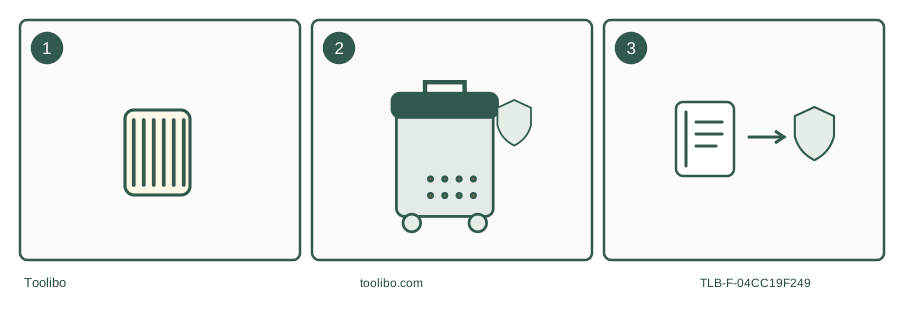
Filter
What exactly is rated?
Machine
Does the complete system contain it?
Task
Is this material and use permitted?
A component rating, system claim and task permission must each be checked.
Start with three different questions
A filter listing answers what that component is designed to capture. A vacuum specification may describe how air moves through the assembled machine. A task assessment asks whether the complete setup is suitable for the material and way of working. These questions overlap, but none automatically answers the next.
Imagine two products described as “HEPA”: one is a replacement cartridge sold for several household machines, while the other is a complete extractor with identified bags, seals and operating limits. Do not decide they provide the same protection from the word on the box. Instead, ask what the claim covers and which document supports it. This is especially important when a marketplace combines accessories and machines under the same product title.
Read the claim at its actual level
Use a three-column note when comparing products. Write the exact claim, the object it describes, and the evidence still missing. A statement about the filter material belongs in the component column. A statement about a complete assembled machine belongs in the system column. A statement approving a named dust and procedure belongs in the task column.
Swipe or scroll horizontally to see all columns.
| Listing says | What you can reasonably record | What it does not establish |
|---|---|---|
| Replacement HEPA filter fits model X | Claimed filter compatibility | A change in the machine’s hazard rating |
| Sealed HEPA vacuum | A whole-machine claim to verify | Suitability for every toxic or combustible substance |
| H-class extractor | A defined machine-class claim to check | Permission for any task with any accessories |
| Antistatic hose | A property of the specified hose/system | Explosion protection or higher filtration class |
Leave unknown fields blank rather than filling them with assumptions from a neighbouring model. A missing answer is useful: it shows which question to ask before purchase.
Understand two regional examples
In the United States, EPA’s RRP purchasing guidance distinguishes a machine designed to route its exhaust through a final HEPA stage from a shop vacuum merely retrofitted with a HEPA cartridge. In New Zealand, WorkSafe explicitly distinguishes HEPA filtration from H-class equipment. These examples explain why a component label is insufficient; they are not an international conversion table.
Do not label a machine “EPA certified” simply because its page mentions HEPA, and do not replace a regional requirement with the closest-looking foreign label. For a regulated task, obtain advice based on the location and actual material before choosing the equipment.
Build a useful question for the supplier
A vague question such as “Is this safe?” tends to produce a vague answer. Provide the exact machine code, country, material and proposed task. Ask which complete configuration the documentation permits, including filter, bag, hose and disposal method. Ask for the applicable manual or declaration, not a screenshot of an advertisement.
For example, the useful question is not whether an accessory “captures tiny dust”. It is whether the named machine, with that accessory installed, remains approved for the intended operation. Keep the supplier’s answer with the model documentation. If the answer refers to a different suffix or regional version, resolve the mismatch before spending money.
Upgrade for a known purpose, not a new permission
An approved replacement filter can be worthwhile for an already permitted cleaning task. Compare availability, seal condition, cleaning instructions and replacement cost. That is a maintenance or performance decision. Treat a proposal to collect a different hazardous material as a new equipment-selection decision, not as the same upgrade with a more expensive cartridge.
If a machine has already collected an unknown hazardous substance, do not open it for a curiosity check or use it around the home while deciding. Identify the exposure and seek appropriate handling advice. The goal is not to own the largest collection of filters; it is to have a documented, maintainable configuration for the job you actually intend to do.