
Understand the float
Cutaway sequence showing low water with open air passage, risen water with float sealing the passage while motor remains marked active, then disconnected emptying.
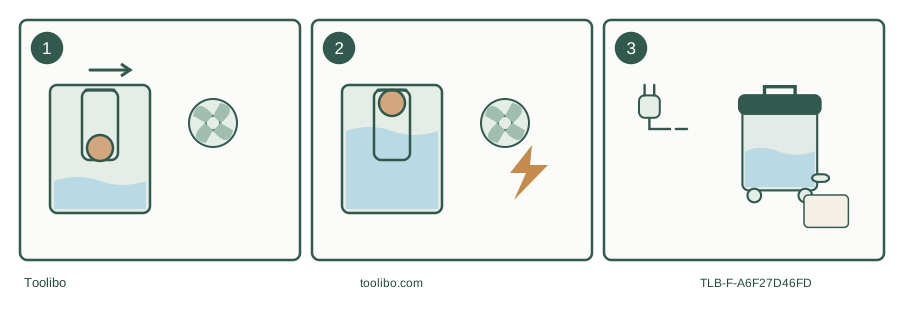
Flow
Low liquid level leaves the protection passage open.
Close
Risen float blocks airflow; power may remain on.
Empty
Switch off, isolate and reduce the liquid load.
Model-specific decision path; isolate power before opening or changing the collection system.
Separate the three things that can stop
During wet pickup, the liquid stream, suction airflow and electrical motor are related but not identical. A float is part of the liquid-protection system. As collected water rises, it can close an internal opening and stop useful suction. The motor may still be energized and audible. Waiting for complete silence is therefore the wrong way to decide whether a tank needs emptying.
Kärcher WD 4 manual 59510240 describes the float closing the suction opening when the container is full, with the machine running faster. RIDGID HD12000 manual SP7160 (04/24) describes the same broad symptom: airflow cuts off and motor pitch and speed rise. These are documented examples, not a claim that every wet/dry vacuum uses the same valve, indicator or restart sequence.
Learn the signal without deliberately overfilling
Before collecting known clean water, read the manual’s full-tank section and plan where to empty. You do not need to run a deliberate fill-to-failure test. Nominal drum volume is not the usable collection capacity in all conditions. The filter, internal components, nozzle arrangement and type of contents can affect when useful pickup stops.
Stay near the operating machine. If the nozzle stops taking up water and the sound changes abruptly, turn it off promptly. Do not lift the nozzle and keep the motor running “to clear itself.” Do not squeeze, tape or weight the float down to regain suction, and never remove its cage to create more room.
Swipe or scroll horizontally to see all columns.
| What you notice | Immediate response | Next check after safe isolation |
|---|---|---|
| Water pickup stops; pitch rises | Switch off promptly | Tank contents and upright position |
| Vacuum has tipped over | Stop, make the electrical area safe | Damage, spilled liquid and model restart rule |
| Foam or liquid leaves exhaust | Stop using the machine | Correct setup and service need |
| Repeated early cutoff with little water | Do not bypass the float | Blockage, setup or defective protection |
Empty before trying again
Switch off and disconnect from power with dry hands from a dry position. If the plug or surrounding area is wet or unsafe, do not approach through water; have the supply made safe by a competent person. Open or drain the tank only after isolation. Use the proper drain if fitted, or remove the motor head as the instructions describe and empty into an appropriate receptacle.
Keep the head out of water. Reduce the load before lifting a heavy tank. Refit the drain cap, head and latches, and confirm the required wet-filter state before a restart. The goal is to remove the cause of the closure, not merely reset the sound for another few seconds.
A tipped vacuum is a different branch
The documented WD 4 instructions say that tipping can also close the float. Their recovery note is to stand the machine upright, switch it off, wait five seconds and switch it on again. That note is not permission to restart a damaged or electrically wet machine. First stop and inspect safely; water on electrical parts, a cracked tank or an uncertain spill route calls for service advice.
Do not apply the WD 4 five-second instruction to another model as if it were a universal reset timer. A different vacuum may specify a different sequence or require checks not described here. A simple label beside the machine showing its exact manual reference is more useful than memorizing one number.
Distinguish protection from a fault diagnosis
A float event can be normal full-tank behaviour, but a repeatedly closing float in a nearly empty upright tank is not proof that the system is healthy. Inspect only owner-accessible areas with the machine isolated. Check for an incorrect filter, debris around accessible protection parts or an obstructed hose, using the permitted maintenance instructions.
If the float, cage or retention is damaged, missing or cannot move as intended, stop using wet mode and arrange approved repair. Do not dismantle internal electrical parts. After a legitimate empty-and-reassemble cycle, observe the next small clean-water pickup; recurrence or escaping liquid ends the owner-level check. The protection system is a reason to stop safely, not a capacity booster or an automatic unattended shutoff guarantee.