
First setup
Three serial gates: matched nameplate, empty opened tank, and correctly filtered closed machine before power.
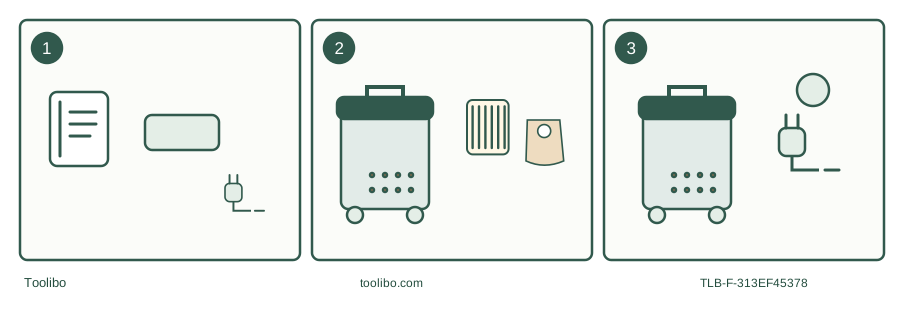
Identify
Match the plate and regional manual.
Assemble
Empty packaging, fit the correct collection system.
Start
Connect power only after the dry preflight.
Model-specific decision path; isolate power before opening or changing the collection system.
Start with the identity rather than the colour
A round tank and a large motor head do not identify the correct setup. Read the rating plate and find the manual for that model, market and revision. The example here is Kärcher manual 59510240 (12/21), covering its named WD 4, WD 4 S, KWD 4 and KWD 4 S family. Its electrical data describe 220–240 V machines. A similarly named North American vacuum needs its own instructions; a plug adapter does not change the electrical rating.
Keep the operating booklet together with the separate safety booklet. Before assembly, choose a modest first task involving known ordinary household debris, not an unidentified workshop pile. Do not use this startup routine to authorize silica, asbestos, lead dust, hot ash, flammable liquids or combustible dust. An impressive filter label cannot clear those exclusions.
Open the tank before looking for missing parts
With the switch off and plug disconnected, release the closures and lift off the head using the designated grip. Put it on a stable dry surface where its underside will not be damaged. Look inside the container: hoses, small accessories and packaging may have been shipped there. Count the contents against the actual package list, not a photograph of another bundle.
The WD 4 instructions call for removing the contents and fitting the steering rollers before initial startup. Treat a missing wheel, cracked latch or damaged cable as a problem to resolve now. Do not run the unit balanced on three wheels or improvise a latch from tape. Check that the tank is empty and no transport material blocks the inlet or filter area.
Choose the collection state while disconnected
For this WD 4 family, the flat pleated filter must remain fitted in operation, including wet collection. Dry work requires it to be dry and undamaged. If using a matching dry filter bag, unfold it fully and press its collar firmly onto the internal connection before replacing the head. A bag does not substitute for the pleated filter.
The first job determines the state. A clean-water job uses the manual’s wet setup and no dry bag; a dry-debris job uses dry components. If you cannot identify the installed filter or the previous contents of a used machine, postpone the test. Guessing that an empty-looking tank must be ready is an avoidable mistake.
Swipe or scroll horizontally to see all columns.
| Check | Ready to continue | Stop and resolve |
|---|---|---|
| Identity | Plate matches the selected manual | Model, voltage or revision uncertain |
| Collection | Correct filter, sound seals, suitable bag if used | Missing, damp-for-dry or damaged filter |
| Structure | Head seated, closures engaged, wheels secure | Cracked tank, latch or unstable base |
| Job | Known permitted routine debris | Unknown powder, chemicals or hazardous history |
Build a reachable route
Connect the hose to the suction inlet, then the handle, tubes and selected nozzle according to the manual. A second large opening on some vacuums may be an exhaust or blower port, not another suction inlet. Inspect every joint with the machine still off. It should fit by the intended connector action, without adapters made from tape or force.
Place the vacuum on a stable dry surface and arrange the hose so that reaching the first area does not tug it toward steps, water or a vehicle door. Route the cord away from wheels and pinch points. Identify the off switch before starting. Keep children and bystanders away from the work path, and follow the exact safety booklet’s personal-protection and power-supply requirements.
Make the first run a check, not a challenge
Connect only after the assembly and dry electrical conditions are satisfactory. Switch on while attending the machine and try the intended routine debris with the proper nozzle. Do not deliberately block the hose, fill the tank to test the float or run without a filter to compare power.
Stop immediately for escaping dust or liquid, an abnormal sound, burning smell, damaged connection or electrical protection trip. Switch off and disconnect safely before inspection. A successful brief run establishes only that the current assembly appears to work; it is not a leakage certification or a test of hazardous-dust containment. End the job by emptying the collection system and recording which filter and bag are fitted for the next use.