
Four separate spaces in a sander case
Dividers separate a supported tool with unloaded pad space, a removed battery, flat abrasive and clean collection accessories.
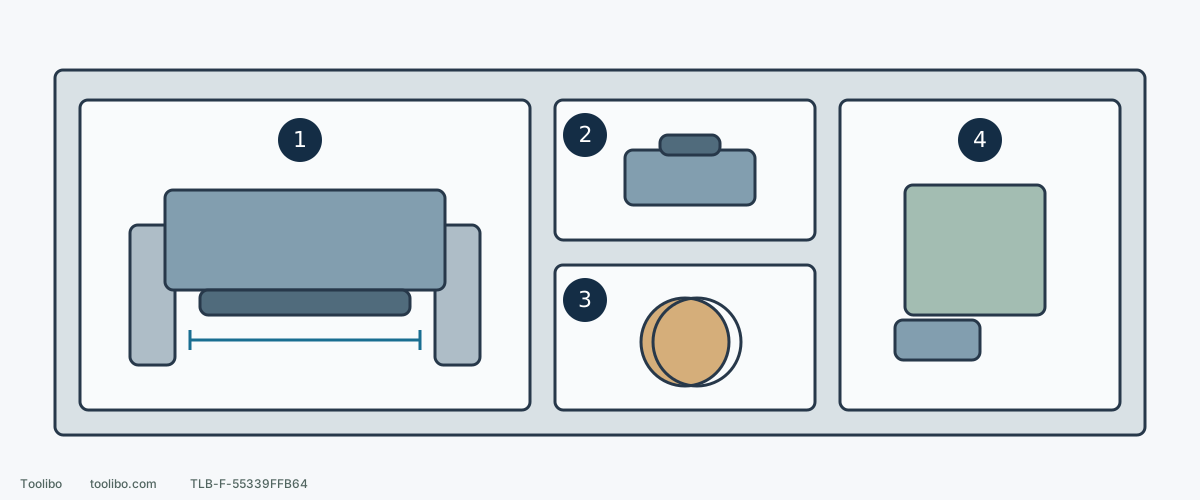
1. Support the body, unload the pad
Keep heavy tools and lid pressure off the abrasive attachment face; rearrange if the lid resists closing.
2. Removed, retained battery
Follow the pack instructions for terminal protection; exclude loose screws and other conductive objects.
3. Flat, identified abrasive
Separate new and used sleeves; an example used label is P120, hook-and-loop, bare oak, used/recheck.
4. Clean collection accessories
Retain collectors and adapters independently so the tool outlet does not carry their impact or other luggage weight.
Conceptual arrangement, not a fitted insert specification. Use the original case layout where provided; the blue mark indicates unloaded space, not a measured clearance.
Decide whether normal packing is appropriate
This routine concerns intact Milwaukee 2648-20 and RYOBI PCL406 tools after ordinary work. If a tool or battery smokes, leaks or continues heating abnormally, do not approach to remove the pack, empty the bag or put it in a case. Move away and obtain local emergency assistance as appropriate. Abnormal vibration, uncontrollable switching or mechanical damage also requires keeping the tool out of use, not hiding the problem until next time.
End work using the exact model’s sequence. PCL406 switches off and stops completely on the work before lifting; do not borrow a lift-first sequence. Once all movement stops, remove the battery before handling abrasive or collection equipment. Closing a lid does not replace isolation.
Empty collection, then sort abrasive
Handle dust according to its material and the collection instructions. Coating residues can present a self-ignition hazard; do not pack a full or partly full collector. If disposal is uncertain, pause packing instead of mixing it with other sawdust. Inspect cleaned fabric, box and connections; damaged equipment is not ready merely because it is assembled.
For the 2648 PSA arrangement, remove the adhesive disc after use as directed, before adhesive hardens onto the pad. Do not turn that into an identical rule for every hook-and-loop product. Keep serviceable used abrasive flat and identify product, grit, backing, previous material and condition. Torn, contaminated or failed backing does not return to clean stock.
For example: “P120 / hook-and-loop / bare oak / used, recheck.” That is more useful than “120” and avoids mistaking a used disc for new stock. Reinspect before its next installation.
Lay out a divided case
Use the original case’s intended locations first. For a general divided case, arrange these relationships rather than forcing everything into the smallest space.
- Tool body. Retain the body with appropriate dividers, leaving the pad free from batteries, wrenches and lid pressure. Do not make a soft pad or abrasive edge support heavy objects. Resistance when closing means rearrange, not force the latches.
- Battery. Remove and retain it separately, protect terminals as its instructions require and keep conductive screws or keys away. Do not leave a loose battery on the tool or use metal pieces as terminal separators.
- Abrasive. Store new and used stock separately in flat protective sleeves or original packaging. Preserve identifying labels and avoid folded edges. A fitted disc is not an impact cushion for the pad.
- Collection accessories. Retain clean collectors and adapters independently, without making the tool outlet bear impact or other items’ weight. Identify each loose adapter’s model compatibility.
Gently lift and set down the packed case, listen for loose items sliding, then reopen and confirm pad clearance and compartments remain intact. This is not a shaking or drop test. If a heavy item shifts onto the pad, revise the retention.
Separate local carrying from storage and regulated transport
Carry the case by its intended handle; hold a bare tool normally, never by a collector or hose. Set it down away from dampness and tipping hazards. Moving between work areas does not establish permission for postal, commercial or airline transport, which needs exact battery identity, condition and current carrier requirements.
The checked PCL406 manual says not to store outdoors or in vehicles and gives 50–100°F for use, storage and charging. That is not a universal battery-brand rule. Do not turn arrival in a vehicle into leaving it stored there. Check the applicable battery instructions as well; no universal charge percentage is prescribed here.
Recheck when reopening
Look for impact marks, compressed pads, damaged bags and loose metal. Verify the abrasive and adapter identities before restoring the setup through the model’s preflight process. Clearly label equipment awaiting service and separate it from ready tools. Storage should preserve an intact, clean, identifiable starting point, not eliminate the next isolated inspection.
Models referenced