
Keep the five-point list beside you
This covers DEWALT DCW210/DWE6423 and SKIL SR211601/SR250801 in normal stable condition. A smoking, leaking or abnormally heating battery is not approached for removal or inspection: move away and seek appropriate help. For ordinary equipment, switch off, wait for all motion to stop and unplug or remove the battery before checking abrasive, connectors or clamp clearance.
- Material and intended finish are identified.
- Tool, pad, controls and power components have no unresolved abnormality.
- Abrasive size, backing, holes and task match, and attachment is secure.
- Complete collection setup is suitable, intact and free of known blockage.
- Work is fixed and the full supported outward/return route clears hands, cords and hoses.
Gate one: identify material and outcome
Identify the target face: bare solid wood, a known panel or an existing finish. Unknown old paint, suspect treated timber or uncertain dust hazards are not resolved by a light trial. Pause for appropriate assessment.
“Wood” is not enough. Confirm tool/abrasive/material suitability, dust handling and dimensions or edges to preserve. Known bare oak for a specified coating can proceed to abrasive selection; uncertain veneer thickness cannot inherit the same removal allowance. Clarify the process before selecting coarse paper.
Gate two: no known tool fault
Inspect housing, grip, pad and visible controls. Damaged or loose cords/plugs on DWE6423 or the SKIL tools are not powered to test them. Abnormal DCW210 battery housing, connections or retention is not fixed with tape. Previous uncontrolled switching, unusual vibration, burning odor or overheating must be resolved first.
Pass means intact exterior, no obvious pad damage/looseness, reliable supply connections and no outstanding fault. It does not certify every internal part. Do not open housings or insert probes, wire or screwdrivers to investigate.
Gate three: suitable abrasive, not merely adhesive contact
DCW210 and DWE6423 need their matching 5-inch eight-hole hook-and-loop discs. A 125 mm package label alone does not verify backing or holes. Match SR250801’s pointed pad; do not trim a circular disc into a substitute. Check SR211601’s actual disc and hole arrangement too.
Reject tears, lifted edges, hard particles or unknown contamination, then align holes and press flat. Check the whole perimeter and extraction holes. Worn hooks that fail to hold correct new paper need attention, not glue. Pass requires model fit, secure attachment, open holes and a grit appropriate to material and coating stage. Unidentified used paper fails.
Gate four: a complete dust path
Follow abrasive holes through visible pad holes, outlet and the original collector or confirmed compatible external equipment. Lock DEWALT’s bag collar as instructed; align SKIL canister slot/rib and push into place. Blocked or torn collectors and loose connections must be corrected, not excused by assuming a vacuum will compensate.
Inspect safely visible exterior locations only; no probes, wire or screwdrivers inside housings. Use each filter’s own care rules: SR250801’s microfilter must not be washed with soap and water. An unconfirmed SR211601 external arrangement is not validated by another SKIL model’s connection.
Pass means a material-suitable complete setup, seated connections, serviceable collection and a hose that does not pull the tool. Mechanical fit does not establish hazardous-dust suitability. Isolate the external extractor separately before its filter or bag inspection.
Gate five: stable work and full travel, then scrap
Secure the work and rehearse the complete route while isolated. Check clamps against housing, pad support at edges, and snagging cords/hoses. A pointed pad entering a corner while the hand or rear canister is blocked fails. Change clamping or finish by hand instead of tilting and forcing access.
Only after all gates pass and the applicable start/stop sequence is known, confirm OFF, restore power and make a short matching-scrap trial. SR250801 starts clear, reaches full speed before contact and lifts before switch-off. Follow each DEWALT’s applicable instructions without borrowing another model’s sequence. For SR211601, unresolved applicable shutdown instructions mean isolated inspection only, no powered trial.
Stop by the model’s safe sequence, wait for stopped motion and isolate before checking scratches, paper movement and collection. New deep marks, tearing, abnormal heat or vibration require diagnosis before the real piece. A material, abrasive, collection or clamping change reopens its affected gate.
Five checks before a powered sample
Five numbered objects—wood, tool, perforated disc, collector and clamped work—each have an empty checklist box.
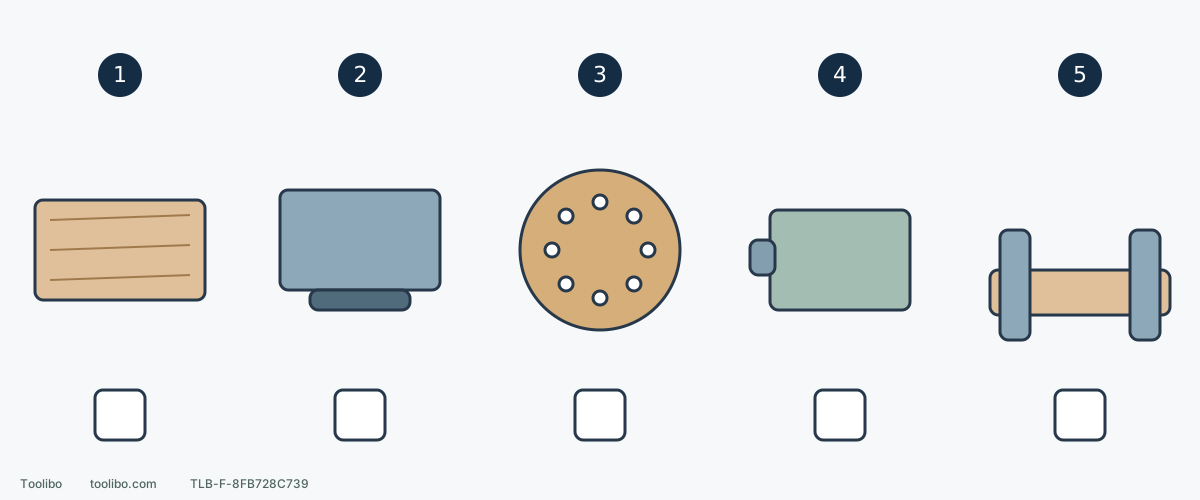
1. Known material and target
Unknown coatings or dust hazards stop the plan before any trial.
2. Sound external tool condition
Reject damaged supply connections, loose pads or unresolved control, heat or vibration faults.
3. Correct secure abrasive
Verify shape, backing, hole alignment, condition and task-specific grit, not diameter alone.
4. Complete suitable collection
Inspect seated connections and collector condition without inserting probes into the tool.
5. Supported clear travel
Rehearse both directions while isolated. All gates and the applicable start/stop procedure must be clear before any powered sample.
Boxes are reminders, not automatic approval. The round eight-hole disc illustrates the named DEWALT setup, not every SKIL pad shape.
Models referenced