
Choose the material plan before the adapter
This covers external collection for DEWALT DCW210/DWE6423 and SKIL SR250801/SR211601. Identify wood or finish, dust, suitable collection and protection first. Unknown paint or suspect treated material requires assessment, not a trial made acceptable merely by attaching a vacuum.
An ordinary collector and fitting connector do not certify hazardous-dust control. Check the extractor’s filter, bag and material restrictions as well; no efficiency percentage or universal cross-brand compatibility is promised. For stable equipment, switch off, wait for stopped motion and unplug/remove battery before adjustment. Isolate the extractor separately by its instructions.
Find your model’s route
DWE6423: original collar-lock bag, or verified DEWALT connection. Product information names DWV010/DWV012 direct connections and DWV9000 for other 1-1/4-inch hose systems, subject to the actual parts. Nominal diameter does not mean every bare hose end locks securely.
DCW210: original bag or its corresponding external arrangement, checking DWV010/DWV012 or required DWV9000. Remove the battery before connection work; O alone is insufficient. Similar outlets do not authorize arbitrary accessory mixing.
SR250801: original microfilter canister or a confirmed 1-1/4-inch external route. The SKIL catalog gives that nominal size, not every hose-end retention detail. For the original canister align slot and rib, then push into place. Tight friction is not evidence of an unspecified locking collar.
SR211601: the original slot/rib push-on canister route is established. Do not transfer SR250801’s hose size or buy adapters on that assumption. Until the shutdown sequence applicable to your unit is confirmed, do isolated preparation only, no powered sanding trial.
Example: complete DWE6423 original-bag setup
Use known bare-solid-wood scrap established suitable for this tool and collection arrangement.
- OFF, complete stop, unplug. Inspect tool and bag for damage or unresolved faults. Deal with existing dust by its known material requirements; unknown residue is not dumped into ordinary sawdust.
- Check the disc. Fit the matching 5-inch eight-hole hook-and-loop disc, align holes and press secure. Inspect every hole and lifted edge. A good bag cannot compensate for paper blocking extraction holes.
- Check mating surfaces. Inspect visible bag connection, collar and tool outlet for obstructing dust or damage. Do not insert wire, probes or screwdrivers into the housing.
- Fit and lock. Connect the bag and turn its collar clockwise to lock as instructed; unlock counterclockwise before removal. Turn the collar, not the fabric into a twisted rope. Force alone does not prove engagement.
- Rehearse full travel. With work clamped and power isolated, check both directions for bag/clamp/wall interference and controlled pad support. Correct a displaced connection instead of expecting vibration to straighten it.
Pass requires secure aligned paper, an intact cleaned bag, locked connection and unobstructed travel. A failed condition keeps the setup isolated for correction or correct replacement.
Add three checks for an external extractor
Verify the tool, connector and hose form a confirmed route, then use the connector instructions. DWV9000 has its own unlock, insert and lock procedure; the original bag action is not every hose’s procedure.
Provide hose movement without loading the tool port with the entire hose weight. A clear outward stroke but snagged return fails. Check the extractor’s filter, bag and material suitability while that equipment is separately isolated. Inspect visible external passages only; unresolved internal blockage needs applicable service.
Trial before the real piece
Only with known material suitability, stable equipment, no danger or unresolved fault, passed setup and known start/stop requirements, confirm OFF and restore power. Start collection and a controlled scrap trial according to the relevant equipment instructions. Use each DEWALT’s applicable sequence; SR250801 starts clear, reaches speed before contact and lifts before off. SR211601 retains the no-powered-trial restriction until its sequence is confirmed.
Dust clouds, outlet leaks, loose collectors, hose pulling or declining collection require safe shutdown, stopped motion and isolation of relevant power before inspection. A running motor does not justify continuing. Correct an ordinary cause with no remaining fault before another trial. Paper changes, emptying or hose repositioning reopen hole, connection and travel checks.
Two original-collector connections are not the same mechanism
One connection highlights the DEWALT bag collar; the other aligns a tool rib with a SKIL canister slot before insertion.
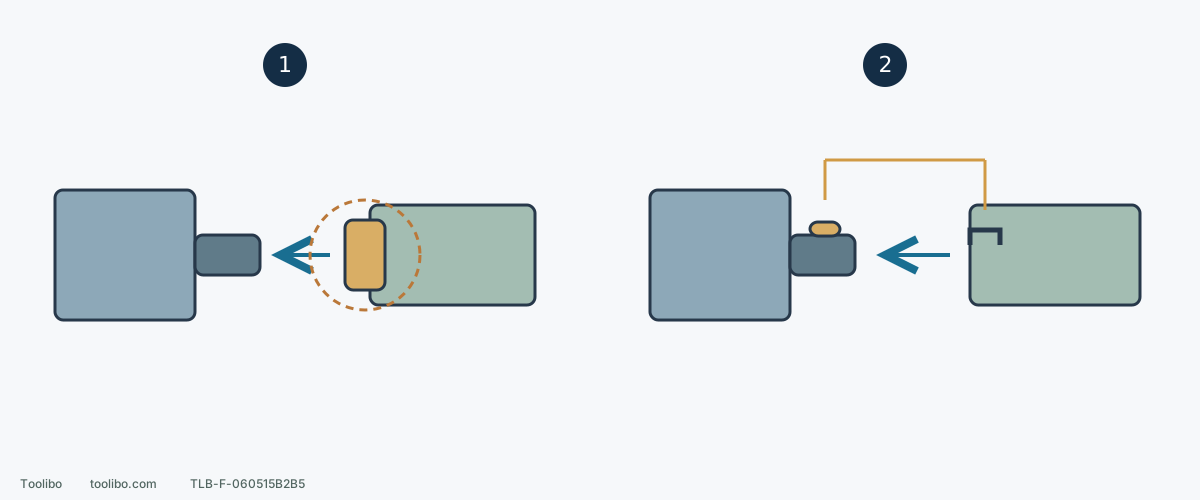
1. DEWALT bag collar
For the named original bags, connect and turn the collar clockwise to lock; unlock counterclockwise before removal. Keep fabric untwisted.
2. SKIL slot and rib
Align the original canister slot with the tool rib and push into place. Do not assume a DEWALT-style collar or transfer SR250801 hose fit to SR211601.
Schematic original-bag/canister relationships, not a cross-brand adapter drawing. Straight arrows show insertion only, not an interchangeable twist procedure.
Models referenced