
Match the cleaning method to the component
Separate icons show an exterior cloth, a lightly brushed pad, a filter with crossed-out water and a vent with a crossed-out inserted probe.
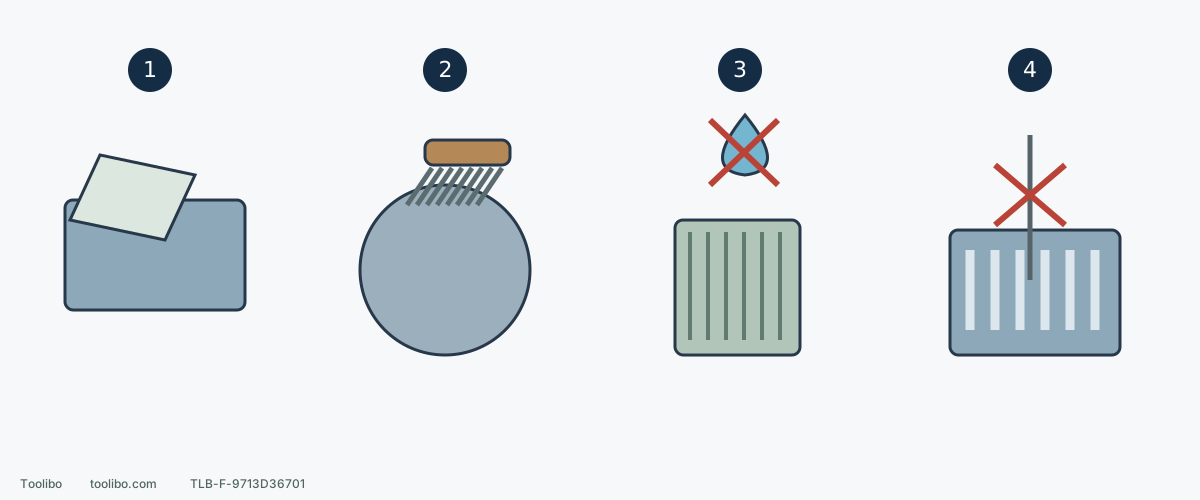
1. Exterior cloth
2648: mild soap and damp cloth without liquid ingress. PCL406: clean cloths, no damaging solvents.
2. Hook-face brush
Remove abrasive first and brush lightly with a small brush; do not run the pad against the brush or add glue to worn hooks.
3. 2648 filter restriction
Empty and tap clean; no water or compressed air. PCL406 bag care is its separate shake-and-refit procedure.
4. No inserted vent tools
Wipe safely accessible exterior surfaces only; unresolved internal obstruction requires applicable service guidance, not wire or screwdriver probing.
All care is with battery removed from stable equipment. Symbols distinguish methods, not permission to clean unknown hazardous dust.
First: prepare before reaching for cleaner
This routine covers the external care of normal, stable Milwaukee 2648-20 and RYOBI PCL406 tools. If a battery smokes, leaks or keeps heating abnormally, do not approach to remove or wipe it; move away and obtain appropriate emergency assistance. After ordinary work, shut down by the model’s procedure, wait for all motion to stop and remove the battery. PCL406 normally stops on the work before lifting; battery removal is still a separate step.
If material or residual dust is unknown, obtain the appropriate assessment before handling used paper or preparing to clean the work surface.
Prepare clean cloths, a small soft brush and a container suitable for handling the known dust safely. Mild soap and a damp cloth belong to the 2648 exterior procedure, not direct spraying. Use a dry, visible work surface and separate dusty used abrasive from new stock. Battery and charger care requires their own instructions.
Separate four areas: housing/grip, hook face, removable collection equipment and external vents. Do not move an oily or adhesive-contaminated brush between them or transfer housing fluid to a filter.
Second: treat each component separately
2648 exterior: mild soap and a damp cloth. Wipe without dripping; never immerse the tool or let liquid enter switches, vents or housing. Gasoline, thinners and ammonia cleaners are not stronger substitutes. Finish with a clean, dry, non-slippery grip.
PCL406 plastic housing: clean cloths. Its instructions warn that solvents and certain chemicals damage plastic. The neighboring 2648’s procedure does not authorize mixing a solvent wash for this tool. A stubborn stain is not a reason to increase chemical strength.
Both hook-and-loop pads: remove paper and brush lightly. With battery out, use a small brush on accessible hook-face dust and inspect for flattened, torn or missing areas. No metal scraping, added glue or running the pad against a brush. This is attachment-face care, not removal of the pad to reach internal brake parts. PSA pads and adhesive residues have separate requirements.
2648 dust-box filter: empty and tap, no water or compressed air. Release the lid by its tabs, empty the box and tap the filter clean. Assess replacement as instructed and snap the lid securely back on. Housing damp-cloth permission does not apply to this filter.
PCL406 bag: remove as instructed, shake out dust and refit. Inspect fabric and connection. A blocked, torn or unretained bag does not become suitable through more shaking. Its resemblance to another collector does not establish washing or high-pressure-air permission.
Vents: inspect openings without inserting tools. Keep the 2648 vents free of dust and debris, but do not insert probes, push nozzles deep inside or improvise compressed-air blasting to achieve that. For both tools, limit wiping to safely accessible exterior surfaces around the openings. Internal obstruction or residue not removable externally requires applicable service guidance; never push wire or a screwdriver into the housing.
Third: inspect, then store without powered blowout
Check for cracked housing, damp grips, damaged hooks, torn collectors and insecure lids or connections. Do not reconnect while liquid remains. Suspected ingress is not cleared merely because the outside has dried; keep the tool out of use for assessment.
Distinguish dirt from wear. If a cleaned hook face still will not retain the correct abrasive, extra pressure, glue or stronger solvent is not the answer. Faulty controls, housing damage or unresolved internal blockage keep the tool out of service.
Refit required collection components and store with battery removed. Do not run the tool to blow out the last dust. If work will resume immediately, repeat material, abrasive, collection and clamping checks, confirm OFF before restoring power and follow that model’s start/stop sequence. Completion means a sound, safe external condition, not exposing every internal part.
Models referenced