
Blocked and worn nozzle openings are different
Detached nozzle diagram shows debris at an unchanged opening, gentle use of the specified cleaning pin and a separate enlarged worn opening.
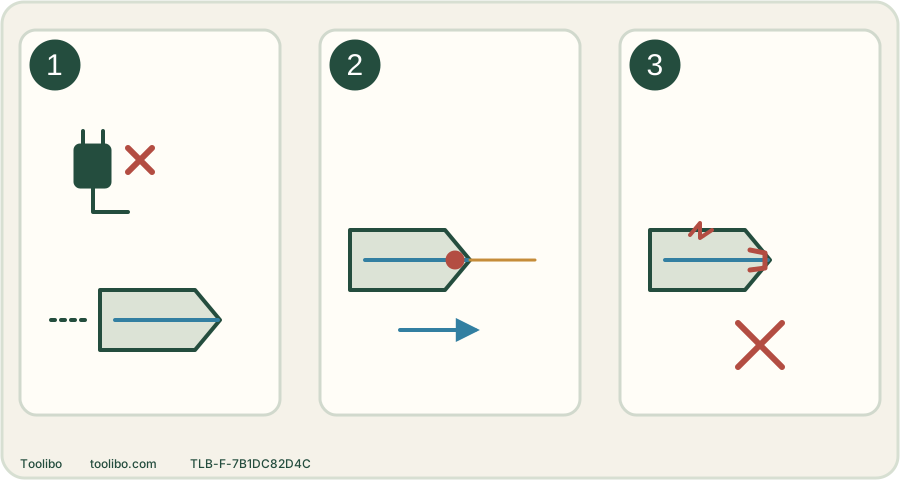
Detach safely
Switch off, unplug and release pressure before handling the head.
Dislodge debris
Use only the matched cleaning tool and rinse as instructed.
Do not ream wear
Cracks or an enlarged opening call for replacement, not drilling.
The cleaning pin removes contamination; it must not enlarge the calibrated hole. A worn opening needs the correct replacement. Conceptual schematic, not a product image or scale drawing.
Decide whether the nozzle is the right suspect
Note what changed: an uneven fan, a sudden reduction after reconnecting a gritty hose, or pressure that repeatedly rises and falls. A blockage is one possibility, not a diagnosis from sound alone. First confirm that the supply tap is open and the inlet hose is not folded. If every accessory has the same weak output, the supply and inlet filters also need attention.
Inspect the spray only against an appropriate inanimate surface from the normal operating position. Never hold a hand in front of the nozzle or look into it while it is connected. A fine high-pressure jet can injure even when it looks small.
Remove the accessory with no stored pressure
Follow the machine’s shutdown and depressurization procedure, switch off and unplug, then disconnect the water supply. Check that pressure is released before releasing a latch or turning a coupling. Keep the trigger locked while handling removed accessories. For a hot metal fitting, wait until it can be handled safely.
The Bosch UniversalAquatak 135 manual shows its removable nozzle head releasing from the lance in figure L. Use the correct latch rather than twisting parts that are not meant to unscrew. Put the disconnected head on a clean surface and find the cleaning tool supplied or specified for that nozzle.
Clear debris, not metal or plastic
- Inspect the opening under good light. If the housing is cracked or the opening has visibly changed shape, replacement is preferable to probing.
- Insert the specified cleaning pin gently as the matched diagram shows. Its purpose is to dislodge contamination, not to ream the opening larger.
- Withdraw the pin and rinse the head with clean water using the manufacturer’s direction. The Kärcher K4 Power Control Flex instructions, for example, specify rinsing the high-pressure nozzle from the front after removing debris with a needle.
- Inspect again. Do not escalate to a drill bit, abrasive wire, solvent bath or disassembly of a rotating nozzle mechanism when the blockage resists the permitted cleaning method.
- Reconnect only when the original locking mechanism and seal are clean and sound. Confirm the head is secured without holding its outlet toward yourself.
Run one controlled comparison
Restore the water supply and clear trapped air according to the machine’s startup process. Then make a brief normal spray test. Use the same nozzle setting and comparable target as before. A restored even fan supports the blockage explanation; it is not a pressure measurement.
If a compatible, known-good nozzle is available, it can distinguish an accessory problem from a problem shared by the machine. Isolate and depressurize before swapping. Do not use a random nozzle just because the coupling fits: an unsuitable orifice or accessory rating changes the test and can create a hazard.
Stop cleaning when the evidence changes
A nozzle that is worn rather than blocked may produce steady low pressure. Repeated cleaning will not restore its original opening. A rotary head that remains irregular after permitted cleaning, a damaged seal or a cracked body needs the correct replacement or service assessment. If cleaning restores the fan only briefly, inspect the inlet filters and source of grit instead of repeatedly pushing debris out of the end.
Keep the removed part separate until the comparison is complete, and record the nozzle marking rather than only its colour. A useful service report says whether the spray was distorted before cleaning and whether one correctly matched replacement restored it. It should not claim a measured pressure merely from the appearance of the fan.