
Separate the cushion, weave, frame and joints
An exploded chair shows a removable cushion above a woven seat and frame, with soft-tool paths and open airflow around separated components.
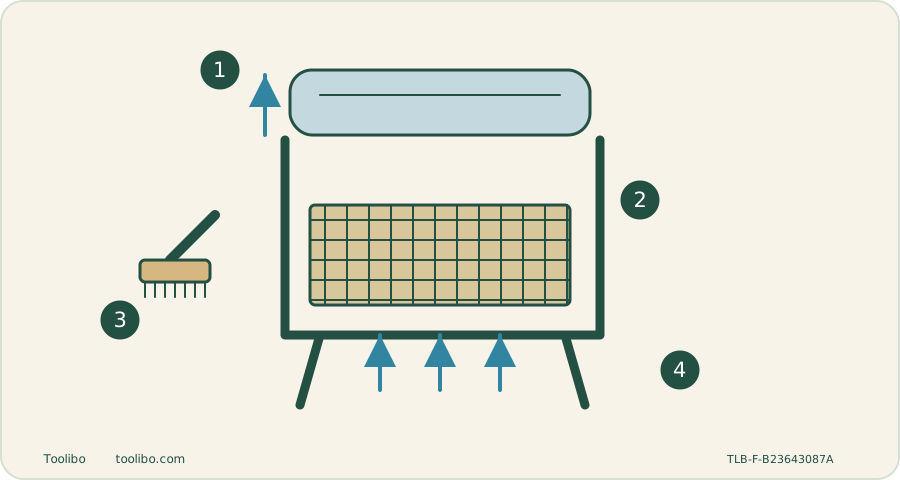
Identify
Read each material’s care instruction.
Separate
Remove only owner-removable components.
Clean
Use approved soft tools and controlled rinsing.
Dry
Check hidden moisture before reassembly or storage.
Different components can require different cleaning and drying methods.
Identify the materials and instructions
Find the furniture model or care label. Record the frame, seat, arms, cushion covers and any woven panels separately. “Rattan look” may describe synthetic weave rather than natural cane; a timber appearance may hide a coated material. Ask the supplier if identification is uncertain.
KETTLER’s teak instructions, for example, prohibit a pressure washer and specify gentle cleaning along the grain with soft tools and mild soap. That is a concrete no-pressure case, not a reason to assume all outdoor furniture shares the same care rule.
Read cushion labels before unzipping or removing covers. A zip may be part of manufacture rather than permission to machine-wash the cover. Do not separate glued, stapled or structural parts merely to make cleaning easier.
Prepare a stable item and separate tools
Move the item to a stable area where rinse water can be managed. Inspect loose joints, split weave, cracked plastic, sharp corrosion and peeling coating. A spray jet can turn a small failure into a larger one; repair or obtain advice before washing a structurally uncertain chair.
Remove only components intended to be removable. Keep cushions away from dirty frame runoff. Use a soft brush or cloth that will not carry grit from a floor-cleaning job onto the finish. Keep cleaner and lubricant away from fabrics unless their labels specifically permit that use.
A hidden test is useful only after the material and method are approved. Check it once dry: water can temporarily conceal whitening, lifted fibres or damaged coating.
Follow a component-based gentle workflow
- Lift off loose debris with a soft brush or cloth. Work around woven crossings rather than forcing a stiff tool between strands.
- On a permitted washable frame, use the specified mild cleaner with a soft cloth or sponge. Work from cleaner areas toward dirtier joints so grit is not spread across finished surfaces.
- For the named teak example, clean gently with the grain; do not use pressure to strip away the weathered colour. Patina is not automatically dirt.
- Remove cleaner residue using the allowed controlled rinse or damp-cloth method. Do not flood hollow sections or direct water into bearing, folding or fastening assemblies.
- Dry and ventilate the parts separately as their instructions require. Refit cushions only when the relevant frame and fabric surfaces are suitably dry.
Do not close folding furniture while water is trapped in its joints. Do not improvise drilled drain holes: that changes the product and may expose unprotected metal.
Judge the result before further treatment
Swipe or scroll horizontally to see all columns.
| Observation | Next action |
|---|---|
| Surface soil is removed and finish remains intact | Finish drying and return the item to use when stable and dry. |
| Grey teak remains after dirt is removed | Check whether this is normal weathering; do not pressure-strip it. |
| Coating flakes, weave splits or joints move | Stop use where structural integrity is uncertain and seek repair advice. |
| Cushion stays damp internally or smells after surface drying | Follow its drying/service route; do not trap it under a cover. |
Cleaning and protective treatment are separate decisions. The KETTLER teak example cautions about oils and coverings; do not apply a generic furniture-oil or cover recommendation to it. Other products may have different requirements.
Make storage part of the job
Record which covers are removable, which cleaners are permitted and which components need extra drying time. Store loose cushions according to their labels rather than relying on a dry-looking outer surface.
For example, a woven chair can look clean while dirty water remains at its frame junctions. Wipe accessible residue and let the approved drainage and ventilation work. More pressure is not a reliable way to solve retained moisture, and a furniture cover should not be used to hide unfinished drying.