
Brush, rinse and dry before retraction
Awning fabric with soft brush, protected motor and crossed wet-storage symbol.
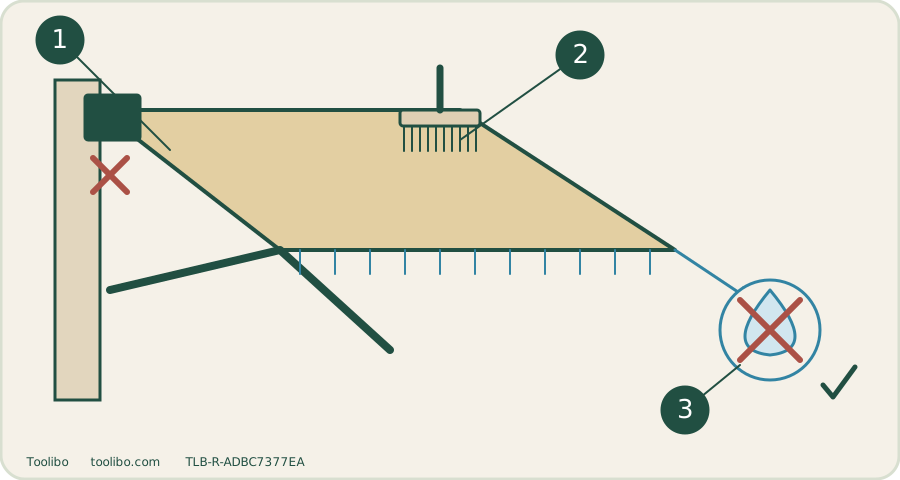
Identify
Separate fabric, frame and powered components.
Clean
Use the permitted gentle method on accessible sections.
Dry
Inspect folds and seams before retracting.
The wet-storage warning does not prohibit the manufacturer-permitted gentle rinse; it requires drying before normal storage.
Identify more than the fabric colour
Find the awning model and fabric-care instructions. Distinguish the fabric from the frame finish, seams, roller and any motor or controls. A cleaner intended for metal furniture is not automatically suitable for a coated canopy, and a removable shade sail is not the same mechanism as a retractable awning.
The Dometic 8700 manual explicitly prohibits high-pressure cleaning. WOUNDWO likewise excludes pressure cleaners and abrasive or solvent cleaning. These are meaningful product examples, not permission to apply one brand’s detailed detergent treatment to another.
Choose a workable cleaning window
Work only when the awning can be placed in its prescribed stable position and the weather permits safe use and drying. If wind or rain makes it unsafe to remain extended, postpone cleaning. Do not climb onto the canopy, lean a ladder against it or stand on furniture to reach the centre.
For a powered model, prevent unintended movement using its specific user procedure before touching accessible cleaning areas. Do not assume removing a remote-control battery isolates the motor. Electrical work, spring arms, roller tension and disassembly are outside this task. If you cannot prevent movement as prescribed, arrange service instead.
Remove dry debris before making it wet
With the fabric safely accessible, lift away loose leaves and dust with a soft brush as the exact care instructions allow. Support your own stance on the ground, not against the fabric. Avoid dragging a branch or gritty brush across a coating. Inspect seams and edges while they are visible.
Stop at tears, detached stitching, distorted arms or unusual movement. Cleaning cannot restore a failing seam or straighten a tensioned arm, and scrubbing harder can hide the original fault under new damage.
Keep the gentle workflow specific
For an identified WOUNDWO awning whose instructions permit the method, use its approved mild cleaning solution for remaining dirt, then rinse thoroughly and leave the fabric extended to dry. Check the actual fabric instructions before selecting concentration or product. This guide deliberately does not supply a universal detergent mixture.
Use small accessible sections so you can see where liquid is going and remove residue without letting it collect in folds. Keep water away from motor housings, controls and electrical connections. Clean the frame with a soft cloth and a finish-compatible method separately; do not carry gritty fabric-cleaning tools onto the finish.
If a stain remains, ask the maker about that fabric and stain rather than using a solvent, abrasive pad or pressure jet. Do not mix household cleaners. Specialist treatment is preferable to permanently removing a protective coating.
Check drying, then retract as instructed
Inspect the fabric face, accessible lower edge and seams for remaining moisture and residue. A surface that looks dry in sunlight may still hold moisture in a fold. Do not use heat guns or high-pressure air to hurry it.
For the Dometic 8700 example, if weather forced the awning to be rolled while wet, reopen it as soon as conditions safely permit and let it dry before rolling again. This is a recovery step, not a recommendation to store wet fabric. Use the exact operating sequence for retraction, keeping hands clear of moving arms and rollers.
Record any persistent marks or damage for the dealer. A successful cleaning ends with intact fabric, residue removed, safe normal operation and dry storage—not simply a lighter-coloured patch.