
Inspect the cold tool and its resting route
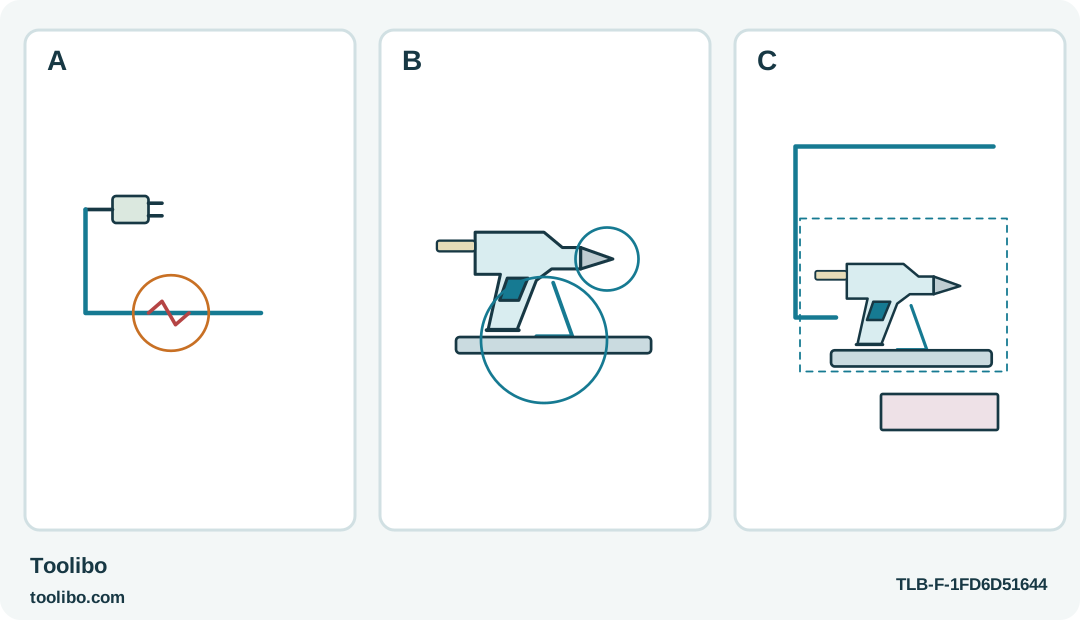
A disconnected lead with a marked damage area, circled exterior and support zones, and a cable routed outside the work area show pre-use inspection.
A
While cool and unplugged, follow the whole lead and strain relief externally. Damage means qualified service, not tape or a live test.
B
Check housing, exterior nozzle area and stable support without opening or tightening parts.
C
Route the lead behind the activity and keep a clear nonflammable resting space. Heat only after all checks and supply identity pass.
Cable condition and a stable resting area must be settled while the gun is still cold and disconnected.
Inspect before connecting the plug
A glue gun that worked last month can still have a damaged cable, a loose support or hardened debris that makes it sit badly today. Check those things while it is cool and unplugged. Starting with a hot tool turns a simple inspection into an awkward attempt to avoid the nozzle while moving the cable and stand.
This guide covers the German-market Einhell TC-GG 30, article number 4522170, with the matching operating and safety instructions. It is a corded tool for compatible household gluing materials. The normal operating temperature is approximately 195°C; do not treat a separate maximum melting-temperature specification as a selectable working setting.
Place the tool on a clear table and keep its plug visibly disconnected. Do not open the housing, remove a nozzle or operate the mechanism forcefully as part of this check. The purpose is to identify whether the tool is fit to begin a session, not to repair it with whatever happens to be on the bench.
Follow the lead from plug to housing
Examine the accessible plug and the full length of the lead under good light. Look for crushed sections, cuts, exposed conductors, heat damage and a strain relief that no longer appears sound. Inspect the cable where it enters the tool, because bending and storage can concentrate wear there.
Do not flex a suspicious damaged area to see whether it still works. Tape is not an acceptable repair for a damaged mains lead, and plugging it in briefly is not a safe diagnostic test. A damaged power cable must be replaced by the manufacturer, its service organization or similarly qualified personnel.
Check that the tool’s actual rating matches the intended supply before connection. Do not modify the plug or use an improvised wiring arrangement to make it fit. Route the lead so it will stay away from the hot nozzle, sharp edges and the area where you will place and join the parts. Leave enough comfortable movement without a loop dangling where it can be caught.
Check the body, nozzle area and support
Look over the housing for cracks, looseness or damage that could affect control. Check the outside of the nozzle area for obvious displacement or damage, but do not try to tighten or remove parts during this inspection. Unexpected leakage around the tool body is a reason to stop and seek service rather than hide it beneath a new application of glue.
Set the gun on its support stand on a level, nonflammable surface. It should rest securely without relying on a wall, a pile of offcuts or tension from the cable. Move loose paper and combustible clutter away from the nozzle’s resting area. A small craft project still needs a deliberate hot-tool parking place.
Check that the trigger and grip are externally clean enough to control. If hardened residue prevents stable resting or normal handling and cannot be addressed safely by the permitted external care procedure, stop. Do not cut into the housing, insert a metal probe into the feed path or disassemble the trigger mechanism.
Prepare the consumable and the work
Use an identified, manufacturer-recommended glue stick for the exact TC-GG 30 and the intended materials. Do not choose an unlabelled stick by visual similarity, and do not force a questionable fit. Keep the packaging available so that the formulation and compatibility can be checked instead of treating diameter as the only requirement.
Arrange clean, dry matching scraps for a trial. The finished task should be a modest indoor attachment, not an electrical repair, safety-critical joint or load-bearing construction. Check that the pieces can meet promptly without your fingers lying under permeable paper or fabric where hot adhesive could emerge.
If all checks pass, load the stick normally and connect the tool to the matching supply. Allow approximately five minutes for heating while the gun remains supported. Feed gently onto a suitable test surface. Persistent resistance, abnormal smell, smoke, sparking or unexpected leakage ends the test; disconnect the supply safely rather than continuing to see whether the fault clears.
Finish with a repeatable decision
For normal operation, bring the intended surfaces together promptly after applying the glue and keep them aligned while it sets. Return the gun to the stand whenever work is interrupted. An apparently successful bead does not cancel a cable or support defect discovered earlier; a damaged tool stays out of use.
When the session is over, unplug the tool and leave it safely supported until fully cool. Inspect it again before storing it, especially if the stand was knocked or the cable caught on something during the work. Store without crushing the lead or putting strain on its entry point.
Make the decision explicit: sound tool and stable setup means proceed with a material sample; damaged lead, cracked body, insecure stand or abnormal operation means stop and arrange proper service. Owner inspection is valuable precisely because it does not require opening the gun or attempting a temporary repair.
Models referenced