
Check the complete protective combination
Eyewear coverage, spectacle-arm interference with an earmuff seal and loose material near the chuck.
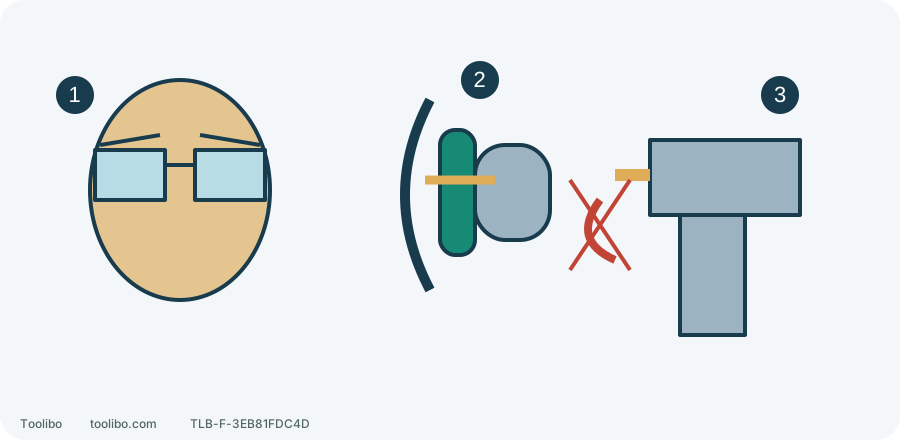
1. Eye coverage
No sliding or large gaps when looking down.
2. Ear seal
A thick spectacle arm can break the seal; choose compatible equipment.
3. Snagging material
Keep loose clothing, hair and cloth away from rotation.
Fit-check schematic, not a certification or attenuation test. Adjust only with the tool isolated.
Identify this job’s hazards first
Wood chips, sharp metal swarf, impact-drilling noise and material dust are different hazards. Sturdy-looking glasses cannot replace all controls. Establish known material, secure work and suitable accessories before choosing protection. Unknown coatings or hazardous dust need identification, extraction and a work plan, not simply a face covering.
This is a fit and compatibility check, not a universal attenuation prescription or workplace assessment. The US Milwaukee 3403/3404 instructions specify appropriate eyewear marked for ANSI Z87.1. Canadian CSA Z94.3 references describe another jurisdiction’s requirements; these names are not interchangeable permission for every site.
Inspect lenses and frame, not just advertising
Check product identity, manufacturer use instructions, applicable standard and actual markings. CSA-certified products carry the corresponding certification identification. Confirm lenses, frame and removable sides belong to the approved assembly. An impact claim without traceable product details needs clarification, not a guess based on thickness.
Ordinary prescription glasses are not safety glasses. Use suitable prescription safety eyewear or an approved over-glasses protector that fits. A face shield supplements suitable safety glasses or goggles rather than replacing them.
Reject cracked or badly scratched lenses, loose parts and distorted frames. Obscured vision encourages leaning closer. Use matched replacements; do not drill, trim or substitute unknown lenses.
Look down and turn your head before powering up
Protection should cover eyes and surrounding tissue with a supported bridge and close, comfortable sides. Look toward the intended hole and turn your head. Check for sliding, large gaps and obstructed vision while the tool remains isolated.
If glasses slide down when looking downward, do not plan to hold them with one hand while drilling. Adjust only permitted fittings or choose a better size. Repeat with the face shield and other equipment, since separate fit does not establish combined fit.
Check the actual hearing-protection seal
Where required, choose identified hearing protection with manufacturer attenuation data appropriate to assessed exposure. Music or ordinary noise-cancelling headphones are not automatic substitutes. Do not subtract a label’s NRR or SNR from guessed noise and declare safety.
Fit earplugs with clean hands using their own illustrated instructions. Designs differ; rolling foam is not a universal step for every plug. Use the maker’s fit checks and, where available, individual fit testing rather than perceived quiet alone.
Earmuff cushions should surround the ears and seal against the head without hair, hat edges or thick spectacle arms making gaps. Inspect cushions for damage, hardening or distortion. If glasses break the seal, select a compatible combination instead of spreading the cups. Include alarm and communication needs in selection rather than repeatedly lifting a cup during noise.
Check sleeves, hair and interference last
Remove jewellery near rotating parts, restrain long hair and loose sleeves, and secure drawstrings. Keep gloves, clothing and cleaning cloths away from rotating chuck and bit. Isolate before handling sharp stock and choose protection for that handling task; its glove choice does not automatically transfer to powered rotation.
With all required equipment on and the drill isolated, rehearse stance and grips. Verify clear vision, secure two-hand control, easy trigger release, intact ear seals and sleeves clear of the accessory. Anything needing a hand to hold or adjust it during operation must be corrected first. PPE does not cancel workholding, extraction or clearance requirements.