
Separate the stored tool, pack and charger
A cabinet separates battery, unplugged charger and metal accessories, with sun and temperature checks.
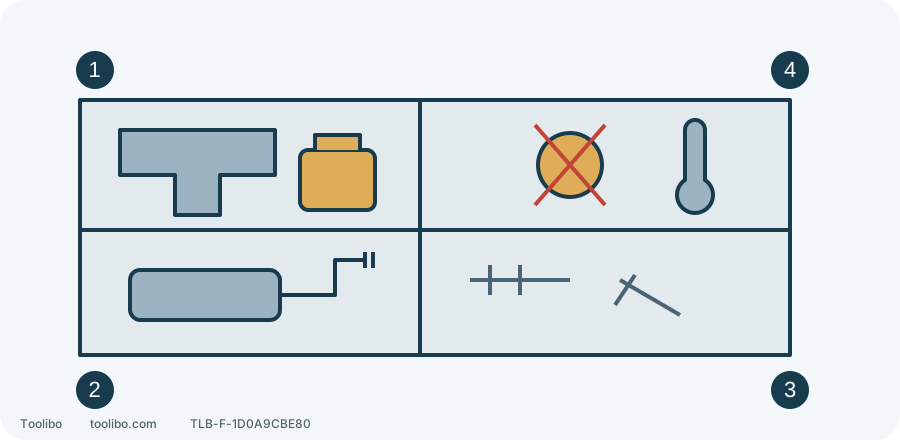
1. Detached pack
Stable, dry storage inaccessible to children.
2. Unplugged charger
Do not pinch the cord in a case lid.
3. Separate metal
Prevent screws or bits bridging battery terminals.
4. Actual conditions
Check peak temperature, moisture and direct sunlight.
Layout principle only, not a fire-rated cabinet design. Apply the exact product temperature and charge requirements.
Exclude unsafe equipment from ordinary storage
A smoking, leaking or persistently abnormally hot battery must not be hurried into a case. Do not approach to move or trial-charge it; move away from danger and follow emergency arrangements. These routine steps apply only to stable equipment safe to handle.
For sound equipment, release, wait and remove the battery. Let hot accessories cool before normal removal. Clear accessible exterior debris and keep the tool and storage dry. Cracks, impact damage, distorted latches or other abnormalities require stopping and inspection, not mixing the item with sound equipment for accidental reuse.
Select a location by actual temperature
The US DeWalt DCD800/DCD805 NA229093 manual forbids storing tool and battery where temperature may reach or exceed 40°C (104°F), and calls for cool, dry storage away from direct sun and excessive heat or cold. The upper limit is not a target temperature.
The FLEX FX0311/FX0321/FX0331/FX0341 battery and FX0411 charger manuals list storage below 50°C (122°F). That separate system does not relax DeWalt’s 40°C limit or imply every low temperature is acceptable.
Assess the hottest and dampest conditions, not just today’s touch. Vehicles in summer, sunlit metal cabinets, heaters and leak-prone basement corners do not pass merely because there is a case. If cabinet peaks are unknown, measure them or choose a steadier location; battery charge status is not an environmental measurement.
Follow the matched charge instruction
The cited DeWalt storage advice is a fully charged pack kept outside the charger in a cool, dry place. This does not establish a universal half-charge or full-charge rule. Follow any newer, specific matched-pack instructions. Do not repeatedly free-run a drill to reach an internet percentage.
FLEX FX0411 forbids long-term pack storage in the charger and requires unplugging for storage. Do not import another brand’s storage charge level or recharge interval into a FLEX routine. For a long-term plan, confirm the requirements for the exact pack with its manufacturer. Recording the date and gauge state can support later checks but is not a manufacturer recharge program.
If charging before storage, first confirm a sound compatible combination and charging temperature. Storage limits are not charging permission: the cited DeWalt charging procedure requires ambient temperature above 4.5°C and below 40°C. Pause if unsuitable; do not use artificial heating, ice water or terminal bridging.
Separate items and prevent terminal bridging
Store the detached pack securely against falling, crushing and contact with screws, keys or bits. Compartments prevent contact and collisions; tighter sealing is not automatically safer. Do not improvise heat-trapping or crushing containers that conceal abnormalities.
Put bits and chuck keys in their own holders with sharp points away from reaching hands. Unplug the charger and arrange its cord without pinching it in the lid. Keep corrosive cleaners and leaking liquids away. Inaccessible to children means they cannot obtain the equipment, not merely a centre-locked trigger.
Inspect again after storage
Look first for water, abnormal temperature exposure or fallen objects, then inspect housings, contact surroundings and cables. Leakage, swelling or obvious damage means no trial installation; arrange manufacturer-guided inspection or lawful recycling. Exterior checks do not include opening the pack.
For a sound pack, use its indication and matched charger instructions to decide on charging. A gauge estimates charge, not internal health. Refit accessories and check restraint and controls before installing the battery for work. Follow any specified inspection interval; without one, do not present a personal reminder date as a technical requirement. The key is checking before each return to service, not assuming the state at storage persists.