
Fixed contact and selectable references
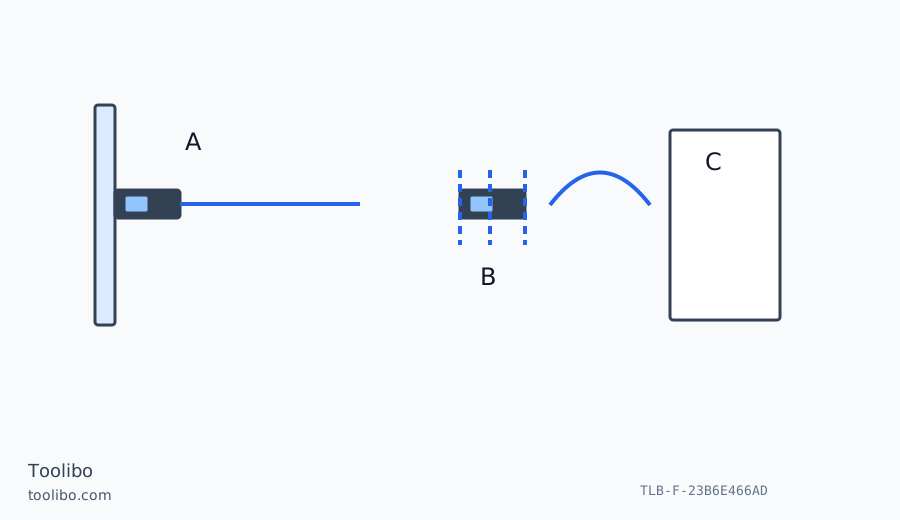
One meter is anchored to a wall while a second has three marked reference positions and a separate receiving record.
A
A fixed rear reference suits a matching wall contact.
B
Selectable references must match the chosen start.
C
Check the receiving record separately from placement.
Selectable references and connectivity solve different tasks; neither replaces a stable physical start.
Separate the regional identities from the shared brand
This comparison covers the GB GLM 40, order 0601072900, and GLM 50-27 C, order 0601072T00. It does not combine every regional kit or substitute the similarly named CG model. The question is how the documented reference and recording systems fit a household task, not which instrument wins an unperformed accuracy or durability test. A product photograph alone cannot establish the functions of the unit being offered.
Start by naming the work. Recording room widths for furniture planning, measuring from an exposed edge, and transferring a series of dimensions into compatible software place different demands on the operator. The more elaborate instrument is not automatically the easier choice for someone who needs a few clearly labelled wall-to-wall distances. Conversely, a simple instrument can become awkward if its fixed starting edge does not suit the available contact points.
Decide whether the reference system matches the surfaces
The GLM 40 manual specifies the rear edge as its measurement reference. With that edge held against the starting wall, the displayed distance corresponds to the documented rear-reference setup. Do not search for a front-reference option merely because another Bosch model has one. If the rear edge cannot reach the intended starting surface, choose another appropriate method or a clearly defined alternative baseline.
The GLM 50-27 C instructions distinguish the rear edge, front edge and tripod-thread centre. That flexibility is useful only when the chosen setting agrees with the actual starting point. Changing where the meter is supported without checking the displayed reference can introduce a systematic difference. Make reference selection part of every change in placement, rather than assuming that the setting remembered from an earlier room is still appropriate.
Consider measuring from the edge of a worktop. Ask which physical edge of the instrument can be placed on the required line, whether the beam has a clear path, and whether the selected reference represents that placement. A selectable reference can simplify a valid arrangement; it cannot make an unstable support or an obstructed target dependable. Test the arrangement on a straightforward span before relying on it for the project.
Treat connected records as a separate benefit
The GLM 50-27 C supports the documented connected workflow. Before choosing it mainly for transfer, check the currently compatible software and device requirements. Do not assume that every phone or an old application screenshot represents a supported arrangement today. Test a small transfer using a labelled distance, and check the value, unit and destination field after it arrives.
Wireless transfer does not tell the software which wall you intended. A correct number placed against the wrong room label remains a bad record. Retain a simple plan and verify one entry end to end before collecting a large series. For the GLM 40 workflow, a paper or electronic worksheet with a short label beside each reading may be sufficient. Compare the complete recording process, not just the presence of a connectivity symbol.
Choose with a short rehearsal rather than a specification contest
Write down a few representative tasks before buying: one flat-wall span, one awkward starting point and the way you expect to keep the results. Ask whether each setup can be performed and identified clearly with the exact model. If possible, rehearse those ordinary operations using the matched instructions. This is a usability check, not an invented laboratory test or a promise about field accuracy.
For a household that mostly records accessible wall-to-wall dimensions, a fixed rear reference can reduce the number of settings to manage. For a user who regularly needs different documented starting references or a verified transfer process, the GLM 50-27 C offers a different workflow. The useful distinction is whether those functions solve a repeated problem without making the record harder to check.
Keep the package contents and local commercial terms separate from the operating comparison. A regional listing may include accessories that another package does not. Inspect the offered identity and consult its documentation rather than inferring an accessory, warranty or charging arrangement from a similar photograph. Neither meter determines safe structural clearance, hidden services or a suitable fixing location. Keep the laser away from eyes, people and optical instruments, and verify critical fit dimensions by a suitable independent method.
Models referenced