
Two SKIL models, two control routines
A collar and separate sleeve, a locked pivot with trigger, and divided instruction records distinguish the two models.
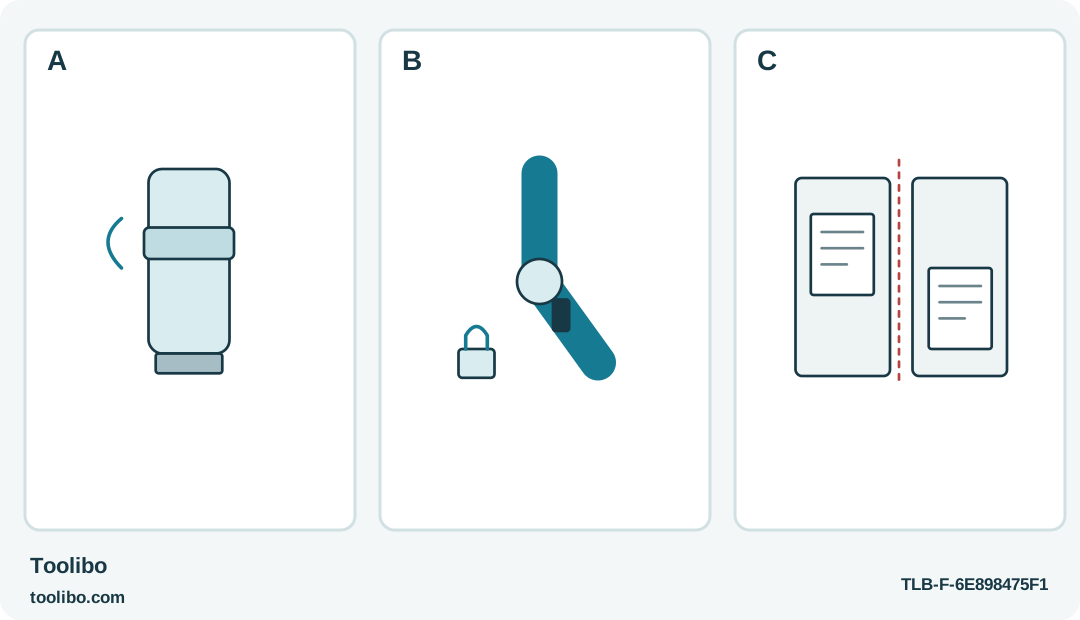
A
SD561201 starts with its direction collar; its separate cinch sleeve retains the bit. Its powered softwood/ST3.5 limit stays with this model.
B
SD561802 uses a trigger, lockable pivot and magnetic holder, not the other tool’s control routine.
C
Keep model-specific capacity and setup instructions separate; the shared brand is not a compatibility rule.
These control sketches keep the collar-operated model separate from the pivoting trigger model, including each tool’s own holder and application limits.
Treat these as different small drivers
The US SKIL SD561201 and SD561802 have different operating arrangements despite sharing a compact screwdriver category. The SD561201 uses a forward/reverse collar that also starts the motor, together with a cinch-lock bit sleeve. The SD561802 uses a trigger, a pivoting handle and a magnetic bit holder.
Begin with the screws and materials you intend to use, not the feature that looks most distinctive. A household furniture kit may contain wood screws, machine screws, cam fittings and fasteners for engineered board. Those are not interchangeable applications merely because one small driver can physically reach them.
Keep electrical work out of this comparison. The Circuit Sensor feature on the SD561201 does not authorize inserting a bit into an outlet or touching circuitry. Choose these tools for suitable non-electrical fastening, with the work supported and the fastener visible.
Check the SD561201 powered-use boundary
The SD561201 instructions distinguish listed powered screw combinations from other screws that may be handled manually without motor power. For softwood, the powered table includes self-tapping screws up to ST3.5. Do not extend that entry into unrestricted powered use on particleboard, cam connectors or larger furniture screws.
This matters before you compare grip comfort. If the fastener and material are outside the applicable table, an appealing collar or sensor does not make that powered task appropriate. Do not replace the furniture’s specified fastener with an unsuitable smaller one simply to fit the driver’s table.
For a permitted combination, the collar gives a compact start-and-direction action. Remember that moving it can run the motor. Keep it untouched during bit changes, release it to stop and use the sleeve’s intended fitting procedure to confirm bit retention.
Understand what the SD561802 changes
The SD561802 separates the trigger from its direction selector and lets the handle pivot between its intended positions. Adjust the grip in open space with the motor off, release the pivot-unlock knob and confirm that the handle is locked before approaching the screw.
Its magnetic bit holder is not the SD561201 cinch-lock sleeve. Use the correct compatible bit and do not force a release action copied from the other tool. Center-lock the direction selector during setup, and allow hot accessories to cool before handling them.
Follow the SD561802’s own screwdriving guidance and the actual fitting instructions. Do not copy the SD561201 table as though it were a specification for the pivot model, and do not infer unlimited capacity from the absence of that particular table. The correct screw, straight approach and prompt stop still determine the result.
Rehearse grip and bit changes separately
Place a representative fitting on a stable bench and try each tool inactive. Check whether the SD561201 collar can be operated without accidentally moving it while adjusting your hand. Check whether the SD561802’s chosen grip leaves room for your knuckles and a clear trigger release.
Then look at bit handling. A retained sleeve can be useful when a compatible accessory needs positive retention; a magnetic holder has its own fitting and handling routine. Neither style excuses an unsuitable tip or a partly inserted bit.
For a powered trial, use only an appropriate screw/material combination for the exact model. Start the screw squarely and watch the head approach its required seat. Stop if the recess slips, the part shifts or the motor meets unexpected resistance. A clutch-like endpoint should not be invented for either model simply because another screwdriver has a numbered ring.
Make the choice by the work you can describe
Choose the SD561201 only when its permitted fastening scope and collar/sleeve arrangement suit the work. Choose the SD561802 when its own documented scope, trigger and locked pivot positions give you a more controlled approach. A feature comparison should end with a suitable task, not a claim that one model is universally better.
Keep each tool’s instructions and accessories identified. Do not mix maintenance, bit-fitting or control procedures between them during a shared household project. Internal electrical or battery faults belong with authorized service rather than an improvised repair.
The useful distinction is not “more features” versus “fewer features.” It is whether the exact tool’s operating method and fastening limits fit the actual screw, material and space in front of you.
Models referenced