
Pivot position and drive axis
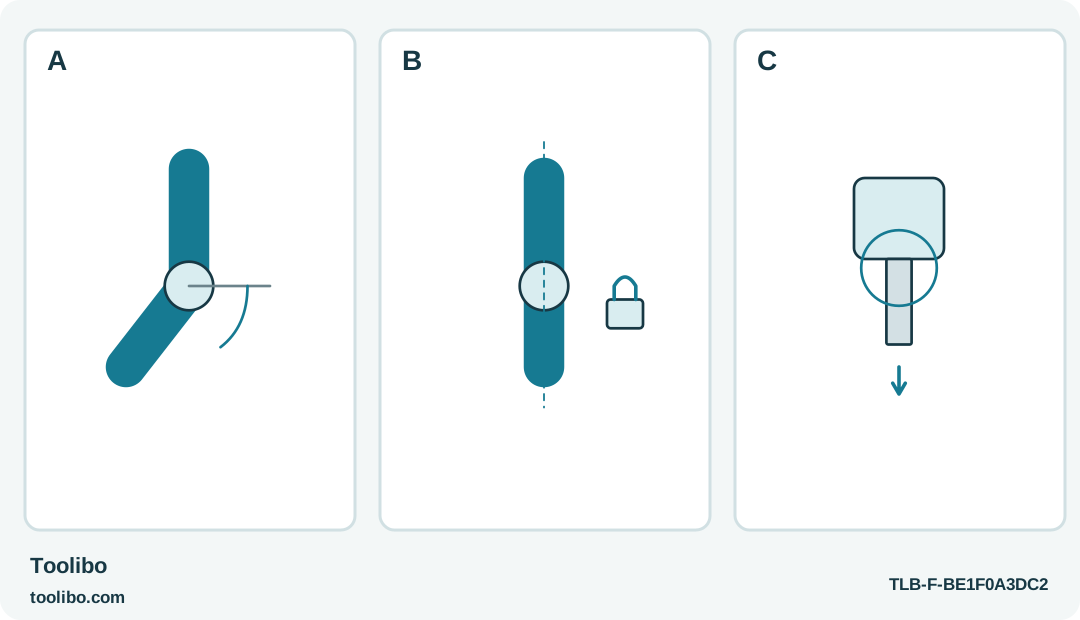
A pivot arc, a locked straight axis, and a magnetic-holder retention close-up separate three setup checks.
A
Stop and unlock the handle pivot only as instructed; do not force beyond its stops.
B
Confirm the chosen handle position locks. The bit still drives on its original axis.
C
The SD561802 uses its magnetic bit holder, not the other SKIL model’s retention sleeve.
A pivot changes where the hand sits while the spindle keeps its straight working line; a locked grip and retained bit are separate checks.
Decide whether the grip actually helps
A pivoting handle can make a small screwdriver easier to hold inside a furniture compartment, but it cannot turn a straight bit around a corner. For the US SKIL SD561802, start by looking along the screw axis and checking where the tool body, your knuckles and the rear of the handle will sit.
Support the work before trying either handle position. A loose drawer front held in one hand is a poor place to discover that the grip is awkward. Remove a safely removable part to a bench where practical, or support the assembled furniture so that operating pressure cannot move it.
Try the approach with the motor off and the direction selector centered. Choose the position that lets the bit remain fully engaged without twisting your wrist to one side. If neither position gives a clear straight approach, use a different suitable tool or change the assembly order rather than tilting the bit into the screw.
Change the handle before inserting it into the gap
Keep the tool in open space while adjusting the pivot. Depress the pivot-unlock knob, move the handle through its intended movement, then release the knob. Do not over-twist the handle or force it past a stop in an attempt to obtain a third angle.
Check that the handle is securely locked before putting a bit against the work. A handle that still moves after the control is released needs attention; holding it tightly with your palm does not replace the lock. Do not attempt adjustment while the motor is running or while the bit is trapped in a screw head.
Keep fingers clear of the moving joint. The useful test is a controlled check of the locked handle, not a hard jerk that stresses the mechanism. If the lock will not engage cleanly, stop using the tool and arrange the appropriate service rather than continuing with a partly latched grip.
Fit the bit using this model’s holder
The SD561802 uses a magnetic bit holder. It is not the collar-operated SD561201 with its cinch-lock sleeve, so do not search for or force a release collar that belongs to another model. Center-lock the direction control before inserting or pulling a bit, and allow a bit that has become hot in use to cool first.
Choose the proper size and shape for the actual screw. Inspect the recess and the bit tip under good light. A worn tip or a damaged recess becomes harder to manage in a confined space because you may not be able to see the first sign of slipping.
Seat the compatible bit properly and rehearse the complete movement again. Include the final position of the screw head: a bracket or nearby sidewall may become an obstacle only near the end of tightening. Make sure you can withdraw the tool without dragging the bit sideways through the recess.
Use the trigger deliberately
This model starts with its trigger and stops when the trigger is released. Keep your operating finger clear until the bit is correctly seated and you are ready to drive. The pivot knob is not the start control, and pressure against the screw is not a substitute for deliberate trigger handling.
Follow the fitting or furniture instructions for the correct screw and final position. Begin with the parts aligned and the screw square, using a supported trial where possible. Watch the head approach its seat and release before forcing the fitting into the surrounding material.
Do not invent a numbered torque clutch for this tool. Your inspection of the joint remains essential. If the screw stops unexpectedly, the bit skips or the work shifts, release the trigger immediately and correct the cause with the tool locked. More pressure is not a cure for an unsuitable bit or a misplaced hole.
Check the fitting and store the tool safely
When the screw is seated, check the actual household function: the handle stays secure, the bracket sits flat or the drawer fitting remains aligned. Test normal movement without loading a newly assembled part beyond its intended use. A motor that turned the screw does not prove that the correct fastener was chosen.
Center-lock the selector before moving the tool to another location. Put loose bits in a holder rather than carrying the screwdriver among other objects that could press its controls. Keep the exterior clean and dry, with ventilation openings clear; do not push pointed objects inside them.
A successful pivot setup is one that removes awkwardness while preserving control. If the handle, bit or workpiece needs to be held in a strained position, stop and improve the setup instead of expecting the hinge to solve every access problem.
Models referenced