
Compare head length before adding the bit
Proportional head-length bars with dashed bit extensions face an obstruction.
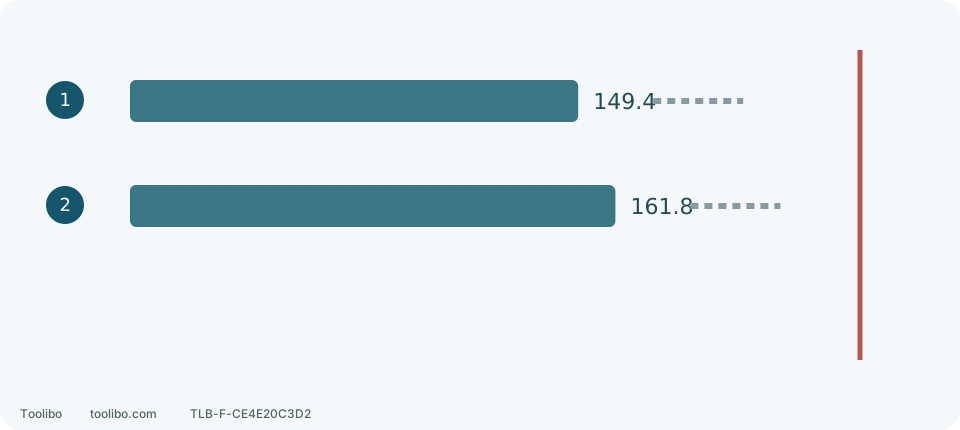
1 · DCD794
149.4 mm
2 · DCD800
161.8 mm
Approximate mm, converted from published inch dimensions. Dashed sections are not measured bit lengths; check your real setup.
Put the actual differences side by side
This comparison covers US DCD794 and DCD800. Both are 20V MAX brushless drill/drivers with 1/2-inch chucks, variable-speed triggers, reverse and two mechanical gears. The smaller model is not restricted to driving screws.
Swipe or scroll horizontally to see all columns.
| Item | DCD794 | DCD800 |
|---|---|---|
| Head length | 5.88 inches, approximately 149.4 mm | 6.37 inches, approximately 161.8 mm |
| Modes | Drilling and driving | Drilling and driving |
| Published maximum no-load speed | 1,650 rpm | 2,000 rpm |
| Lighting | Work LED | Three-position, three-mode adjustable LED, including timed light |
| Selected bare-tool code | DCD794B | DCD800B |
| Example kit | DCD794D1: one 2 Ah battery, DCB107 | DCD800D2: two 2 Ah batteries, DCB112, bag |
A precise working-weight difference would require matching batteries, hooks and accessories; subtracting weights from different packages would mislead. Sharing a battery platform does not mean every fitted battery has the same size or feel.
In a cabinet, 12.4 mm can matter
The heads differ by 0.49 inch, approximately 12.4 mm. That is body clearance, not the complete drilling length. For a drawer slide, measure along the hole axis to the opposite panel, then allow for the actual projecting bit, hands and withdrawal route.
Disconnect power and check the chosen battery and suitable short bit as a complete setup. Reaching the hole is insufficient: you must align, grip and withdraw reliably. If DCD800 meets an obstruction while DCD794 permits controlled straight drilling, the shorter head has a real advantage. If both require badly angled drilling, change the assembly sequence or tool rather than forcing the smaller one into service.
On a bench, adjustable light addresses shadows
Where space is ample, DCD800’s light may be more useful than a shorter head. A clamp or workpiece edge can block an ordinary fixed light; changing the light angle may improve the target area. Its three modes include a spotlight with an approximately 20-minute timeout. Turn it off when unnecessary rather than treating it as a mandatory operating step.
Light does not identify material or locate hidden wiring and pipes. Arrange sufficient illumination and reliable support for a difficult-to-see hole. Resolve unknown wall construction, services and rear clearance before drilling; a brightly lit exploratory hole is still unsafe.
Speed and clutch settings follow the job
Both have a variable trigger, mechanical gears and numbered clutch settings. Let the tool stop fully before changing gear or mode, following its instructions. For furniture screws, begin low on matching scrap and increase until the screw seats without damage. A clutch number is not calibrated tightening torque.
DCD800’s higher no-load maximum does not establish cutting speed under load. Bit, material, hole diameter, feed and battery matter. Large accessories have their own speed requirements; maximum speed is not a universal setting. Neither drill has hammer action. If that is genuinely required, select an appropriate tool category instead of substituting rpm for a missing mode.
Price the equipment you actually lack
With approved DEWALT batteries and charger already available, compare DCD794B and DCD800B plus any genuinely needed spare pack or accessory. First-time buyers need a complete power setup: the US DCD794D1 contains one DCB203 2 Ah and DCB107; DCD800D2 contains two DCB203 2 Ah, DCB112 and bag. Both list a belt hook. The manufacturer’s 794D1 contents do not list a bag; confirm retailer additions separately.
Two packs provide rotation options, not better clearance or one installed 4 Ah battery. Obtain battery codes and quantities, charger model and input rating in writing, then compare complete prices including delivery and taxes. An undated price cannot settle value.
Decide in order: usable dimensions before surplus features; useful lighting differences once both fit; then existing power equipment and complete quotes. A series name cannot perform these checks for you.
Models referenced