
Four gates before accepting a used machine
History leads to identity, then isolated external condition and finally a complete-cost decision; unresolved contamination exits before any opening or demonstration.
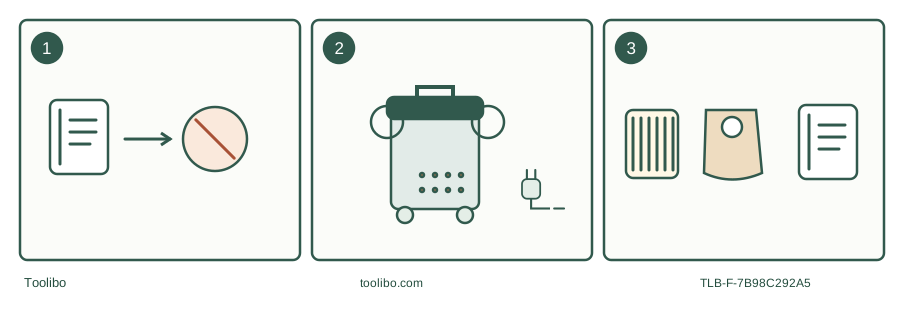
History
Resolve previous contents before handling.
Condition
Match identity and inspect externally while isolated.
Decision
Include correct parts and a clear handover.
A startup demonstration comes after suitability checks, not before them.
Ask what the vacuum collected, not just how old it is
Before handling the machine, ask the owner what it has been used for, where it was stored, and whether any unknown powders, renovation dust, chemicals or contaminated liquids were collected. Request an honest answer rather than a general assurance that it was cleaned. A shiny exterior does not establish the condition of the filter, hose or internal collection surfaces.
If hazardous contamination is suspected or the history cannot be resolved, do not open the drum, shake the hose or run the motor to see what comes out. Arrange appropriate professional assessment or choose another machine. This is a decision gate, not an instruction to identify dust by sight, smell or a home test.
Confirm the exact identity while it is isolated
If the history is suitable for ordinary external screening, find the model plate and regional electrical rating. Photograph the complete identity with the owner’s permission and match it to the manual. Similar-looking drums or a familiar brand name are not enough, especially when an appliance has been assembled from spare parts.
Check which components should be present for your intended dry or wet task. List the head, collection container, latches, filter assembly, any required float or liquid-stop parts, hose and accessories. Do not treat a missing filter cage or damaged stop mechanism as a discount item you can safely work around. The correct parts must be available and the machine must be restored by an appropriate route before use.
Make an external condition record, not an electrical diagnosis
Keep the machine disconnected during the permitted visual inspection. Look for a damaged plug or cable sheath, cracked casing, insecure latches, deformed filter seating surfaces and a damaged hose. Check that wheels and approved carrying points are intact. For battery equipment, use the battery’s own inspection guidance and do not charge a damaged or unknown pack as a trial.
Swipe or scroll horizontally to see all columns.
| Observation | Buying or borrowing decision |
|---|---|
| Exact identity and suitable history are documented | Continue with the matched manual’s external checks |
| Filter or bag is missing but correct replacements are available | Include replacement and configuration checks before any use |
| Cracked housing, damaged cable or compromised stop components | Do not operate; obtain qualified assessment or decline |
| Unknown hazardous collection history | Stop handling and do not perform a demonstration |
A seller’s video of the motor running does not test insulation, sealing, filtration or collection suitability. Do not dismantle the motor head or improvise an electrical test to turn a purchase inspection into a repair project.
Only consider a normal demonstration after the gates are passed
A demonstration is useful only when the history, configuration and external condition support it. The owner should use the approved setup on a normal permitted task, not a deliberately dusty or hazardous challenge. Observe whether pickup is normal and whether abnormal noise, discharge or instability appears. Stop if the manual’s warning signs occur.
Do not ask for a sealed-inlet strength test, a water-overflow test or a trial without the correct filter. A short successful demonstration still does not establish remaining motor life or prove the machine meets an occupational dust standard. Record exactly what was observed rather than upgrading it to a claim that everything has been tested.
Price the missing configuration and agree the handover
Add the correct consumables and missing accessories to the asking price before comparing with a new complete unit. Check whether warranty coverage transfers and whether support exists for that exact model; do not assume either. A needed part that cannot be sourced can make the purchase impractical even when the motor sounds normal.
For borrowing, agree the permitted task, supplied configuration, cleaning and return condition before starting. Keep the lender’s attachments together and do not modify cuffs or substitute unapproved filters. If the intended job changes, ask again rather than using a borrowed household machine for a different material. A clear handover protects both the next user and the person who owns the equipment.