
Separate the two machines first
SR250801 is the pointed detail sander; SR211601 is the round-pad random-orbit model. Record the exact body model rather than inferring identical ports from similar canisters. The 2025 catalog SR250801 entry states a nominal 1¼-inch vacuum hose fit. That does not apply to SR211601 or prove that every adapter advertised with that number fits.
List four identities together before buying: sander, proposed adapter part number, hose and end fitting, and extractor. If one is missing, a seller’s “fits 1¼ inches” may describe just one joint, not the complete route.
Why can matching numbers still fail to fit?
Mating geometry matters, not just advertised size. These checks require no power.
Swipe or scroll horizontally to see all columns.
| Area | Question to answer | Common purchasing error |
|---|---|---|
| Inserting end and surrounding cuff | Which goes inside, and is the measurement internal or external? | Treating two similar outside diameters on projecting ends as a direct connection |
| Effective engagement | Which straight or tapered section mates, and can it reach its specified position? | Measuring only the mouth, missing a blocking shoulder, different taper or short engagement |
| Retention | Which specified latch, slot/rib or other confirmed feature holds it? | Inserting without locking, or disguising looseness with tape |
A ruler or caliper describes what is present; it does not establish your own fit tolerance. Do not file the tool port, enlarge it, cut locating ribs or force parts because tighter seems better.
Understand seating with the original canister, not external-hose approval
First ensure the equipment is stable and safe to approach. With smoke, fire, electrical trouble or severe heat, move away and seek appropriate assistance instead of inspecting fittings. Normally switch off, wait for complete stop and unplug. Keep power isolated throughout.
The SR250801 original microfilter canister has a specific action: align its slot with the tool’s rib, then push it onto the port until it locks. Pull it away to remove. This slot/rib/lock combination distinguishes appearing joined from being correctly seated. Do not repeatedly demonstrate with a dusty canister; handle existing dust under applicable collection and disposal requirements.
This is only an original-canister example. An unidentified external hose may use different geometry or retention. Copying the push/pull action does not approve it. Nor can SR211601 be checked against SR250801’s nominal size.
Get an answer you can actually use before buying
Give the maker or accessory supplier all four exact identities and photographs possible without dismantling. If providing measurements, identify the section and whether inside or outside diameter, not merely “about 32 mm”. Ask:
- Does this adapter explicitly fit this body and hose end? What are the connection direction, seating position and retention action?
- Is another connector required between the hose’s opposite end and extractor? Have every missing exact component listed.
- Is the setup suitable for the planned material and required filtration, collection and maintenance arrangements?
“Close enough; wrap tape around it” leaves the connection unresolved. If a complete setup cannot be confirmed, postpone the external purchase, choose a clearly matched system, or use the correct original arrangement only where the task controls permit. An original canister fitting does not mean it controls every dust hazard.
Inspect the delivered setup with power isolated
Verify identities and instructions, then assemble the approved combination as directed. Check specified seating, actual latch engagement and unobstructed passage. Wrong ends, cracks, obvious looseness or forced deformation mean stop and resolve return or compatibility questions. Do not switch on to make suction hold a poor joint.
Route the hose in its working position and rehearse flat placement, turns and withdrawal while unplugged. Look for pinching at the bench, blocked bends or end-of-travel pull that moves the sander or separates the fitting. Change hose support and routing and check again; do not operate while holding the joint together with one hand.
This inspection checks assembly and layout of a confirmed combination, not extraction performance or exposure. Unknown material or unassessed old coatings exclude even a brief trial on the actual surface. SR211601 also has an unresolved stopping-sequence conflict: do not power-test until applicable instructions are clarified. Only after material, complete controls and exact-model operation are established should operating preparation begin. A nominal size here is not a verified external-system shopping list.
Check mating geometry, not only a diameter
Left: incompatible projecting ends are conceptual, not an approved hose setup. Right: the original SR250801 canister slot/rib concept, not dimensions or an external-adapter design.
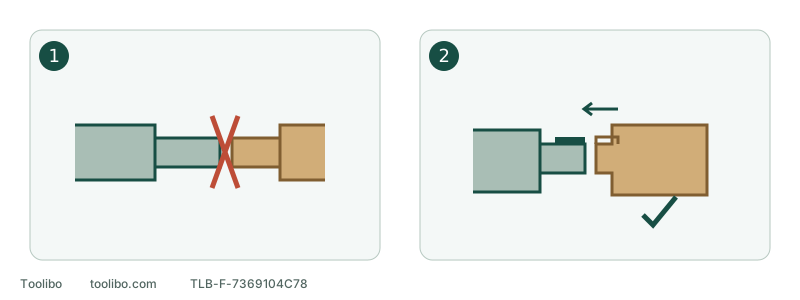
1. Two outside ends do not mate
State which end inserts and which surrounds it; similar outside measurements do not establish fit.
2. Original canister seating
Align its slot with the tool rib and push until locked; this does not authorize an unknown external hose.
Left: incompatible projecting ends are conceptual, not an approved hose setup. Right: the original SR250801 canister slot/rib concept, not dimensions or an external-adapter design.
Models referenced