
Angle, opening, connector and rating are different checks
An exploded nozzle profile separates fan angle at the outlet, small metering opening, retention shoulder and a rating tag; a colour-only choice is crossed out.
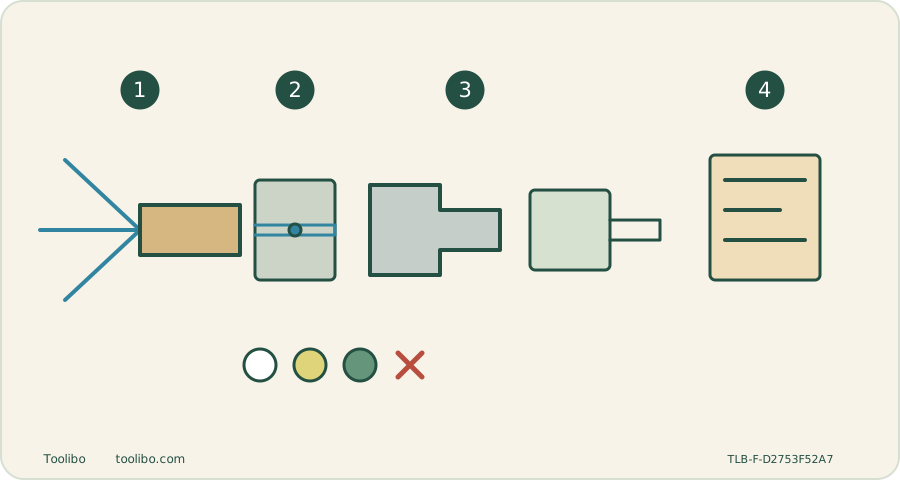
Pattern
Identify the documented spray mode.
Metering
Match the exact approved part designation.
Retention
Check the isolated mechanical connection.
Rating
Verify the complete assembly limits.
The drawing is conceptual and does not specify a real tip’s dimensions.
Record the original setup
Before shopping, write down the washer model, regional variant and the gun or lance fitted to it. Photograph the original tip’s visible markings and keep its packaging or part number if available. A previous owner’s mixed set is not reliable evidence of what was supplied originally.
Some machines use interchangeable quick-connect tips; others use proprietary adjustable lances. Do not assume a tip from the first system can replace part of the second. The gun, lance and tip form one rated assembly.
Read four separate fields
Swipe or scroll horizontally to see all columns.
| Field | What it answers | What it does not answer |
|---|---|---|
| Spray angle or pattern | How the jet is distributed | Whether the tip meters the correct flow. |
| Orifice or metering designation | Which specified hydraulic configuration the maker intended | A universal colour-to-flow relationship. |
| Connector type and retention geometry | Whether the approved mechanical interface is correct | Whether every fitting that clicks is rated or authorized. |
| Pressure and temperature rating | The component’s operating limit | Whether the machine and surface are suitable for the chosen pattern. |
This guide does not supply a universal stamped-code decoder or nozzle-sizing formula. Manufacturers and accessory families can use different markings. Use the exact part list or the maker’s documented mapping for your model.
Use colour as a prompt, not a certificate
SIMPSON’s nozzle table associates colours with several spray patterns, and distinguishes its low-pressure soap setting from high-pressure cleaning tips. That helps identify the intended mode in that system; it does not approve a random matching-colour replacement.
A broad fan does not erase a surface maker’s prohibition, and a red or concentrated tip is not the answer to every stubborn mark. A soap tip also does not make an otherwise incompatible chemical safe for the pump or surface.
Follow an approved replacement route
- Match the exact washer and fitted gun/lance to the manufacturer-approved replacement part or documented accessory set. If the original part is unknown, ask for identification rather than guessing from a photograph of another machine.
- Check the package fields against the part record. Stop if the connection, rating or intended machine is unclear, even if the seller describes it as universal.
- Before changing a tip, shut down and isolate the machine and release trapped pressure using its specified sequence. A trigger lock is not a substitute for isolation and depressurization.
- Inspect the isolated coupler and replacement for damage or debris. Fit only as instructed and verify the retention check without pointing the outlet at yourself.
- Perform the normal water-fed startup and a controlled test on a suitable approved surface. Keep people away from the spray path. Stop for unexpected release, leakage, abnormal spray or pulsing.
A useful rejection example
Suppose a homeowner loses the white tip from an interchangeable set. A replacement pack contains a white tip with the same-looking plug, but does not identify the orifice or approve the machine. Colour and appearance close only part of the question. The correct next action is to identify the approved replacement, not to run an experimental tip and judge it by sound.
If an original nozzle is blocked, use its permitted external cleaning method instead of enlarging the hole with a drill or forcing a harder pin through it. Changing the opening changes the part, even if the connector remains intact.
Keep the set traceable
Store tips with their approved machine or labelled part record. Do not merge unidentified pieces from borrowed equipment into one tray. Retire damaged or unidentifiable tips rather than making a “spare” set that will be mistaken for verified parts later.