
A cooling indicator, crossed-out timer and protected nozzle
A cooling indicator, crossed-out timer and protected nozzle.
A
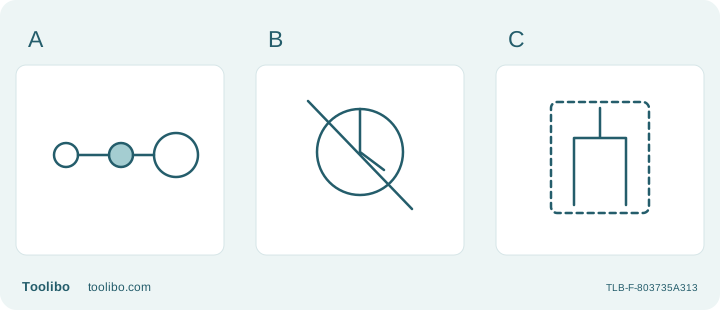
Identify the command and indicator that selected cooling.
B
The crossed timer represents contradictory printed durations.
C
Protect the hot outlet until actual cooling and shutdown are complete.
Identify the commanded cooling state, then protect the hot nozzle; conflicting printed durations cannot establish safe handling.
Reconstruct the command that preceded the fan
A FURNO 500 fan that continues after a control action is not automatically stuck on. The model includes a cooling mode, so the first useful question is what command immediately preceded the behavior. Did the operator deliberately enter the documented cooling sequence, or did airflow change unexpectedly during heating? Keep those cases separate instead of treating every running fan as the same symptom.
This guide concerns the US FURNO 500 listing, SKU 503063, with its applicable operating instructions. The simpler FURNO 300 does not supply a substitute control procedure. Identify the actual model and manual before interpreting the buttons or indicators. A familiar brand name cannot establish which shutdown sequence applies.
Read the indication in its operating context
Use the cooling indication described for this model together with the action that selected it. The motor sound alone cannot tell you whether the unit is heating, cooling or behaving unexpectedly. If the indicator and your recollection of the command disagree, stop the material process and consult the supplied instructions rather than pressing buttons repeatedly to see what happens.
Keep the outlet directed away from the work during cooling. A sleeve or label-removal sample should not remain in the air stream simply because the operator considers the job finished. Cooling is part of ending tool use, not an additional material-processing stage. The nozzle and an attached accessory may still hold substantial heat even as the operating mode changes.
Recognize the manual’s unresolved timing conflict
The checked 0503749G document contains conflicting cooling-duration wording: three minutes in one place and thirty seconds in another. Those statements should not be averaged, silently reconciled or converted into a newly invented countdown. This guide does not select either duration as proof that the tool is safe to handle.
Check the edition supplied with your own unit and ask Wagner to clarify the applicable sequence if the wording remains inconsistent. When reporting the conflict, identify the document number and the two passages, rather than saying merely that “the internet gives different times.” A manufacturer clarification can address a document discrepancy; another user’s guessed waiting period cannot establish the intended behavior of your unit.
Separate the end of airflow from safe handling
A stopped fan establishes only that the fan is no longer running. It does not establish that the metal nozzle, accessory or nearby support has reached a safe handling temperature. Conversely, a running fan in a documented cooling cycle does not mean the tool should be grabbed, dismantled or packed away. Preserve a protected cooling area until the applicable shutdown requirements and actual cooling have been satisfied.
Do not check the nozzle with bare fingers or point the air toward skin. Keep other people from assuming that a quieter tool is a cold tool. If an interruption requires you to leave the area, follow the supplied shutdown and disconnection instructions rather than leaving a powered cooling cycle unattended.
Identify the observations that need support
If the fan behavior does not match a clearly identified cooling command and indicator, write down the sequence and stop guessing. Note whether the tool had been heating, which control was used and what the indicator then showed. An unexplained failure to stop, an unreliable control or a repeated abnormal event deserves manufacturer assistance, not a homemade bypass or an attempt to open the casing.
Damage, smoke from the tool, a damaged cable or other abnormal conditions must not be dismissed as a timing discrepancy. The contradictory duration wording does not explain every possible symptom. End use safely and seek the appropriate service advice. This article does not provide electrical diagnosis or an internal repair procedure.
Make the next handover unambiguous
Tell the next operator whether the tool has completed its shutdown and cooling or is still in a protected cooling state. Include any unresolved symptom and keep the tool out of normal use if clarification or service is pending. Do not leave a note that says only “fan normal”; that erases the difference between a documented commanded cycle and an unexplained event.
For routine work, agree on the ending procedure before starting the material trial. Keep the relevant manual accessible outside the hot area, and ensure that the cooling location remains available after the workpiece is removed. The useful understanding is a sequence of states and observations, not a universal timer: heating ends, the applicable cooling and shutdown instructions are followed, and handling or storage waits for actual safe cooling.
Models referenced