
Inspect only the cold exposed slider guide
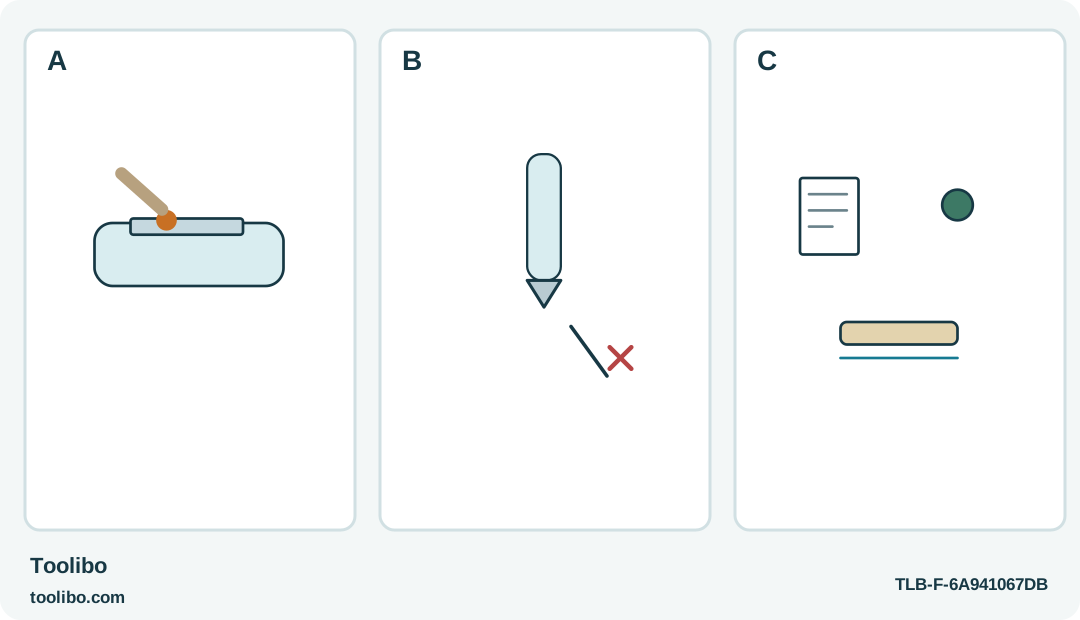
A blunt implement near an exterior guide deposit, a crossed nozzle probe and separate readiness and consumable checks define permitted slider care.
A
When off and fully cool, remove only accessible external residue gently with a blunt object as allowed for Gluey.
B
Do not probe the nozzle, detach the slider or open the housing; persistent obstruction and backflow end owner checks.
C
Resolve correct short-stick identity and battery/readiness conditions before one restrained scrap restart.
Cold residue on an exposed guide is an owner-care task; resistance inside the feed is not.
Separate a cold feed from a dirty guide
The Gluey slider can feel reluctant for several different reasons. The adhesive may not be warm enough, the batteries may be weak, the stick may be unsuitable, or hardened residue may obstruct the exposed guide. Cleaning the pen will not fix all of those causes. Begin by recalling whether the slider became stiff during a normal session or was already difficult at the first attempt to feed.
Stop pressing the slider. Switch the pen off and let it cool in a safe place, with the nozzle clear of people and loose materials. Do not put a resistant pen straight into storage while it is still hot. A small battery tool can retain enough heat to damage a bag or scorch something lying against its tip.
If glue is coming backwards through the feed area, or if the housing is cracked, treat that as a stop condition. This guide is limited to visible external residue and straightforward setup checks, not dismantling the feed mechanism.
Check the stick and battery history
Look at the adhesive packaging before touching the guide. This Gluey uses the recommended short 7 mm by 20 mm sticks and low-temperature adhesive system. A long stick intended for a rear-fed gun, an unlabelled offcut or a high-temperature formula is not made suitable by fitting into the opening.
Consider the light-up ring during the last attempt. A pen that was still warming had not reached its normal feeding condition. A rapidly flashing ring points toward weak batteries. Solve those conditions through the normal operating and charging procedure rather than treating additional hand pressure as a substitute for heat.
Do not pull an inserted stick backwards to inspect or replace it. If the wrong adhesive has already entered the pen and you cannot follow a clear manufacturer-approved correction, stop and seek guidance. Trying to extract it with pliers or pushing it through with a metal rod can turn a consumable mistake into damage.
Inspect the exposed slider track when cold
Once the pen is fully cool, look along the visible slider and its guide. Work in good light so that a bead sitting on the outside is not mistaken for part of the mechanism. Keep the pen off while checking. You should not need to remove the housing or detach the slider to examine the accessible area.
Hardened external adhesive can be removed gently with a blunt object, as allowed for this model. Keep the movement small and directed away from the nozzle and openings. Stop if the residue does not lift without force. Do not gouge the guide, lever against a plastic edge or use a sharp blade to cut into a gap.
Use no solvent to dissolve the glue. Do not introduce oil, spray cleaner or water into the feed track. The goal is a clean external path, not a lubricated mechanism. Put any removed cold pieces aside immediately so that they cannot drop into the open stick compartment during the next loading step.
Make one restrained restart on scrap
Prepare the correct stick and a known charged, suitable battery pair. Open and load the top compartment using the normal slider movement shown for the Gluey. Keep the pen over a heat-resistant protected work area and arrange a scrap surface before switching it on.
Wait for the readiness indication instead of testing the slider repeatedly throughout warm-up. Feed slowly with moderate pressure. A small, even sample is enough to check whether the exposed guide now moves normally; there is no need to empty a series of sticks merely to prove the mechanism can be pushed.
If resistance returns, stop. Record whether the ring was ready, which adhesive was used and where visible residue appeared. A persistent obstruction, backflow or abnormal body behaviour belongs with service support. Do not respond by increasing force, heating the exterior with another tool or attempting to remove the nozzle.
Reduce the next build-up without creating a new problem
At the end of a normal line, stop feeding before lifting the pen away. Keep the working area organised so that the slider hand does not touch freshly applied adhesive and carry it back onto the tool. Park the pen safely between applications rather than laying it across glue-covered scraps.
After switching off, allow full cooling before checking for accessible residue or storing the pen. Keep the correct short sticks in their original packets, separate from larger guns’ supplies. These habits address two different causes of trouble: contamination of the external guide and accidental loading of the wrong adhesive. Neither requires opening a sound pen or treating it with a cleaning chemical.
Models referenced