
Bosch GST 18V-125 S: rehearse barrel-grip control · Diagram
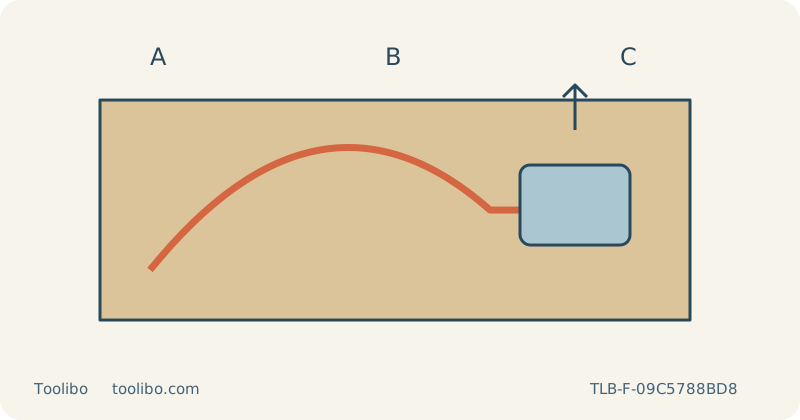
A broad curve ends on a supported base footprint beside a switch-access arrow.
A
Rehearse the curve
B
Keep the switch reachable
C
Stop on supported wood
A broad curve ends on a supported base footprint beside a switch-access arrow.
Identify the barrel-grip version first
The UK Bosch GST 18V-125 S uses a barrel grip and a sliding on/off control. It is not operated like the bow-handle B merely because both names appear in the same manual. The checked UK listing identifies order number 06015B2000, while the instructions identify the S machine family as 3 601 EB2 0… Record both the model and the machine type before selecting parts or applying a diagram.
This guide prepares a first curved cut in loose, known, uncoated wood. It does not recommend overhead or inverted use, and it does not establish a minimum turning radius. The useful question is whether you can keep the base supported, see the route and reach the correct stopping control without changing to an insecure grip. Answer that with the battery removed before cutting anything.
Rehearse the route and the stopping point
Draw a broad curve on matching scrap. Hold the insulated gripping area in the normal upright position and check your wrist through the turn. If you must stretch or rotate your hand away from the switch, turn the loose workpiece into a more comfortable orientation. A long curve can be divided into separate approaches with complete stops and re-clamping rather than attempted in one uninterrupted reach.
Plan where the saw will stop while its base still has support. The end of the pencil line is not necessarily a suitable place to lift the tool. Make sure there is space to keep control while the blade slows to a complete stop. Do not plan to catch the waste with your free hand or to reach underneath for a better view.
Fit the blade and support both pieces
Switch off and remove the battery before changing the blade, base or dust attachments. Use a compatible T-shank blade suited to the wood thickness and the intended curve. Operate the SDS mechanism as instructed, insert the blade fully with its back in the guide roller groove and verify retention. A narrow blade can suit curves, but forcing it around a radius it cannot follow can still bend it below the surface.
Secure the base at zero bevel. Clamp the retained wood on a stable bench and independently support the waste at the appropriate height. Inspect the whole route underneath, leaving clearance for the entire blade stroke, not only the visible blade tip at rest. Above the board, check that clamps, the hose and the tool body cannot collide as the base turns.
Use preselection rather than trigger habits
The S uses the stroke-rate preselection wheel and its on/off switch, with a separate worklight control. Do not expect increasing finger pressure on the sliding switch to act like the B trigger. Set an appropriate speed for the blade and wood before the sample. Orbital action is a separate adjustment; low or zero orbital action is a sensible starting point when examining the finish of a visible curve.
Wear eye and hearing protection and suitable respiratory protection. Arrange compatible extraction and ventilation, and turn the blower off when using extraction as the manual requires. Support the hose behind the tool without making it drag against the curve. Rest the front of the base on the work, keep the blade clear, switch on and establish speed before feeding. Keep the base flat and follow the path without levering the blade sideways.
Judge control as well as the finished line
If the base lifts, the blade resists the turn or the saw labours, switch off. Wait for a complete blade stop before withdrawing, setting down or inspecting. Remove the battery before adjustments or moving clamps. Examine the lower edge as well as the top line: an attractive upper curve can hide a sloping cut face that will not fit the project.
Repeat a failed sample only after identifying a useful change, such as a broader curve, improved waste support or a suitable fresh blade. Keep other conditions consistent so the result is understandable. Once both control and finish are acceptable, transfer the arrangement to the finished board and recheck its actual thickness and support. Persistent switch, clamp or base faults require service, not a different hand position to work around the defect.
Models referenced