
FURNO 300 controls
Two heated switch positions, retained cord and cold-tool storage.
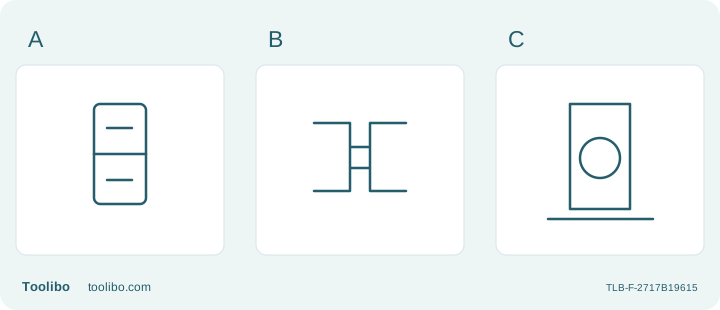
A
Both operating switch positions deliver heated air.
B
The retained cord connection is not a routine removable plug.
C
Store only after the tool and nozzle reach room temperature.
The manual recognizes nozzle darkening with use; it does not excuse cracks, deformation or damaged electrical parts.
Two choices do not equal delicate-material control
The US FURNO 300 listing identifies SKU 503059 and two temperatures. Its switch offers off, low and high. Low is heated operation, not a cooling fan or a substitute for a hair dryer. Before selecting it, check that the available choices can satisfy the material instructions.
Fewer controls can simplify selection, but do not remove the need to identify the material. A thin decorative film, an adhesive label and a thick plastic object can react very differently. If the task needs a controlled gentle temperature this model does not provide, select an appropriate tool and process instead of guessing a working distance.
Check the cord connection and leave it assembled
The applicable manual illustrates connection of the supplied cord. Follow the assembly instructions before first use; do not repeatedly dismantle a retained connection as though it were a storage connector. If the cord is damaged or the connection seems loose, stop and consult qualified service. Do not open the handle or adapt a different cable.
Check the switch, housing, air openings and nozzle with the tool disconnected and cold. The side supports and rear fins serve different roles. Use the specified upright resting arrangement on a level, stable, noncombustible surface, and prevent the lead from pulling the tool over.
Prepare a trial you can leave safely
A suitable trial requires known material, an authorized hot-air process and room to stop without grabbing a hot object. Remove combustible clutter and keep others outside the hot area. Support the sample before switching on. Whoever controls the heat must see the work clearly, without a hidden hand behind it.
Inspect the cooled sample for distortion, surface changes and damage outside the intended area. If the material requires more control than the switch provides, reject the arrangement. Repeatedly reheating a failed sample does not establish safety for the finished object. A commercial application list does not authorize heating appliances, unknown pipes or coated objects.
Store only after actual cooling
When finished, switch off and disconnect, leaving the tool in its safe resting position until the nozzle reaches room temperature. The hanging hook is for a cold tool, not a shortcut around waiting. The manual notes that the nozzle can darken over time; that alone is not equivalent to cracks, distortion or loose parts.
Clean only cold external surfaces according to the instructions, without solvents or liquid entering the housing. Recurring symptoms require service rather than dismantling. An appearance change and a physical defect are different observations, so do not use normal darkening to explain away an actual damaged or loose component.
Decide whether another tool is needed
A practical purchase starts with a real material instruction, not a list of possible future projects. If the instruction calls for several controlled stages or a gentler condition than either available choice, record the incompatibility. Greater distance, faster movements or brief switch operation do not necessarily reproduce a setting the tool does not have.
For someone who already owns the gun, that conclusion does not indicate poor technique. It prevents forcing a tool beyond the intended work. A non-heating method or a different heating tool may be the appropriate answer under the material supplier’s instructions.
Also check that the whole task is visible. A sample on an open bench is easier to assess than an installed fitting beside a wall, but visibility does not establish thermal compatibility. Require both an approved process and an arrangement that controls airflow, support and cooling. If either condition is missing, do not begin simply because the gun happens to be available.
Read the verified operating values
The US FURNO 300 specifies approximately 750°F at low and 1100°F at high. Those are two heated output choices, not the endpoints of a continuously adjustable range. In particular, “low” does not mean a gentle room-temperature breeze. The checked operating instructions do not provide a numerical airflow rating for this comparison, so none is inferred. These approximate output temperatures are not target temperatures for a label, sleeve or underlying material.
Models referenced