
HG6031V controls
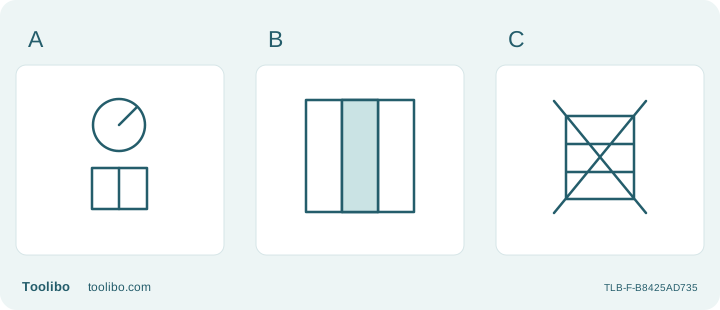
A dial and two flows beside the correct manual column.
A
Read the temperature dial with both airflow positions.
B
The highlighted column is HG6031V in a shared manual.
C
The crossed third position belongs to HG6030, not HG6031V.
Position I pairs 200 L/min with 50–350°C; position II pairs 400 L/min with 80–550°C. The dial range depends on airflow.
A package suffix does not add a third position
Makita’s US HG6031VK listing links a manual that identifies the tool body as HG6031V. The document also covers HG5030 and HG6030. That mapping is useful, but makes one mistake easy: HG6030’s three-position switch and dedicated first-position cooling do not describe HG6031V.
For HG6031V, use its two airflow positions and temperature dial. Read its own table row rather than borrowing a convenient figure from the neighboring column. The US listing describes a numbered dial, not a workpiece thermometer. A number that suited one sample does not transfer unchanged to another nozzle, airflow or material.
Inventory accessories separately from the case
The checked US package includes a case; nozzle accessories are described separately. Before planning work with a reflector or narrow outlet, check what you actually have and what is approved. A shaped recess in a case or a catalog photograph does not establish that an attachment was included.
Inspect and fit accessories with the plug removed and the gun cold. Clear loose packaging from the bench. During a trial, do not reach across the outlet to hold the far side of a small workpiece. Secure or support the object before starting and leave space to move the air stream without directing it toward a hand.
The dial finds a permitted process rather than inventing one
Suppose a manufacturer permits controlled hot-air removal of its adhesive label from a detached heat-tolerant object. Check the substrate too and trial an equivalent spare piece where possible. Begin at the lowest useful permitted condition, remove heat and inspect as soon as the label can release. More heat does not automatically mean better adhesive removal.
Stop if the finish becomes cloudy, an edge curls or the adhesive responds unpredictably. Allow cooling before considering a non-heating method. Do not introduce solvent into a hot process. This guide explicitly excludes unknown coatings, old paint, enclosed cavities and appliance interiors.
Finish according to HG6031V instructions
The manual describes reducing temperature for cooling and then switching off, with at least thirty minutes of cooling in the standing position before moving or storage. This does not mean HG6031V has HG6030’s separate cold-air position. Keep the inlet clear during the documented powered cooling and protect the hot outlet afterward. With the plug removed and tool cold, owner maintenance is limited to external cleaning. Recurring poor airflow, damage or unusual operation requires service.
Compare the correct row before changing the dial
The HG6031V technical table distinguishes the available temperature range at each airflow position. Do not interpret the full advertised range as available under every condition. When changing airflow, review the model’s row and the material requirements before assuming that the dial produces the same result.
Record what changes between household trials. Change one relevant condition at a time, always within the approved process, and let the sample cool before inspection. If the base softens before the adhesive releases, raising temperature or airflow is not an appropriate way to force success. The base and adhesive may need incompatible conditions.
Reserve the case for storage after complete cooling. Do not turn it into a tray for hot attachments beside the manual, labels or plastic packaging. When an accessory change is needed, reserve a separate suitable area and wait until handling is safe. That arrangement prevents a routine change from becoming an improvised transfer of hot metal across the bench.
For the next trial, write down the airflow position beside the dial position, and identify the fitted nozzle. This keeps a later change visible: a record that says only “same dial setting” would conceal whether the switch or attachment had changed between the two samples.
Read the verified operating values
The US HG6031V table gives position I as 200 L/min with a 50–350°C dial range, and position II as 400 L/min with an 80–550°C range. Moving the airflow switch therefore changes both airflow and the dial’s available temperature range. Neither position is a separate unheated cooling mode. These are the tool’s specified operating values, not a calibrated dial-to-workpiece temperature scale or a material heating recipe.
Models referenced