
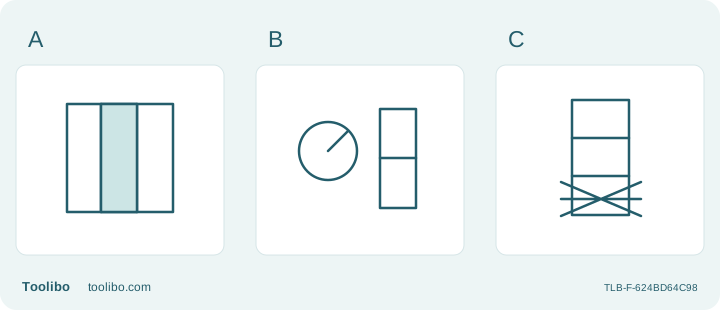
A highlighted model column, dial and excluded third position
A highlighted model column, dial and excluded third position.
A
Stay in the HG6031V column through every table row.
B
Read the dial together with the two airflow positions.
C
Do not copy the neighboring model’s third position.
Follow the HG6031V column and its dial with both airflow positions; the adjacent HG6030 third position is not an added feature.
Start with the package-to-body relationship
The US HG6031VK sales package links to operating instructions for the HG6031V heat gun. That relationship is useful evidence when finding the manual, but the package suffix should not be used to guess which controls the tool has. Read the identification on the body and compare its dial and switch with the HG6031V sections before applying any operating instruction.
The same document also covers HG5030 and HG6030. Those names on its cover establish the scope of the document, not interchangeable features. A reader who selects the correct manual but then follows the wrong model column can still create an incorrect procedure. The important task is maintaining the model match through the entire reading process.
Follow a row back to its heading
When reading a specification table, find HG6031V at the top and follow that column carefully for every row. Do not continue vertically from a neighboring model simply because a number appears more convenient for the planned material. A screenshot cropped below the model headings can remove the most important context; retain the complete table when making a personal note.
Record the units alongside any value copied for legitimate planning. Do not combine one model’s airflow row with another model’s temperature row and call the result a setting. If formatting on a small screen makes the alignment uncertain, use a larger view of the original document or obtain clarification before relying on it.
Read switch positions and dial instructions together
HG6031V has two airflow operating positions and a temperature dial. The document gives separate temperature ranges for those airflow positions. Consequently a dial position is not a complete description of the operating condition. A meaningful setup note needs the selected airflow as well as the dial position, even when the previous sample appeared satisfactory.
Do not copy the HG6030 third-position arrangement into an HG6031V routine. A shared paragraph or drawing must be read with its model label. If a suggested procedure tells you to select a position that does not exist on your physical switch, stop at that contradiction. It is evidence that the procedure or model identification needs correction, not a reason to force the control.
Keep accessory scope separate from kit contents
The manual’s accessory discussion describes possible attachments and their purposes. It is not, by itself, an inventory of everything included in a particular retail package. Check the actual HG6031VK listing and supplied contents separately. An accessory drawing does not establish that an unmarked attachment from another tool is suitable for this gun.
For a manufacturer-permitted process on a known detached non-electrical object, choose only an approved attachment appropriate to the process. Fit or change it with the tool disconnected and fully cool. If an accessory cannot be confidently identified, resolve that identity before considering material trials. A snug physical fit is not evidence of acceptable airflow or compatibility.
Build a short model-specific reading sheet
A useful reading sheet contains the exact body model, package designation, applicable manual and the control descriptions you actually need. Add a short exclusion such as “do not use HG6030 switch instructions.” Keep it with the full manual rather than replacing the manual with a cropped diagram. The sheet helps prevent a known reading error; it should not discard general safety instructions that still apply.
If multiple people share the tool, ask the next user to locate the same dial and switch on the cold disconnected body. Have them explain which control changes airflow and which adjusts temperature. This practical check exposes a mistaken model assumption more reliably than asking whether they have already read a heat-gun manual.
Recheck the evidence when advice conflicts
An online demonstration, reseller title or informal instruction may use a similar name loosely. Compare any claimed feature with the body and the HG6031V-specific instructions. If the claim depends on an extra stage, digital display or automatic program that your model does not have, reject that part of the advice rather than adapting it experimentally.
The same discipline applies after a tool replacement. Retain old material records as history, but do not transfer their dial numbers to another model or another airflow position without a new compatibility assessment and representative trial. The benefit of careful column reading is a coherent operating decision: the physical tool, the document section, the accessory and the material process all describe the same setup. When any one of those remains uncertain, pause before heating.
Models referenced