
D26960 controls
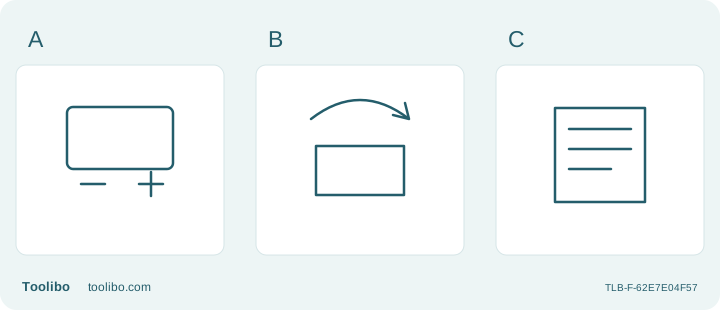
LCD controls, a remembered-setting loop and a clear air path.
A
The LCD and buttons select a temperature.
B
The return arrow represents a setting remembered from earlier work.
C
A new material needs its own complete setup record.
Overload protection can stop the element while the fan continues, then automatically restore heating; airflow is not safe isolation.
The recalled setting may belong to yesterday’s work
The Canadian D26960 is the LCD version of the D26950/D26960 family. Its shared manual describes a stored temperature setting recalled in relation to airflow. That convenience requires a deliberate startup check: the previous user may have worked on another material or changed accessories since the last session.
Do not aim at the finished object while discovering the current setting. Clear the air path first and check the controls. If the chosen conditions are uncertain, return to an appropriate low trial condition permitted for the material. The screen number organizes the tool’s setting; it does not certify the temperature of a hidden layer, adhesive or finished surface.
Follow the LCD sections, not every section
Confirm D26960 on the nameplate and check the regional supply. The same North American manual also describes D26950’s knob, so follow the parts explicitly applicable to the LCD model. A sales summary does not replace those handling differences. This documentation review does not establish current availability, package contents or later revisions.
A useful trial record identifies material, accessory and airflow as well as the displayed value. Recording temperature alone loses information. If another sample is thicker or positioned differently, the previous record provides context for assessment rather than a guaranteed recipe.
Arrange the sample so stopping is safe
Use a stable noncombustible bench and secure the work without placing fingers in the air stream. Leave the inlet clear and keep the cable away from the nozzle. Before heating, decide where the gun will rest and where the workpiece can cool without being touched. If the transition from heating to securing the work is awkward, redesign the arrangement.
For an approved heat-shrink sleeve on a detached non-electrical object, confirm that the sleeve and underlying material requirements agree. Heat only according to those instructions and inspect the cooled result. A tight sleeve over a scorched or distorted object is a failed result even if the upper surface looks tidy. Do not extend this example to mains wiring, batteries, pressurized parts or safety-critical connections.
Interpret unexpected behavior cautiously
The manual describes overload protection that interrupts the element while the motor continues and may later resume heating. Unexpected heat changes are reasons to stop, not an automatic process to exploit. After shutdown, disconnect and allow at least thirty minutes before moving or storage, with the accessory actually cold before touching it. If the fault returns after external checks, give the model and event sequence to qualified service rather than opening the tool.
Record the restart and operating limit
A useful restart note includes the displayed target, airflow and material. When sharing the gun, leave the note with the cold tool rather than assuming another person understands its remembered setting. The next user must check the controls and confirm permission for the current material. An old note supplies context; it does not authorize skipping the initial checks.
The Canadian listing links N888399 through a Type 10 download. Although the filename says D26950, the opened cover explicitly includes D26960. Its warning limits on-time to sixty minutes within two hours. Plan repeated trials around that total. Cooling during a pause does not allow the operating limit to be ignored.
Separate symptom history from the working process record. A change in heat followed by a fan-only period belongs in the service history, not in a convenient method for reducing heat. This separation prevents a protective response from becoming an undocumented operating step and gives a technician a more useful account of the sequence.
Read the verified operating values
The Canadian D26960 pairs position I with 8.8 CFM and 150–750°F, and position II with 17.7 CFM and 150–1100°F. CFM means cubic feet per minute. Its lower limit and airflow values therefore differ from D26950, despite the shared manual. Read the recalled temperature together with the selected airflow. The stated ranges are tool control/output information, not measured temperatures throughout the material and not a processing recipe.
Models referenced