
DeWalt knob and remembered LCD setting
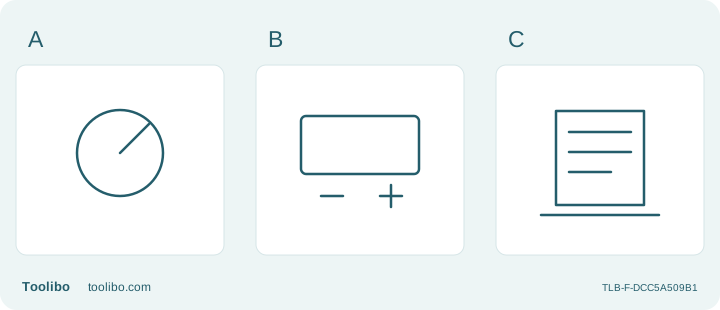
A dial, a display with return arrow and a shared airflow path.
A
A knob returns to a physical position.
B
An LCD shows a selected value and can recall prior work.
C
Both need airflow, accessory and material recorded together.
Both need airflow, accessory and material recorded together.
Compare how you return to a known condition
D26950 uses a temperature knob; D26960 offers LCD control and documented memory. Both appear in the Canadian manual, but their differences matter when returning to a task. With the knob, check the physical position. With the LCD, check the recalled condition and airflow before directing heat toward the work.
Neither method determines workpiece temperature. If the material requires narrow limits, what matters is whether the whole method respects them, not which interface looks more precise. The screen supplies tool information; it does not automatically approve a heat-sensitive object.
Match the interface to an actual habit
Someone making an occasional approved trial may prefer a directly visible control. Someone repeating a documented arrangement may find a displayed value easier to record. However, repeating a number without repeating the nozzle, airflow, working distance and sample does not repeat the process. The record must describe the relevant conditions rather than only the most convenient number.
D26960 memory also raises a separate question: does the retained setting belong to the present material? When two people share the tool, that cannot be assumed. Always check the selected condition with a clear air path before working on the sample. Familiarity with the last task does not establish what another user selected afterward.
Shared protection features do not settle the purchase
The manual describes a stand and automatic element protection. The stand needs a level, stable, noncombustible surface and controlled cable routing. Protection that interrupts heat can later restore it, so cooler air does not prove shutdown. Neither feature permits leaving the gun unattended or storing it while hot.
Inspect the actual regional product and accessories without transferring contents from a similar listing. A suffix, photograph or retailer bundle can change what is supplied while retaining the family name. The reviewed documentation does not support a comparison of current stock or prices.
Choose from an approved sample
Before working on the finished object, confirm the permitted process and obtain a representative spare sample. A known non-electrical sleeve on a detached heat-tolerant object permits a more bounded assessment than an assembled appliance or unknown coating. Reject distortion, finish changes or uneven results rather than compensating indefinitely with more heat.
Choose D26960 only if its control behavior is useful, and D26950 only if its controls meet the process. There is no hands-on winner here. The shared manual’s shutdown, disconnection and cooling requirements apply to both. Neither removes external inspection or the need for qualified service when faults recur.
Include the document revision in the comparison
The checked Canadian listings both link N888399 under Type 10. The opened cover names D26950 and D26960 even though the filename names only D26950. Reading the cover and model-specific section is more reliable than accepting or rejecting a download solely because of its filename.
That manual limits on-time to no more than sixty minutes within two hours. Include this if many consecutive tasks are planned. Neither knob nor LCD authorizes exceeding the limit, and automatic protection does not replace the specified operating regime.
Compare like-for-like market conditions. The Canadian pages identify included cone and fishtail nozzles, but do not silently transfer that statement to another retailer’s bundle or a foreign package. If the type or supplied documents differ, clarify the discrepancy before using this comparison as an operating guide. This prevents a choice of controls from accidentally becoming a claim about every version sold under the same model number.
Read the verified operating values
The Canadian operating ranges are not identical. D26950 provides 8.5 CFM at 120–750°F in I and 16 CFM at 120–1100°F in II. D26960 provides 8.8 CFM at 150–750°F in I and 17.7 CFM at 150–1100°F in II. CFM denotes cubic feet per minute. The LCD model therefore starts higher, rather than automatically offering the gentler minimum. Compare these tool-control ranges with the permitted process; neither set of figures states a workpiece temperature.
Models referenced