
D26950 controls
A dial, two airflow arrows and a protected resting position.
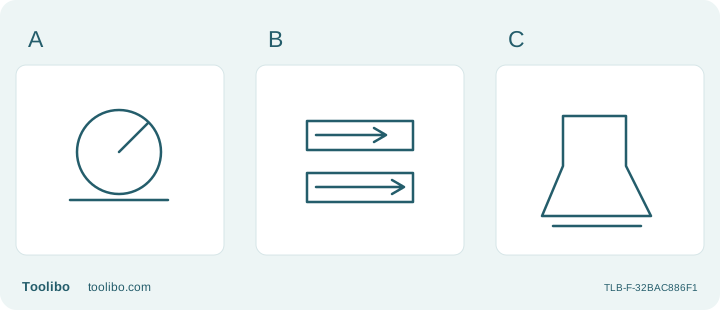
A
The rotary control adjusts temperature within the selected airflow range.
B
The two arrows represent different airflow choices, not material targets.
C
A stand needs a level stable surface and clear outlet.
N888399 limits on-time to 60 minutes in two hours and requires at least 30 minutes cooling before moving or storage.
Recognize the control you have
D26950 uses an air-temperature adjustment knob. The related D26960 uses LCD control, so their photographs and shared-manual sections are not interchangeable. The checked Canadian manual names both and marks their differences. Find D26950 on the tool first, then confirm that the supply matches the nameplate and the supplied document applies to that unit.
The airflow switch and temperature knob answer different questions. Changing airflow changes how hot air reaches the work; the knob changes the selected heat. Neither reports temperature throughout the workpiece. If a household material has no hot-air instructions or requires a low limit you cannot control reliably, a variable knob is not sufficient reason to proceed.
Adjust without crowding the outlet
With the tool off, disconnected and cold, inspect the nozzle and any approved attachment. Fit the correct attachment before the trial. Do not touch recently used metal merely because the switch is off. Avoid makeshift adapters: fitting over the barrel does not establish that they permit the intended airflow or remain secure.
Rehearse the movement with a sacrificial sample fixed on a noncombustible support. Choose a material-permitted low starting condition and work gradually toward the required result without dwelling over one point. For label removal, the label, adhesive and base must all be suitable. A detached uncoated metal object is not equivalent to a painted appliance panel with plastic and electronics behind it.
Make the stand part of the complete arrangement
The manual’s stationary arrangement uses the kickstand on a level, stable bench, with the cable controlled so it cannot pull the gun over. It does not authorize leaving the tool heating unattended. Keep the outlet away from people and materials, and do not cover the inlet with a hand or nearby objects.
Prepare for interruptions before they happen. If a call or another person needs attention, end heating and place the gun in its safe cooling arrangement. Do not rest the hot barrel on the work or hang the tool by its storage ring while it remains hot.
Overload protection does not mean safe storage
The manual describes protection that may stop heating while the motor continues and then restore heat automatically. A cooler stream therefore does not prove the tool is off. Stop an unexpected cycle, allow cooling and check only external causes before seeking service. The checked instructions require at least thirty minutes of cooling before moving or storage; an accessory may need longer to become actually cold. This guide does not include internal diagnosis or repair.
Plan session length from the current document
The checked Canadian listing offers N888399 through its Type 10 download entry. The cover names D26950 and D26960, and the operating section limits on-time to no more than sixty minutes within two hours. Include that limit when combining small tasks: short individual operations accumulate during a long session. A running fan or absence of an overload event does not authorize continuous use.
The Canadian listing includes cone and fishtail nozzles. Inventory the actual parts, but do not treat that pair as a complete selection for every material. Choose the accessory for each task from the applicable instructions instead of using whichever one was left fitted after the previous job.
Keep the document identifier with the model record. If your unit’s type marking or supplied manual differs, resolve applicability before adopting this routine. That is especially important for a borrowed or secondhand tool whose box may not belong to the unit inside. This check seeks the correct operating document; it does not claim that every historical D26950 is identical.
Read the verified operating values
For the Canadian D26950, position I is 8.5 CFM with a 120–750°F control range; position II is 16 CFM with 120–1100°F. CFM means cubic feet per minute. The knob adjusts temperature within the selected airflow range, so the higher airflow also raises the available upper temperature. These manufacturer operating ranges describe the tool, not the temperature reached inside a workpiece or a setting recommended for an unidentified material.
Models referenced