
UniversalHeat 600 controls
Three stages, unchanged sound waves and a clear cooling area.
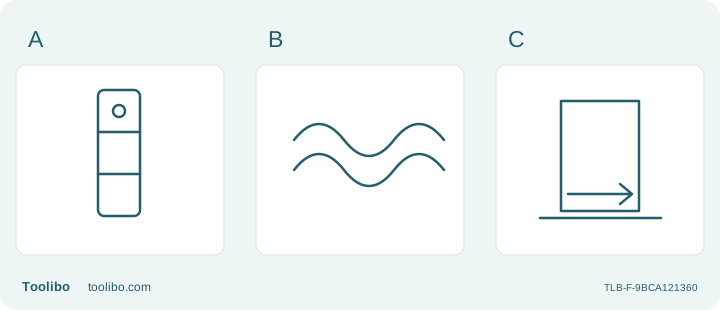
A
The selector has three linked stages.
B
Unchanged sound waves represent unchanged fan speed, not unchanged heat.
C
Use the documented low-temperature cooling sequence before shutdown and full cooling.
A third linked stage adds a lower-temperature choice without adding independent fan-speed control.
Read each stage as a linked pair
The basic German UniversalHeat 600 package is listed as 06032A6100. Its selector offers three linked temperature and airflow stages. The additional low-temperature position distinguishes it from EasyHeat 500, but does not guarantee that every delicate material can safely be heated. Nor does it allow temperature and airflow to be combined freely.
Before following a material procedure, compare it with the actual stages. A requirement for a particular temperature with gentle airflow may not fit a fixed-stage tool. Do not attempt to average two positions by switching repeatedly between them. A high outlet temperature also does not equal a known surface temperature at an estimated distance. Geometry, exposure and the material itself affect the result.
Distinguish the basic package from accessory packages
The checked German page also offers a different order number with a glass-protection nozzle. That does not put the same nozzle into the 06032A6100 package. Inventory the cold, disconnected tool and its compatible original accessories. Keep the nameplate identity with the manual so later purchases can be checked against the correct tool rather than a similar photograph.
The shared manual describes a removable heat shield for UniversalHeat 600. For the open-bench household work covered here, leave it fitted. Removing a shield does not make a narrow or hidden cavity safe and exposes more hot metal. If reaching the work requires bringing hands or combustible material close to the outlet, change the work arrangement.
Use the additional stage in planning
A suitable trial begins with known material, manufacturer permission for heating and a spare sample. For an approved non-electrical sleeve, leave access around the entire sleeve instead of heating only the visible face. Prepare the supports and movement while cold. Stop if the sample shifts, the support becomes unstable or you can no longer keep the air path clear.
Inspect the cooled sample for even results and unwanted changes to the underlying object. The low stage can help organize the process, but a successful trial does not approve another plastic, a thicker section or a coated object. Evaluate those changes as new conditions rather than relying on memory of the last job.
Cooling belongs in the workstation plan
Follow this model’s shutdown and cooling instructions, and prevent the cable from pulling over the resting tool. A tool that seems quiet can still have a hot metal outlet. Reserve its space until completely cool, then disconnect and store according to the instructions. This guide does not endorse window work, paint removal, hidden pipes, fuel-related heating or internal interventions.
Fan sound does not identify the stage
The shared Bosch manual states that UniversalHeat fan speed and operating sound do not change when switching from the low-temperature stage to the hotter stages. If you expect a clear change in pitch, you could mistake a constant sound for an unchanged heating condition. Read the selector position and keep the outlet away from the finished object while confirming it.
This matters when a brief interruption separates two operations. The sound can be familiar even though the selected heat is different. Repeat the initial identity, material and stage checks rather than continuing simply because the fan sounds normal. If the switch position cannot be read clearly, clean or resolve the problem only with the tool disconnected and cold.
Record the stage in a form another person can recognize, together with the accessory and material. Avoid descriptions such as “medium heat” if they might refer to another tool. A useful record helps prepare another controlled sample, but does not guarantee that a different object will respond the same way.
Read the verified operating values
The German 230 V version offers three linked pairs: 50°C/200 L/min, 300°C/350 L/min and 600°C/500 L/min. The 50°C stage is a lower-temperature cooling setting, not room-temperature air or permission to handle the nozzle. Bosch specifies outlet temperature at 20°C ambient and ±10% temperature measurement accuracy. The airflow increases with air temperature even though fan speed stays unchanged; these output figures are not material-process targets.
Models referenced