
EasyHeat 500 controls
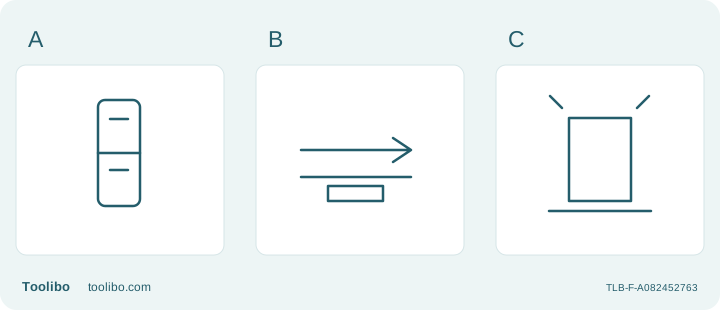
Two switch positions, a moving air path and upright cooling.
A
A two-position switch changes heat and airflow together.
B
The moving air passes a supported sample without trapping a hand.
C
The whole tool remains upright in a protected cooling place.
The two switch choices change airflow and heat together; neither is an unheated fan mode.
A simple switch still requires a heat decision
This guide concerns the German EasyHeat 500 order number 06032A6000, not the cordless EasyHeat 18V-500. The checked listing describes two settings in which temperature and airflow change together. Understand that relationship before buying accessories: the lower setting is not an unheated fan, and moving the switch changes more than one part of the process.
Consider a small craft heat-shrink sleeve on a detached, non-electrical object. First confirm that the sleeve manufacturer permits hot-air shrinking and that the object tolerates the process. The tool’s ability to shrink material does not establish compatibility with every sleeve, adhesive, finish or object. If the instructions require a controllable temperature below what this model offers, choose another method instead of compensating with an improvised long working distance.
Check what arrived rather than the photograph
Before connecting the gun, match the order number, nameplate supply requirements and supplied manual. The basic German listing identifies cardboard packaging. A nozzle photographed in a project is not necessarily included. Inspect the cable, plug, housing, inlet and nozzle while the tool is disconnected and cold. A loose nozzle, cracked housing or damaged lead means stop, not open the casing.
The shared Bosch manual covers EasyHeat 500 and UniversalHeat 600. Follow the EasyHeat column and controls. Do not transfer the UniversalHeat’s additional low-temperature position or removable-shield instructions. A shared cover establishes document coverage, not identical features.
Rehearse the movement before applying heat
Place the sample on a stable noncombustible support with clear space behind it. Keep the lead outside the air stream and the inlet unobstructed. Decide where the gun will rest during an interruption, following the manufacturer’s standing arrangement on a level surface. A household table covered by a loose cloth is not a suitable alternative.
Begin with a sacrificial sample and the material supplier’s permitted process. Direct the air away from people and nearby objects, then inspect the result after cooling. Uneven shrinkage, whitening, blistering or a changed finish means the trial failed. Do not immediately repeat it with more heat: first check whether the material and tool can meet the same process requirements at all.
Finish with a cold tool, not merely an off switch
Disconnect after shutdown and let the nozzle and accessory cool completely in a protected place before handling or storage. The two-position EasyHeat is not the three-position UniversalHeat. Allow cooling time instead of inventing an unheated fan cycle. This orientation is based on documentation, not tested performance, and does not provide instructions for stripping paint, heating pipes or batteries, or repairing electrical installations.
Make a two-setting acceptance checklist
Before the first trial, write two separate questions: can the lower operating condition meet the material instructions, and can the complete object tolerate that exposure? Answering the first does not answer the second. The supplier may permit hot air for the sleeve without approving the plastic underneath. In that case the job remains unsuitable even if the sleeve itself was correctly selected.
Define a stopping point, such as achieving the supplier’s required fit without changing the surrounding surface. Smoke, odor and visible scorching do not mean that enough heat has finally been applied. They mean stop and reassess. Let the sample settle and cool before comparing dimensions or appearance.
Keep the material packaging with the sample record. If a later packet has the same color but a different material designation, repeat the compatibility assessment. This habit is especially useful with a two-setting tool because there is no independent fine adjustment to compensate for a different process. If the available positions provide no reliable working margin, choosing another method is the correct outcome of the trial.
Read the verified operating values
The German 230 V model pairs 300°C with 240 L/min in its lower stage and 500°C with 450 L/min in its higher stage. These are linked choices: there is no 300°C/450 L/min combination. Bosch states these nozzle-outlet temperatures at 20°C ambient, with ±10% temperature measurement accuracy. They describe tool output, not a required material temperature or a heating recipe.
Models referenced