
Filter locations, wet setup, cord control
Three panels distinguish two filter locations, a foam wet setup and a hand controlling the rewinding plug.
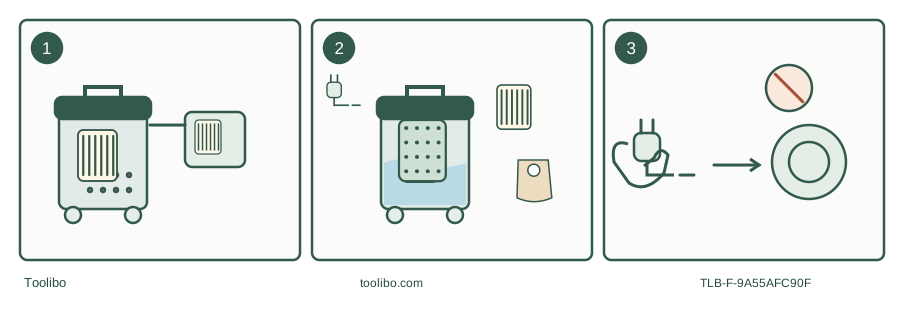
Identify both locations
Main cartridge and exhaust element have separate roles and cleaning methods.
Use wet foam
Remove dry cartridge and bag; fit compatible foam over the retained cage.
Control the plug
Switch off, unplug and hold the plug while operating cord rewind.
Original concept drawing; filter shapes and housing are schematic.
Two filter locations, not two interchangeable filters
The US Vacmaster VF408 has a collection-side cartridge and a separate exhaust filter behind a door. The current product page describes the exhaust element as HEPA material. That wording concerns a filter component; it does not establish that the complete machine is a certified hazardous-dust extractor. Do not treat it as permission for asbestos, lead contamination or other toxic cleanup.
The VF408 is a nominal 4-gallon household wet/dry vacuum with a 1-1/4-inch by 7-foot hose and an 18-foot automatic-rewind cord. The 5 peak-HP designation is a laboratory motor figure, not sustained operating output. Four gallons describes the tank rather than guaranteed liquid pickup before the float acts. Some current image descriptions incorrectly say five gallons; use the actual VF408 model title, specification and manual instead.
Start with the dry air path
For ordinary dry dirt, switch off and unplug before checking the cartridge. It should sit over the cage against the head with its retainer secured. An optional dry collection bag fits at the inlet; the matched manual says it is sold separately. Do not assume a bag is missing from a box just because a diagram shows the optional dry arrangement.
Examine the hose, nozzle and tank for restrictions as well as the filter. A blocked nozzle can look like a weak vacuum, while an unseated filter can let dust escape despite a clear hose. Stop if dust is visibly exhausted. Check the assembly with the power disconnected instead of compensating by continuing for longer.
The small hose family suits its own accessories. Keep the floor nozzle, brush and crevice tool where they can be selected without tugging on the hose to move the machine. For room cleaning, remove objects you want to keep and plan around doorways and chair legs before you start.
Convert to wet pickup with foam
The VF408 manual explicitly says not to use the cartridge or dry dust bag for liquid pickup. With power disconnected, remove those dry components, clean the tank and fit the foam wet filter over the cage. The current US product page lists the small VFF21 wet-filter option as compatible with VF408. Retain the cage and float.
When collecting a larger amount of suitable liquid, the manual advises leaving an air gap at the nozzle opening rather than immersing the entire opening. Keep the machine upright and watch the response. If the float stops suction and the motor speeds up, switch off, unplug and empty into a suitable receiver. Do not wait for the motor to switch itself off.
The 4-gallon format still needs a sensible emptying route. Choose a manageable batch size if the receiving container requires lifting or a controlled pour. Never put the motor head in the liquid or let the plug and connections lie in the wet area.
Clean each filter by its own method
The manual treats the cartridge, exhaust element and foam wet filter separately. For the exhaust element, disconnect power, open its filter door and remove the cartridge-shaped exhaust element; the stated cleaning method is brushing dirt away before refitting it and securing the door. Do not assume an exhaust filter can be washed merely because another filter in the machine is washable.
The foam wet filter is washed with mild soap and water, rinsed and air-dried. After wet use, remove it and restore the dry cartridge before returning to dry debris. A wet cartridge will clog quickly with dust, so check actual dryness rather than trusting that it has spent one night in a closed storage area.
These are owner-accessible maintenance points, not authorization to open the motor enclosure. If a filter door will not latch, or a filter is damaged, resolve that fault before running the machine.
Rewind the cord under control
After switching off and unplugging, hold the plug while pressing the rewind button. The manual warns against letting it whip freely. Keep the cord route clear of chair legs and stored accessories, and guide the final section without allowing the plug to strike the housing or a person.
Empty and dry the tank before indoor storage. Keep the wet foam separate and identifiable so the next user can see which configuration is installed. Do not collect flammable liquids, explosive dust, hot ash or toxic materials. The disposal route must suit the contents; a convenient drain is not automatically appropriate for every liquid the nozzle can pick up.
Models referenced