
Different layouts change the whole routine
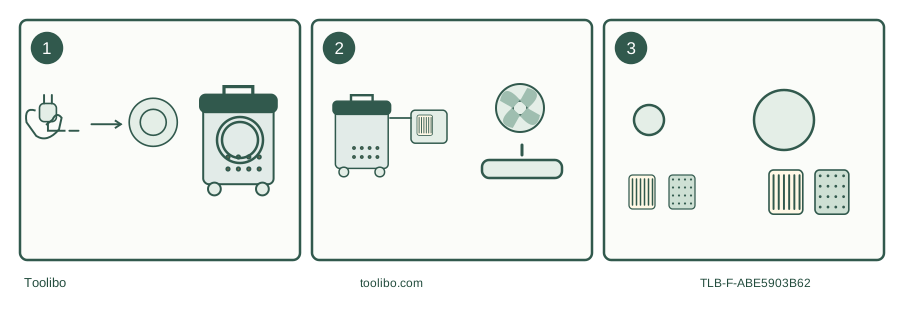
Three paired diagrams show cord handling, exhaust-filter versus detachable-blower layouts and distinct hose families.
VF408
- 1-1/4-inch hose; automatic cord rewind; dry cartridge and separate exhaust filter; foam sleeve replaces cartridge for wet pickup.
- VF408; 13-page OEM-host-linked PDF, cover VF408; printed 7 dry/rewind, 8 wet/no bag/float, 9–11 maintenance and exhaust filter. Current product kit excludes dust bag; manual calls it optional/sold separately.
VBV1210
- 2-1/2-inch hose; drain; detachable blower; matched legacy manual VR01BZ.20.60.01 rather than erroneous current linked manual.
- VBV1210; 12-page legacy OEM PDF accessible in web index; direct download now redirects/404. Exact cover VBV1210. Printed 3–4 safety, 7 cartridge dry, 8 foam wet/float, 9 detachable blower, 10–11 filter maintenance. No current-revision equivalence claimed.
Cord routine
VF408 has controlled automatic rewind; VBV1210 uses its stored cord arrangement.
Extra maintenance location
VF408 has a separate exhaust element; VBV1210 has a detachable blower and intake.
Match the family
Hose and filter parts require exact-model matching despite shared wet-foam logic.
Original conceptual comparison; no measured noise or suction advantage implied.
Choose the operating layout before the tank size
Vacmaster VF408 and VBV1210 are both US bucket-style wet/dry vacuums, but they organize work differently. VF408 combines a nominal 4-gallon tank, a smaller hose family, a separate exhaust filter and automatic cord rewind. VBV1210 combines a nominal 12-gallon tank, a larger hose family, a drain and a detachable blower. Those differences are more useful to examine than their shared 5 peak-HP labels.
Peak horsepower is a laboratory motor designation, not sustained operating output. Nominal tank size is not the volume of liquid guaranteed before the float stops suction. This comparison makes no independent claim about pickup speed, noise, durability or blower effectiveness.
Follow the room-cleaning route for VF408
The VF408 listing specifies a 1-1/4-inch by 7-foot hose and 18-foot rewind cord. It includes household-style tools such as a round dust brush, multi-surface floor nozzle and crevice tool. The compact tank layout and separate exhaust element are meaningful configuration facts, but do not establish that every surface or sensitive material is suitable for those tools.
Consider an owner moving between rooms and storing the machine after each short task. The cord-return mechanism changes the final step: hold the unplugged plug while operating rewind so it cannot whip. The exhaust filter also adds a maintenance location distinct from the main cartridge. If the owner only checks the large filter under the head, the second element can be overlooked.
The current product page calls the exhaust element HEPA material. That does not prove whole-machine hazardous-dust certification. It also does not mean every filter in the machine has the same cleaning method. The manual’s exhaust-element care uses brushing, while the wet foam has its own wash-and-dry process.
Follow the workshop-and-yard route for VBV1210
VBV1210’s listing specifies a 2-1/2-inch by 7-foot hose and 15-foot cord. Its detachable blower uses a release mechanism and adapter rather than requiring the whole tank to accompany every blowing task. The tank drain is another documented difference when dealing with suitable liquids.
Consider whether you actually have a safe blowing task. Clearing ordinary debris into a controlled area can be different from scattering dusty material through a shared space. A removable blower adds equipment to inspect and store: the adapter, outlet accessories, mounting surfaces and protective intake all matter. Do not select that feature merely because a speed figure looks impressive.
The exact legacy VBV1210 manual used here is marked VR01BZ.20.60.01. The current product page’s linked download has a different model on its cover and is excluded. Owners should match their supplied document rather than assuming every link beside a product title is correct.
Both use foam for wet work in the checked documents
For VF408, the matched manual removes the dry cartridge and dry collection bag before fitting wet foam over the cage. For VBV1210, the matched legacy manual likewise replaces the dry cartridge with foam. Keep the cage and float on both machines. Restore the correct dry cartridge before collecting dust again.
This shared pattern does not mean their filters interchange. The VF408 product listing names a smaller wet-filter family, while the VBV1210 uses its own compatible parts. The hose diameters also differ. A consumable must match the exact model and intended material, not just the brand or a broadly overlapping gallon range.
On both, rising liquid can close airflow while the motor continues running. Loss of suction with increased motor speed means stop, unplug and empty. Plan an appropriate receiver and manageable load before starting, rather than discovering the disposal route only when the float acts.
Make the choice through storage and maintenance
If the intended work is mainly ordinary household dry pickup with occasional suitable liquid cleanup, examine VF408’s tool set, separate exhaust filter and rewind routine. If a verified detachable-blower task and drain access are important, examine VBV1210’s three operating states. Neither conditional fit is a hands-on recommendation or a tested winner.
Before committing, make a list of the exact model, matching manual, dry cartridge, optional dry bag where appropriate, wet foam and required attachments. Check that those items have a clean storage place and that wet media can dry fully before the next dry task.
Do not use either vacuum for flammable liquids, explosive dust, hot ash, toxic material or unidentified contamination. A HEPA-material element and a detachable blower solve different design problems; neither expands the machine’s safe-substance boundaries. Prices, current stock and package promotions remain outside this comparison.
Models referenced