
Three states for a portable drum
Three schematic panels show dry filtration, unplugged wet-filter conversion and controlled drum emptying.
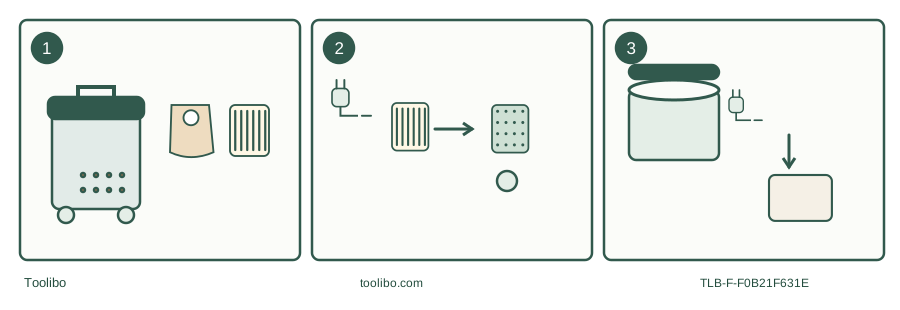
Dry setup
Check filter seating and the correct dry bag before cleaning the car.
Wet conversion
Unplug, remove dry-only media and fit the matched wet foam filter; retain cage and float.
Stop and empty
A float-induced sound change requires switching off, unplugging and controlled emptying.
Concept diagram, not an OEM assembly drawing; identify the actual parts on your machine.
A small drum still needs a complete changeover
The US RIDGID WD4070 is the portable 4-gallon model whose full manual identity is WD40700. This guide follows SP6732-9, dated March 2021. The shared document also names export and Mexico variants; a similar orange body does not make their electrical ratings interchangeable. Check the label near the cord entry before ordering a replacement or using a regional instruction sheet.
Its useful layout distinction is the combination of a small drum, rear wheels, a top carry handle and 1-7/8-inch hose accessories. The current US listing describes a 7-foot hose and 20-foot cord. Those lengths describe separate components, not a guaranteed working radius through a car door or around a bench. Put the machine where the hose can bend without pulling the drum against an obstacle.
The advertised 5.0 peak HP is a laboratory motor figure, not continuous operating horsepower. Likewise, four gallons is drum volume rather than the amount of water you can safely collect. Neither number removes the need to watch the machine while it works.
Set up the car-cleaning job as a dry job
For ordinary dry dirt, check the installed filter before connecting power. The current listing identifies the VF3500 fine-dust cartridge and the optional VF3501 dry bag family. A bag is useful when you want to remove collected dirt as a contained package; it does not make an unsuitable substance safe to collect. Confirm bag fit against the complete model rather than choosing only by the words “four gallon.”
Look at the whole seal path: the cartridge’s bottom gasket, its fastening point, the lid seating and the hose connection. A filter that looks clean but sits crooked can let dust bypass its edge. Inspect the pleats for damage instead of assuming a stronger motor sound means the filter is working. If dust exits the exhaust, stop and unplug before checking the assembly.
For a car interior, remove loose objects you want to keep and work a section at a time. Keep the drum upright outside the vehicle, use the car nozzle where it fits and avoid stretching the hose across sharp seat tracks. A narrow space can require repositioning the machine even when the nominal hose length seems sufficient. These are planning suggestions, not measured pickup-performance claims.
Convert for water deliberately
Stop, unplug and empty the dry contents before opening the vacuum for a liquid job. Remove a dry-only collection bag. In this matched manual, a small amount of liquid means less than 2 inches (5 cm) collected inside the drum; the existing filter need not be removed for that limited case. This is an internal collection-depth description, not permission to put the machine in a puddle of that depth.
For larger liquid pickup, SP6732-9 calls for replacing dry-only paper filters with the correct RIDGID wet-application foam filter. The US product page lists VF3700 as the wet-application option for this smaller filter family. Keep the filter cage and float installed. A removable filter, a protective cage and a moving float are different components; do not remove all three as a group.
Consider a small clean-water spill beside a laundry appliance. First establish that the liquid is suitable and that the electrical area is safe. Arrange the hose so the vacuum itself remains on a stable, dry location. If the spill’s contents or electrical source is uncertain, stop rather than treating the wet/dry label as blanket approval.
Treat the sound change as a stop signal
When liquid raises the float, airflow stops and the motor sound rises in pitch. Switch off and unplug promptly. The float closes the air path; it does not tell you that the electrical supply has been disconnected. Do not keep the motor running while waiting for suction to return.
The WD4070 manual’s emptying procedure uses the removable powerhead and drum. Plan a manageable pour into an appropriate waste container before the drum becomes awkward to handle. Avoid carrying a heavy drum up steps simply because the empty machine is portable. Keep the motor assembly away from the discharge route.
Finish with the next job in mind
Empty and clean the drum after use. Dry the filter completely before returning to dry debris, and store the machine indoors with its hose and accessories organized. Leave a simple reminder with the machine if the wet filter is still fitted; the next person should not discover the configuration only after dust escapes.
Do not collect flammable liquids, explosive dust, hot or smoking material, or toxic and hazardous substances. A fine-dust filter is not evidence that this complete vacuum is an approved hazardous-dust extractor. Dispose of the collected material according to what it actually contains; a convenient sink or outdoor drain is not automatically an acceptable destination.
Models referenced