
Unlock the selection path before rotating
A slide moving beyond a red threshold, a six-pocket cartridge symbol, and a closed slide with a lock explain the selection sequence.
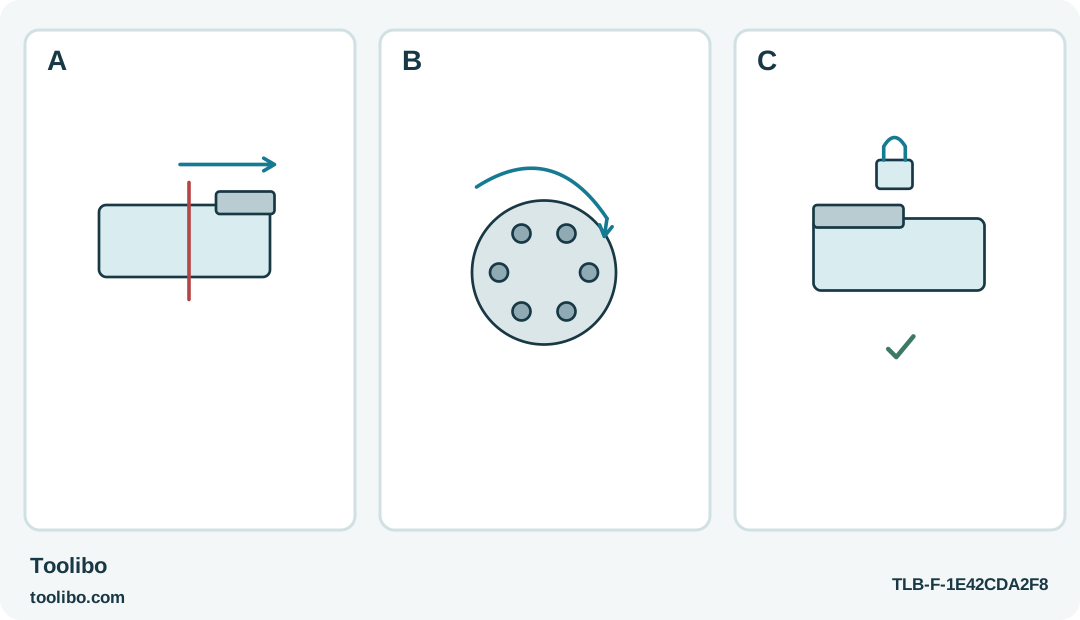
A
With the stopped tool locked, open the slide fully beyond its red line before cartridge rotation.
B
Select the compatible tip only when the normal mechanism moves freely; do not force the cartridge.
C
Close the slide fully before use. These are conceptual selection zones, not a copied model mechanism.
The three panels distinguish opening the selection path, choosing a tip and closing the mechanism before any fastening starts.
Identify the recess before choosing a cartridge position
The WORX WX255L stores several bits in a cartridge, which can save time when a household fitting uses different screw heads. The convenience is only useful if you choose by the screw itself. A bit already presented at the nose is not necessarily the right one for the next fastener.
Work on a supported, non-electrical item with the screw head visible. Inspect the recess for paint, debris or damage and compare the bit’s shape and size while the tool is off. A cross-shaped recess does not establish that any cross-shaped bit is suitable. If the tip rocks badly or only touches the outer edges, stop and find the correct accessory.
This is the original US WX255L system. Do not add features from a WX255L.2 listing or assume that a flexible extension mentioned with another package belongs to this device. Use only the cartridge and bits approved for the exact tool.
Make the selection with the tool locked
Wait for the chuck to stop completely before changing the direction control. Put the forward/reverse switch in its lock position before handling the selection mechanism. Keep your finger away from the on/off switch and move the bit clear of the furniture.
Use the top slide to expose the cartridge as shown in the tool instructions. The slide must open fully, beyond the red line, before the cartridge can rotate normally. If it refuses to rotate, check that condition first. Do not use a screwdriver, pliers or motor power to force the cartridge into the next position.
Keep the selection area above a clear bench so a loose accessory cannot disappear into a drawer runner or onto the floor. Inspect accessible parts for an obviously misplaced bit or external debris without probing inside the tool. A damaged cartridge or slide needs the proper replacement or service, not a forced movement.
Confirm engagement before approaching the work
Select the required bit and return the slide through its intended movement. Check that the mechanism has completed its normal travel and that the chosen bit is correctly presented. Do not operate with the slide partly open or with a bit visibly out of position.
Bring the switched-off bit to the screw and check fit again. This second check catches a simple selection error before the motor makes it expensive. The right bit should engage the intended surfaces of the recess without requiring you to tilt the tool to make it stay in place.
Consider whether the cartridge’s available bit can reach the screw without the body or screw holder colliding with the fitting. A correct tip in a poor approach is still a poor setup. If access is blocked, change the assembly position or choose a suitable separate tool rather than balancing the bit on the edge of the recess.
Fasten by the joint’s requirements
Start the screw squarely, with the work held securely. Select the intended direction only when ready and use the on/off control deliberately. Keep the bit aligned with the screw axis rather than trying to steer it as it turns.
Watch the head as it approaches the fitting. The desired endpoint comes from the furniture or hardware instructions, not from the moment when the driver struggles. Release to inspect if the fitting begins to distort, the screw meets unexpected resistance or the bit starts to climb out.
Avoid prolonged operation at low speed. If a job repeatedly needs a slow strained drive, reassess the screw, material and tool choice instead of dragging the motor through every turn. Small household work is best controlled by a suitable setup and a clear stopping point, not by making the motor labor continuously.
Leave the cartridge ready for the next job
After the work, lock the tool and inspect the exposed bit for wear or damage. A damaged working tip should not be returned to the cartridge as an apparently ready option. Keep the correct identification with any replacement bit so that cartridge position does not become a substitute for recognizing the recess.
Wipe the exterior with a dry cloth and keep the controls free of dust. Do not wash the mechanism or add lubricant merely because the slide feels different; this tool does not call for owner lubrication or internal servicing. If full slide travel no longer allows normal selection, arrange the appropriate service.
The cartridge’s real advantage is organized access to suitable bits. Keeping the selection, engagement and screw-fit checks separate makes that convenience useful without turning it into a reason to skip inspection.
Models referenced